In the 15 months it was open, The Bird in Shaw cycled through a “turnstile” of four chefs, a whirlwind of change that created a lack of consistency in the cuisine, according to David Winer, owner of EatWell DC, which ran the restaurant. He decided things had gotten so bad, there was only one thing to do: Start from scratch.
The Bird closed on January 21, and in just 10 days, it reopened under the same ownership as Frenchy’s Naturel, a French bistro. Winer hired Eric McKamey, a Momofuku and Mintwood Place alum, as executive chef to help transform the restaurant. The bill for the quick change came in at $50,000.
The revamped dinner menu hasn’t done away with the poultry focus completely, but diners can now also choose seafood entrees or steak dishes. New appetizers, hors d’oeuvres, and cocktails also celebrate the French bistro concept. Weekend brunch had always been a hit, so Winer kept fan favorites like chicken & waffles, but added a few French classics, including apple beignets, eggs Florentine, croque-madame, and a Lyonnaise salad.
“A clean slate was truly the best way to go and I’m happy about that,” Winer says, adding that he blames himself for the revolving door of chefs. “We had a lot of good things going on at The Bird, but not all good.”
Whether it’s to generate more business, to cater to the evolving tastes of D.C. diners, or to roll with the punches when a prominent chef leaves, restaurateurs say there are a host of reasons to hit the reset button. And the makeovers are continuing: Last month, for example, Mexican-themed Tio Javier in Barracks Row converted into the beachy Tortuga Caribbean Bar & Grille, serving up island cuisine and tiki cocktails along with a giant rooftop.
For The Bird, at least, the chance for a clean slate was reason enough to switch up the concept. The poultry-focused restaurant opened in 2016, but in recent years, people flocked there for its $4 politically-themed happy hours. Management noticed that those guests rarely stuck around for dinner. Earlier this year, Winer told DCist that those moneymaking happy hours were “a distraction. Sometimes it took our eye off dinner business.”
This distraction, plus the frequent cycling of chefs in and out, led to unevenness in the restaurant’s quality. At Frenchy’s, Winer says the team is able to make new first impressions, rather than earn back the favor of diners who might have been disappointed by The Bird.
“We’re more excited, there’s more enthusiasm for the product and from that perspective I think [Frenchy’s] is going well,” Winer says now.
Edward Collins began bartending at The Bird when it opened in October 2016. While he says he was shocked to hear about the transition, he stayed on because he believed in the new concept, wanted to grow with his team, and looked forward to an “exciting new challenge.”
The learning curve was real. Collins, who has 18 years in the food industry under his belt, had no experience with natural wines and French cuisine, and didn’t know an aperitif from a palate cleanser.
Ten days of intense training between The Bird’s closure and Frenchy’s opening changed that. During that time, staff studied the new menus, wine representatives came in to explain the natural wine process, new chef McKamey brought the team up to speed on the new menu and what drinks paired best with what cuisine, and the staff did several tastings.
“It’s was like a new chapter where after being in this industry for so long, being able to pick up on something new, it makes the job even more interesting,” Collins says.
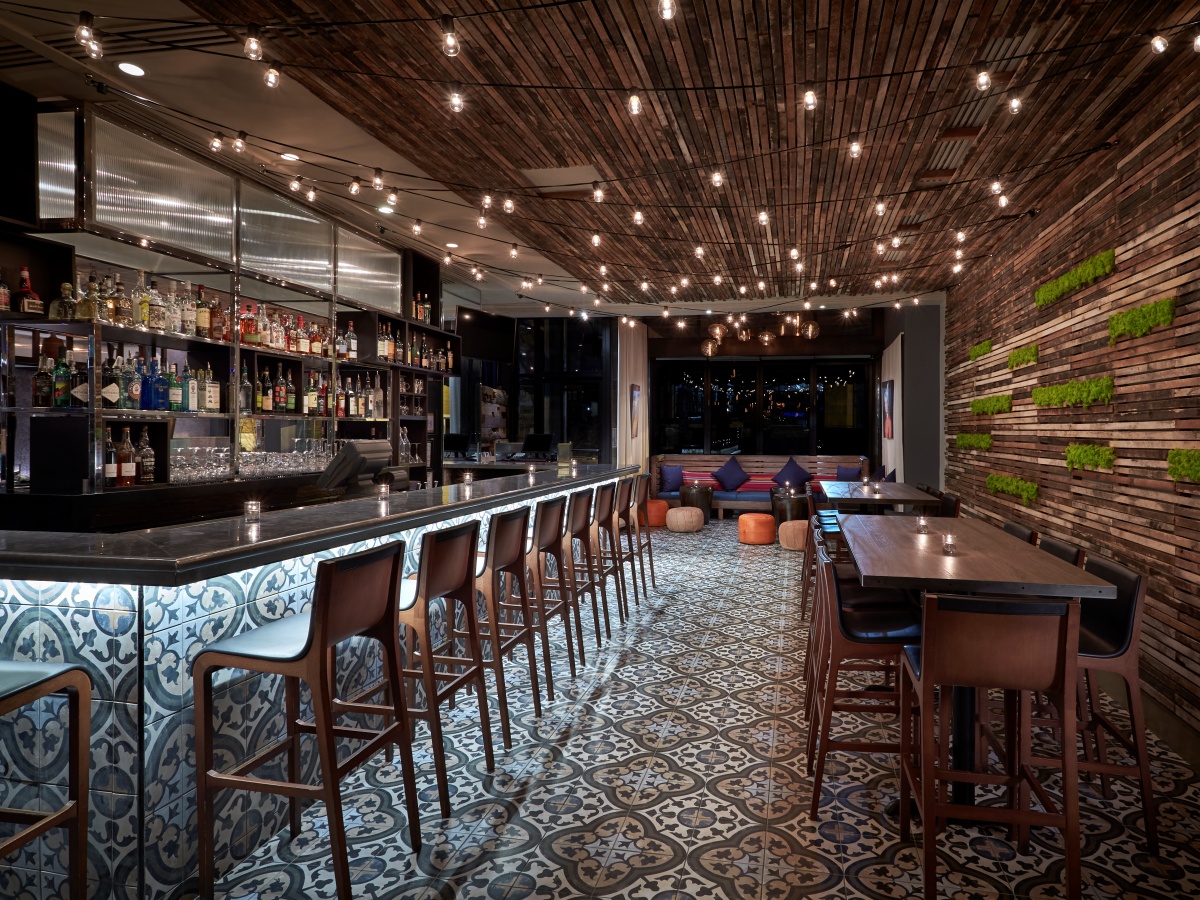
Restaurateur Ashok Bajaj is no stranger to a clean slate. He’s been down this path three times.
Last year, he transformed his American restaurant Ardeo, a mainstay in Cleveland Park for 20 years, into Sababa, an Israeli eatery. He shut down his adjoining American restaurant Bardeo a few years earlier and reopened that as Bindaas, offering Indian street food. Bardeo originally opened 19 years ago as a wine bar.
“Look around the world, people want more flavors in their food,” Bajaj says. “Ardeo was there for 20 years and the neighborhood was looking for something different and it was time for Ardeo to retire.”
Most recently, Bajaj shuttered NoPa Kitchen + Bar in Penn Quarter on January 1 to make way for his Mediterranean restaurant Olivia, reopening the space in just nine days. He says the changes were prompted by shifting tastes amongst D.C.’s restaurant-goers, the success he had with other transformations, and his desire to do something different—Mediterranean food in particular excites him.
According to Matt Kuhn, Olivia’s executive chef, who previously held the same position for four years at NoPa Kitchen + Bar, the transition was a year in the making—at least food-wise.
Kuhn spent that time devising a new menu, holding tastings, and getting feedback on the new cuisine. The new menu was inspired by Kuhn’s 12-day research and development trip to Spain where he tried out dozens of restaurants in Barcelona and Valencia.
All that prep, he says, made the transition “very easy for the most part.” While most of his 30-member kitchen staff stayed on, he did hire a new sous chef. Kuhn’s biggest challenge was switching from NoPa’s multiple-course concepts to small plates — he says it took two weeks adjusting to the speed of service.
“Now you have people ordering 15 plates a course,” Kuhn says. “So it took time to get used to that because you’re selling more small plates for that.”
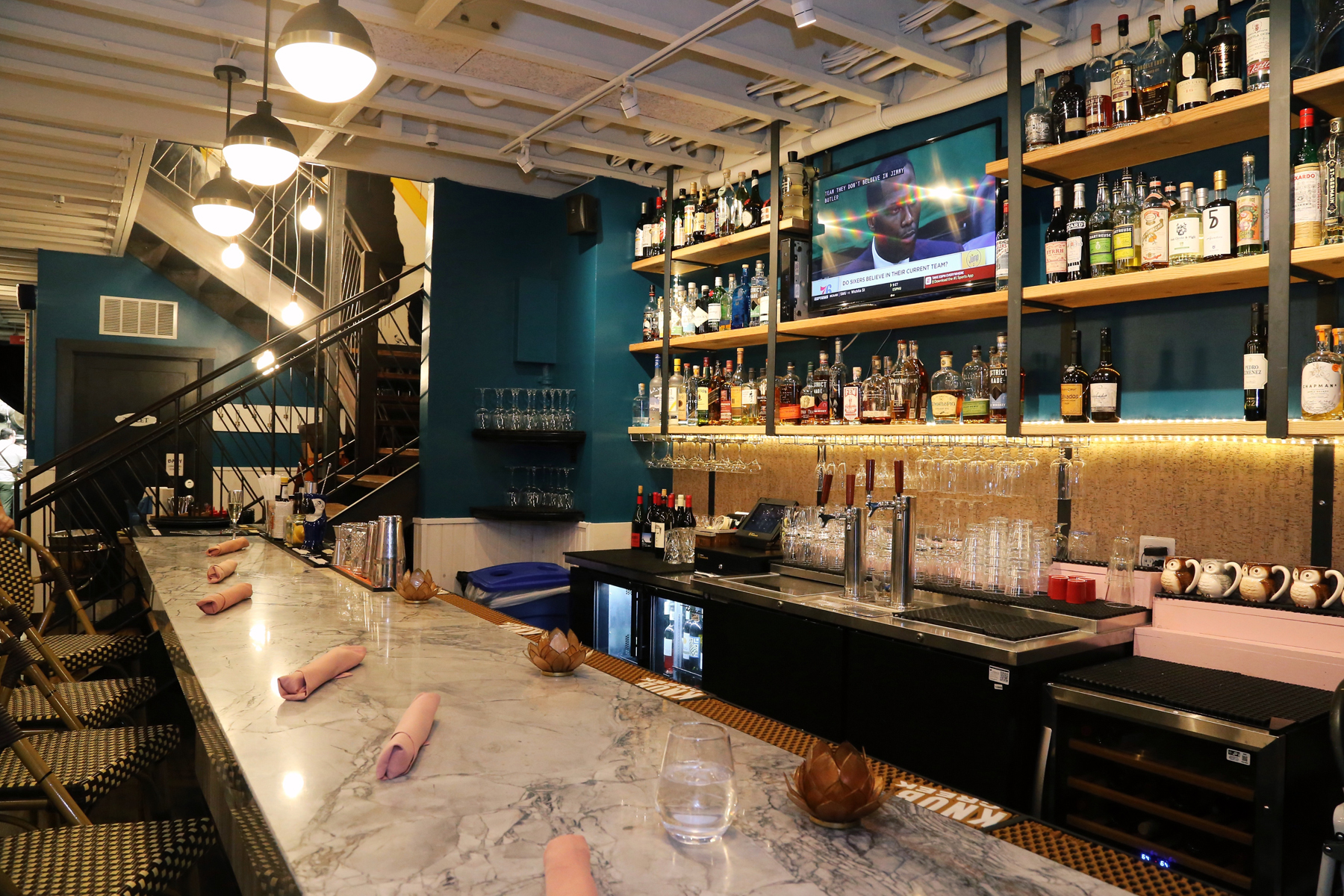
The menu isn’t the only thing that typically gets an overhaul. In the case of Frenchy’s Naturel, the restaurant’s facelift meant repainting and redecorating the space, refurbishing the bathrooms, replacing the old wainscoting with cork for that French café feel, buying new furniture and dishes, and piping in both classic and popular French tunes.
Bajaj also renovated and redecorated his restaurants with each re-launch, and brought on new chefs for Bindaas and Sababa. He hired new employees for Bindaas, but tried to retain staff as much as possible, re-assigning them to his other restaurants while renovations took place.
Bajaj declined to disclose how much he spent on his restaurants’ rebirth. His Knightsbridge Restaurant Group owns seven restaurants with nine locations in D.C., and he doesn’t rule out remaking all of them at some point.
“If something else comes up in my mind, I’ll do it,” he muses.
Meanwhile, Paul Ruppert hasn’t decided what he’ll do with the Petworth space that housed Slim’s Diner for almost three years before he shuttered it in January. He’s been talking to several people about taking on the spot through a sublease—he wants an operator who will not only run a successful business but will also be a good fit for the neighborhood and demonstrate an interest in the community.
He is looking for a concept that will take advantage of the patio and include a strong beverage program, which he says is the key to a profitable restaurant business.
“The margins on alcoholic beverages are better than they are on food, and you need those margins in order to make the differential between losing money and making money,” Ruppert says.
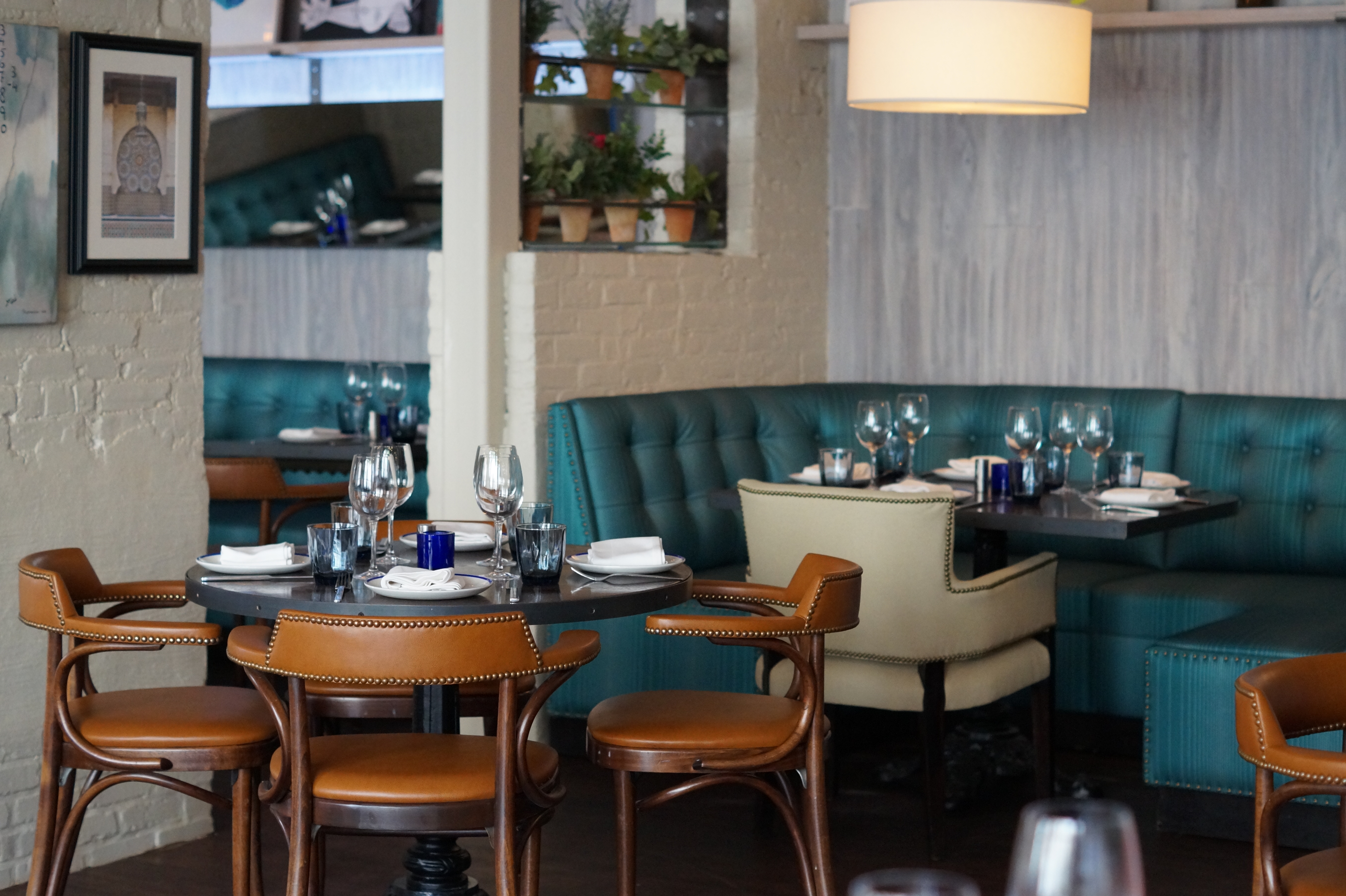
Ruppert doesn’t count out developing his own concept for the space, something he’s already done before.
In 2014, he opened the esteemed Crane & Turtle restaurant just down the block from Slim’s, only to close the French-Japanese fusion eatery less than two years later because executive chef Makoto Hamamura and his wife, pastry chef Katy Kinch, moved to New York.
“We decided to do something different with the space because Crane & Turtle was the vision of Makoto and he was central to the definition of what the restaurant was,” Ruppert says.
Instead, Ruppert and his team did a “crash renovation.” In just a couple of weeks, they replaced the Japanese décor with Chesapeake Bay-themed art, including picnic tables and tents for the patio. He didn’t touch the kitchen or the seating plan, which had room for 24 guests inside and another 24 on the patio. He estimates that the entire project cost $10,000.
The restaurant reopened as Cappy’s Crabs in May 2016, but with mostly new staff—including a new chef—because of the lag time in re-opening. Most staff members couldn’t afford to be unemployed in the interim, so they found jobs elsewhere. Others left because they preferred working in a fine-dining establishment and the crab shack was more casual. Only a dishwasher and a line cook stayed on, while 10 others left, Ruppert says.
Ruppert kept Cappy’s Crabs open for four months while he worked on something for the longer haul.
“I knew that wasn’t going to work as a permanent space because crabs are seasonal and the small size of that space made it difficult to be profitable on a seasonal basis,” Ruppert says.
Things turned over again a few months later for a longer-term concept. Ruppert subleased the site to Carlie Steiner and Kevin Tien, and the duo opened another highly acclaimed Japanese-inspired restaurant: Himitsu.
“I was confident that they were going to do a quality job and that they were going to be successful,” Ruppert says. “And I was excited to be able to work with them in a way to potentially realize their vision.”
Sara Herrera, co-founder of the Petworth Arts Collaborative, has lived in Petworth for a dozen years and patronized Slim’s at least once a month with her family. (Ruppert has also collaborated with the Petworth Arts Collaborative.)
While Herrera was sad to see Slim’s and Crane & Turtle go, the constant change in Petworth’s dining scene doesn’t faze her. The buzz they generate and the idea of the same owner launching another restaurant within that space is exciting to her, because it shows that restaurant owners are committed to their communities.
“Knowing it’s the same owner and the owner is investing in our community and not just giving up and selling it to another owner, it seems the owner is open to listening to the community,” Herrera says. “It makes me want to support even more so whatever comes in next, hopefully we get that date night to go to Himitsu.”
Himitsu is well-reviewed and popular—for now. As any restaurateur can tell you, diners are always looking for the hot new eatery.
And as Bajaj of Bindaas and Sababa puts it, “freshening up” restaurant concepts can be a way to stay in the area, while remaining relevant in D.C.’s constantly evolving dining scene.
“People are changing it more often because people are expecting more experiences,” he says.