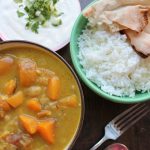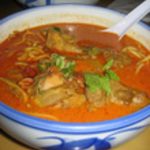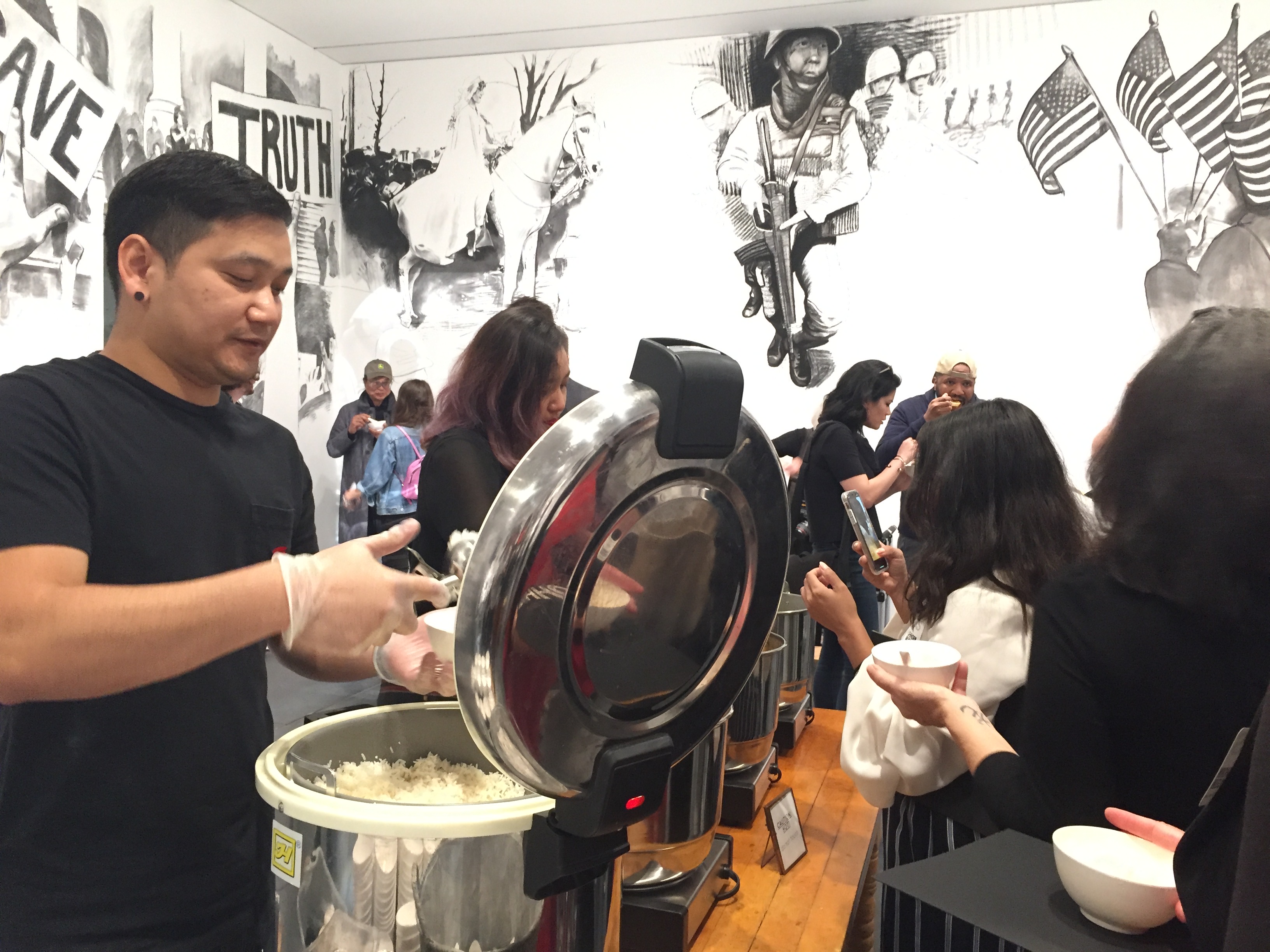
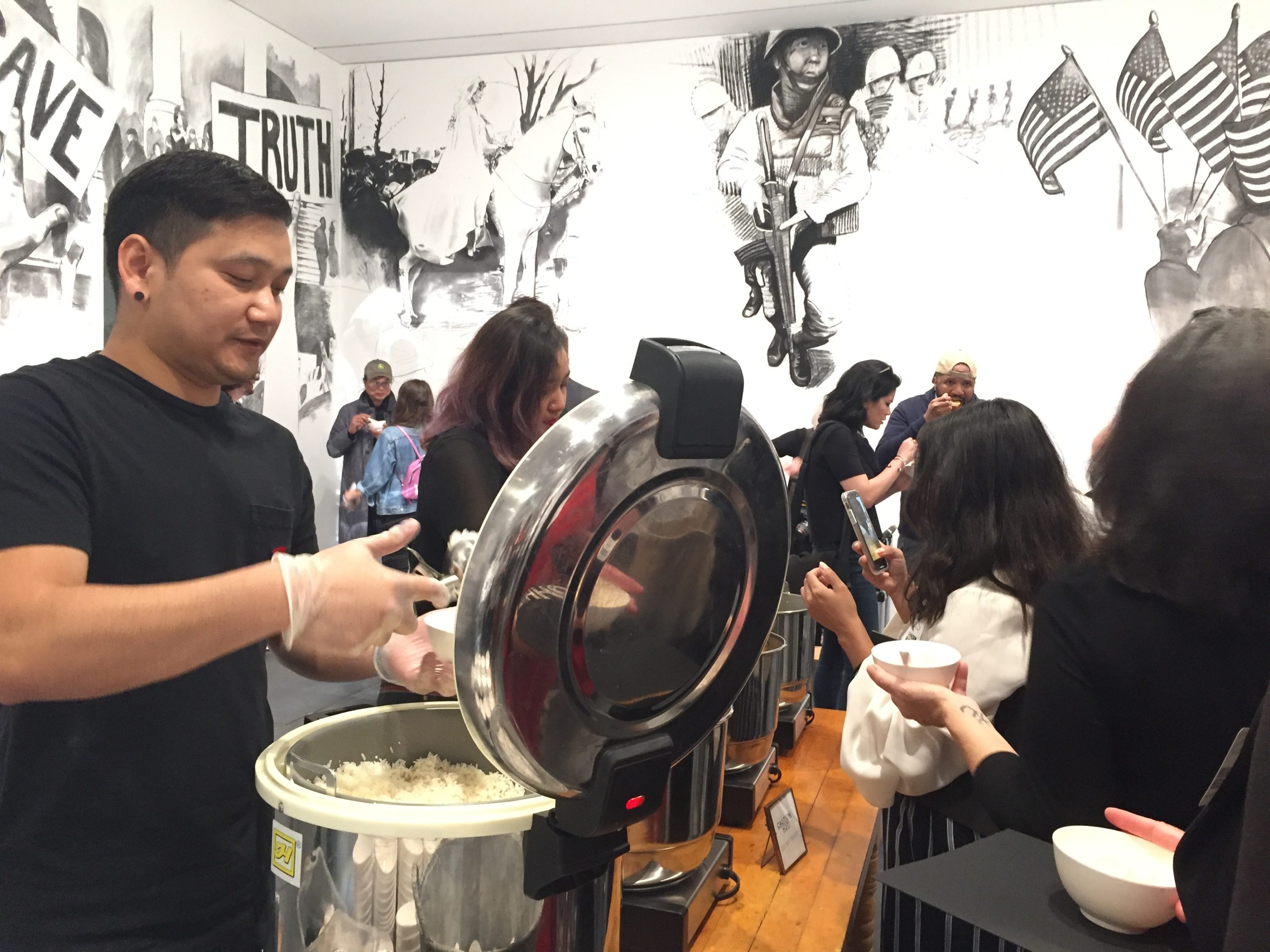
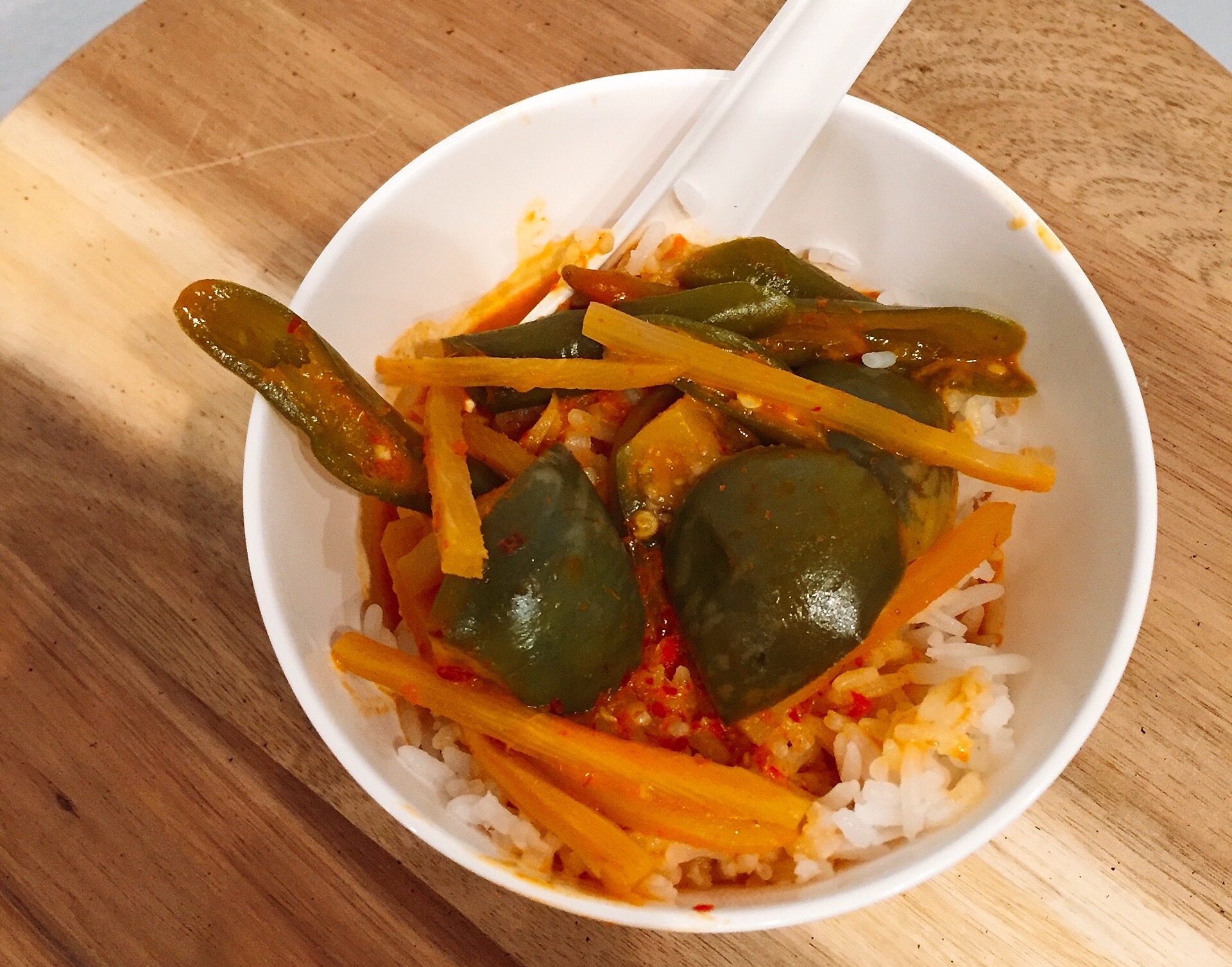
Every Thursday to Sunday until the end of July, servers from the restaurant Beau Thai will dish out 42 cups of rice and 21 liters of curry to visitors at a new Hirshhorn exhibit, (who’s afraid of red, yellow, and green). It’s the museum’s first time exhibiting work from contemporary artist Rirkrit Tiravanija—and the first time they’ve allowed food to be served in the gallery.
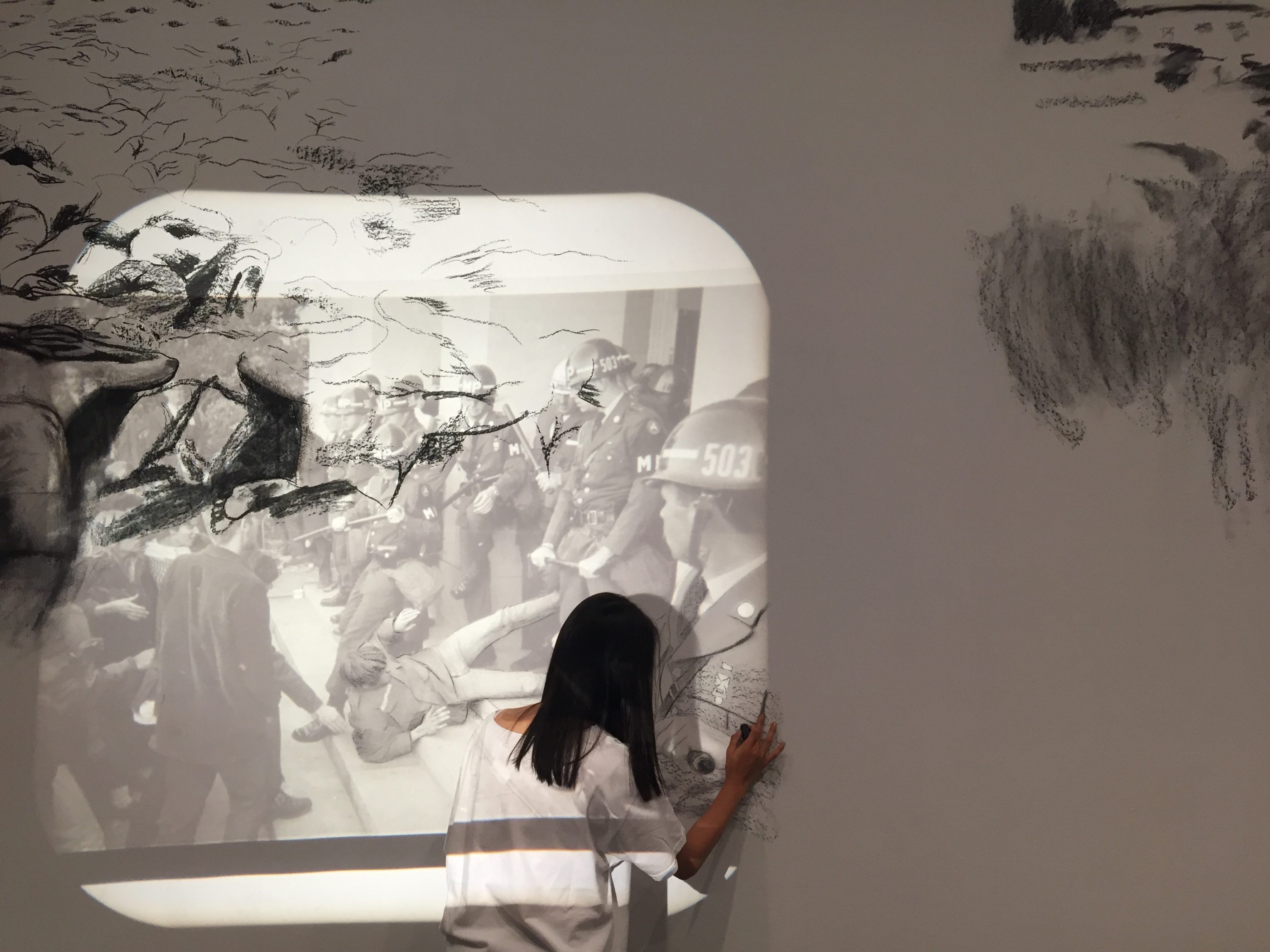
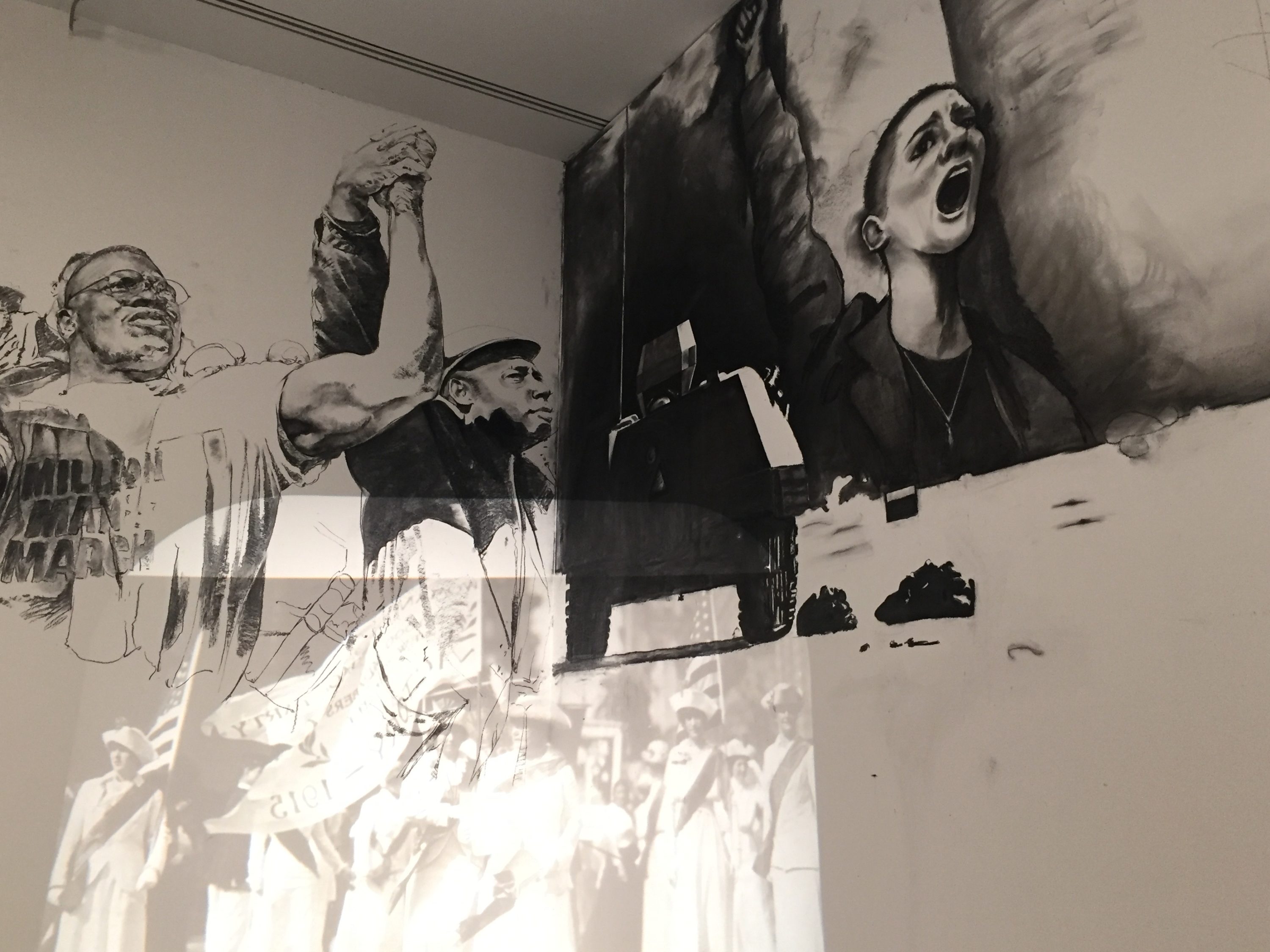
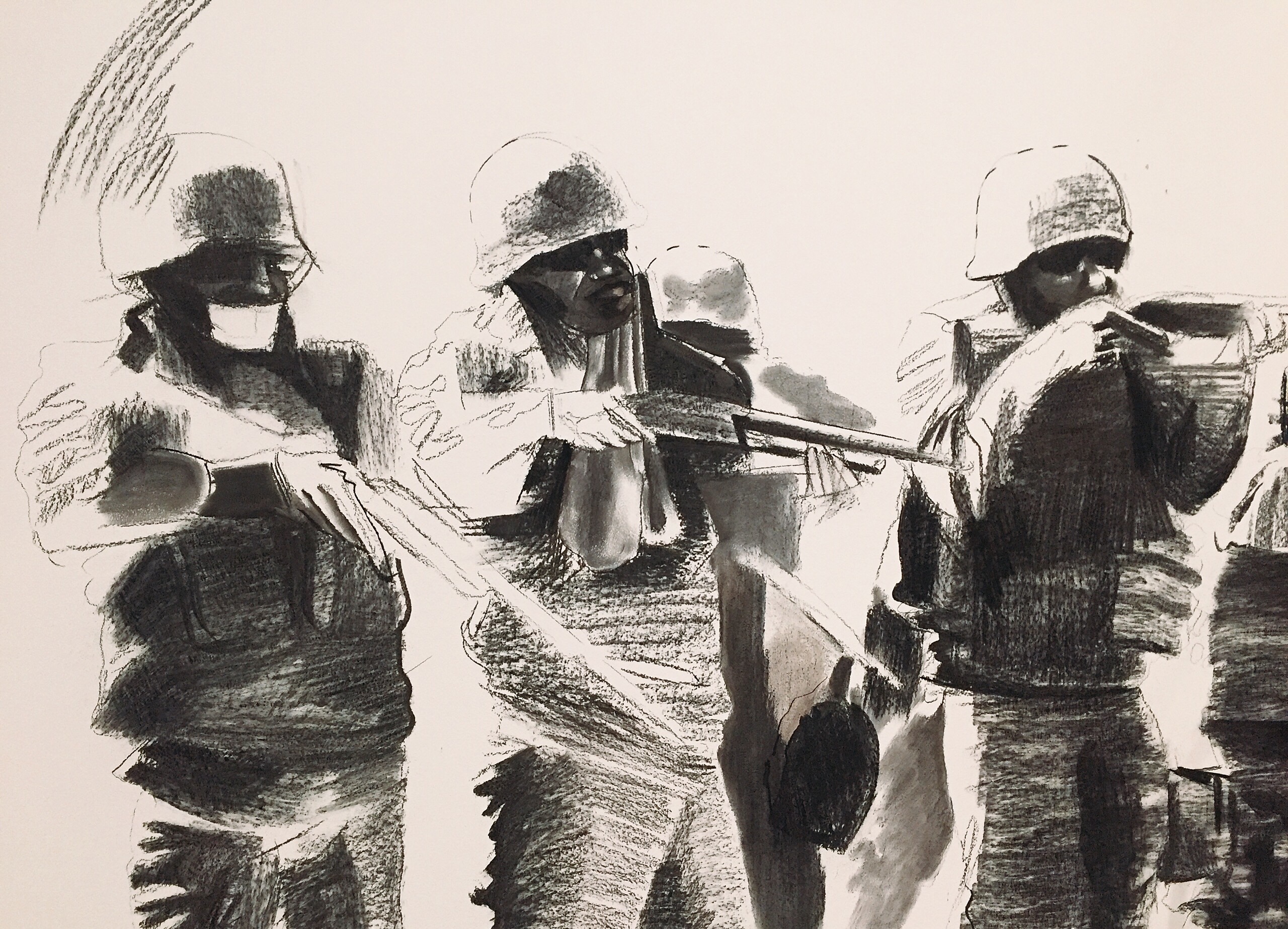
While they feast on the red, yellow and green curries, served over rice, visitors will watch as artists add to an expansive mural. Drawn directly on the gallery walls, the images portray the 2009-2010 anti-government demonstrations that took place in Bangkok, interspersed with American protest scenes, including the 2018 March for Our Lives, 1995 Million Man March and 1915 suffragettes. Empty curry bowls must be deposited in their designated bins before gallery goers wander into a side room to watch a series of documentary shorts curated by Thai filmmaker Apichatpong Weerasethakul and, in another room, George Englund’s 1963 film The Ugly American, starring Marlon Brando. (Tiravanija, who saw the movie as a child, views the film as a reference point.)
Born in Argentina and raised in Thailand, Ethiopia, and Canada, Tiravanija creates works that chip away at the traditional, reverence-laden consumption of art, where the viewer is meant to be at a distance from the object they seek to understand. Here, visitors are invited to interact with and literally consume the art—in the form of curry, yes, but also the conversations that seem inevitable when stuck in a room of strangers eating sinus-opening dishes surrounded by violent reminders of the not-so-distant past. (And if you visit on non-curry days, the knowledge that it exists can nevertheless act as a conversation starter, no?)
In the original iteration of (who’s afraid of red, yellow and green), which first appeared in Bangkok in 2010, Tiravanija did the cooking, using propane burners and open flames. “That volatility in terms of imagery was important at the time,” he says. But just as the mural grows and changes over the span of the exhibit, so too has Tiravanija’s work. “Now we are in the Smithsonian Institution and it’s completely governmental so we have to adjust the space around the bureaucracy of it.”
Enter Beau Thai, whose owners Aschara Vigsittaboot, Ralph Brabham, and Drew Porterfield responded to the Hirshhorn’s proposal request about this time last year—and who happens to be the favorite Thai restaurant of media and performance art curator Mark Beasley. The red and green curries contain shrimp paste and fish sauce, while the yellow is vegan. (Ingredients are listed at the opening of the exhibit, along with an allergy disclaimer.)
“The artist sent us an ingredient list and they pretty much meshed with what we were already preparing,” explains Brabham. Meaning if you miss out on the Hirshhorn’s curry, you can go order it at the one of the Beau Thai locations. One notable difference, though: Thai eggplant are used for the exhibit curries (rather than purple Chinese eggplant typically used at the restaurants), sourced via weekly runs to an “obscure market” in northern Virginia, Brabham says.
Of course, the combination of food and such an immersive art experience are bound to attract the viewer interested more in Instagram than the message. But there’s a usefulness to the idea of art being viral, says Tiravanija. After all, it brings people together.
“I hope that one can still see that one needs to have a real experience with it,” he says. “I think that’s what we tend to forget; that we’re paying too much attention to the thing that is just capturing the experience rather than experiencing the experience. So I hope that they’ll have to put that phone away and actually eat.”
About 20 local artists, working in shifts, will gradually add to the mural spanning the walls of the food hall, using an overhead projector (for all you ‘90s students, the kind with transparencies on which you embarrassingly scribbled incorrect math equations) to achieve the correct scale, then turning it off and filling in the lines by their own skills. “Everybody has different styles, shading, textures,” explains one of the artists, Summer Clinkscale. “Some people are graphic artists, some are portrait artists, painters, performance artists even.”
This adds to the collaborative nature of the exhibit as a whole. “We walk in and there will be a piece to start and then someone else might finish it,” says Clinkscale. “It’s kind of a communal thing—like we are one here, nobody owns any drawings.”
Even you can add to the mural—that is, once you’ve wiped your sniffling nose and sipped on some water, especially if you chose the spiciest red curry.
“The more people participate, the better,” says Tiravanija. “So anything goes.”
(who’s afraid of red, yellow, and green) is on view at the Hirshhorn through July 24, 10 a.m.-5:30 p.m. Food is served Thursday–Sunday, 11:45 a.m.-1:30 p.m., or until supplies last. Admission and food are free.