 Jenny Gathright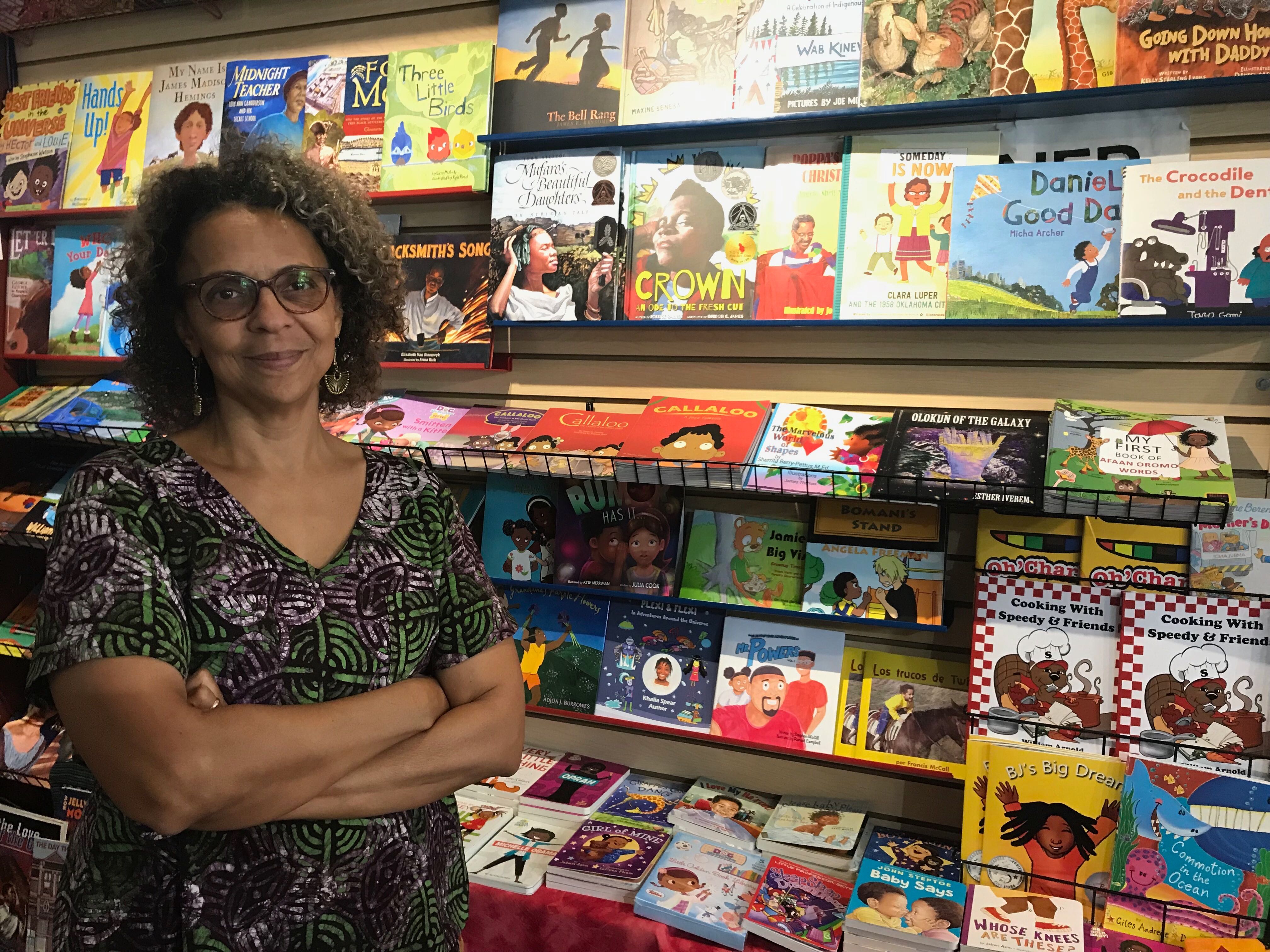
There’s a lobbying campaign underway to grant hundreds of thousands of dollars in tax relief—not for a tech giant, but for a small bookstore and cafe near Howard University.
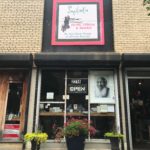
Sankofa Video Books & Cafe says it is under threat from the city’s recent economic growth and is seeking a 10-year property tax abatement from the D.C. Council.
“The city absolutely has the responsibility of making sure we can be here,” says Sankofa co-owner Shirikiana Gerima. “And by ‘we’ I don’t mean just Sankofa—I mean the black population, the colored population of D.C.”
Another bill would grant the same kind of tax relief to Players Lounge, a restaurant and bar in Southeast. Both establishments have been around for decades, and many argue they’re not merely presences in their neighborhoods, but rather integral fixtures of them.
While the District regularly uses tax breaks to attract or retain large institutions, offering millions of dollars in incentives for developers and large companies, it has done so far less frequently for small neighborhood shops and restaurants.
But as longtime businesses struggle with rising property values—and therefore rising rents and property taxes—lawmakers will likely have to consider how to relieve the pressure on small establishments.
‘I haven’t cried uncle until recently’
Shirikiana Gerima and her husband, fellow filmmaker Haile Gerima, bought their storefront on Georgia Avenue in 1997. Just down the street from Howard University, it served as the home for their film production company, Mypheduh Films, before expanding into a popular store that sold films and books by and about people of African descent. Over the years, it became a hub for black intellectual life.
“We quickly saw how important it was for people to have a place to talk about things,” Gerima says. “We wanted a place where producers of culture—authors—could come and see their readership eye-to-eye.”
Across the city in Congress Heights, Players Lounge has been a gathering place for Ward 8 politicos and businesspeople for 25 years, and a source of support for the community. One neighborhood activist told the Washington City Paper in 1995 that its owners would lend neighbors money for rent and utilities. Marion Barry celebrated his 76th birthday there.
The owners of the Players Lounge, Steve and Georgene Thompson, did not respond to a request for comment.
Both Sankofa and Players Lounge are asking for support in a city that has seen a shift in its economy from smaller businesses to larger ones. According to Census data, the number of D.C. businesses with 5 to 9 employees fell 24 percent between 1998 and 2012. And in that same period of time, the number of businesses with 250 or more employees rose dramatically, by 50 percent.
In Shaw, median home prices have skyrocketed from $147,000 in 1995 to $846,000 in 2016. High-end developments like The Shay and Atlantic Plumbing have moved in. And many longtime businesses have had to get creative to survive.
Gerima says the threat to her business, which employs three part-time workers and one full-time worker, is a rising tax bill. She owes $30,000 in property taxes this year, and D.C.’s CFO projects that it will grow to $36,000 dollars by 2022. “It has been going up and up and up, and I haven’t really cried uncle until recently, because it’s just not fair,” she says.
So she sought help from Ward 1 Councilmember Brianne Nadeau, who responded by introducing a legislative tax abatement specifically targeted at the business (in exchange, Sankofa would have to ensure that more than half of their employees reside in D.C., and more than 30 percent of their District resident employees live in Ward 1.)
Sankofa is asking residents to testify in favor of the measure at a June 3 hearing or to write letters of support.
D.C.’s Chief Financial Office valued the abatement for Sankofa at $415,346 over a 10-year period. It also found that the business does not need a tax abatement to stay afloat (the office of has not yet done an analysis for Players Lounge).
A spokesperson for the CFO told DCist over email that his office only provides financial information for tax abatement. It leaves the decision of whether any specific abatement is good policy up to the D.C. Council.
How does D.C. usually use tax abatements?
Lawmakers typically offer tax abatements to help lock developers, businesses, and nonprofits into certain behaviors: Of the nearly 70 active tax incentives written into D.C.’s tax code, many went to developers who pledged to create a certain amount of affordable housing or employ a certain number of D.C. residents.
(D.C. currently faces a decision about how to enforce those stipulations: The Line Hotel failed to meet hiring requirements it promised in exchange for a 20-year, $46 million dollar tax abatement. On Tuesday, the D.C. Council voted to redirect money from The Line Hotel’s abatement to public housing repairs.)
Politicians also use them to lure high-profile companies to town or convince businesses to stay. At the high end, D.C. offered Amazon more than $480 million in tax abatements and exemptions, but it has also dangled millions in deals to companies like the Advisory Board and Living Social.
And tax exemptions have been used to compensate for times when the market produces unjust outcomes, like the relief offered to grocery stores that locate in food deserts.
But D.C.’s chief financial officer has raised questions about whether these incentives actually pay off.
The CFO found in a report published last year that, despite giving out $29 million in supermarket tax incentives over an eight-year period, the city failed to attract grocery stores to Wards 7 and 8, which still have just three full-service supermarkets between them (though more are now on the way). It also questioned whether it had been worthwhile for the city to spend $184 million on incentives for high-tech companies. The D.C. Council voted Tuesday to significantly reduce the program.
Deputy Mayor for Economic Planning and Development Brian Kenner has called such incentives programs “vital” for the city.
Using tax breaks as a tool to support mom-and-pop businesses, many of which say they’re struggling to stay afloat in an increasingly expensive city, is much less common. But it’s not unheard of.
One exception is an IHOP franchise in Congress Heights, which opened in 2010 in a neighborhood where sit-down restaurants were—and still are—scarce.
“Other than the Players Lounge, you couldn’t really go anywhere and sit down and be served a meal at a table anywhere in Ward 8 when we started,” says owner Tyoka Jackson.
But even with a tax abatement, it operates at a loss and is subsidized by a profitable IHOP in Columbia Heights. Jackson has now asked for relief for that location, too, and the measure was introduced by Ward 1 Councilmember Brianne Nadeau earlier this year (the D.C. Council is still considering it).

Is it good policy?
Both Sankofa and Players Lounge “mean something for the customers,” says Yesim Sayin Taylor, the executive director of the D.C. Policy Center. “I think that’s one of the reasons councilmembers are convinced to advance legislation.”
But Taylor says such tax abatements would not be meaningful for the broader business community.
“In fact, they’re a bad signal,” she says, arguing that the policy tells small business owners that they need to have the right contacts and know their way around the D.C. bureaucracy if they want help.
Ed Lazere, executive director of the D.C. Fiscal Policy Institute, is also critical of legislative abatements for individual businesses.
“If established businesses in the city, black-owned businesses in the city, are struggling because of gentrification and rising rents, we should have a programmatic solution,” Lazere says. “And if we just do one-offs, maybe that delays the time we could use to think about a systematic solution.”
But local business advocates defend the policy, even though they agree it does not go far enough to solve problems that they, too, believe are system-wide.
Raj Aggarwal, who chairs the board of small business association Think Local First, thinks tax abatements can work for small retailers, and they have a clear payoff. Dollars spent at these kinds of establishments circulate back through the local economy, he said, and local businesses often give back to their communities in direct ways.
Mark Lee, a local small business advocate and contributing columnist for the Washington Blade, said the tax abatements for Sankofa and Players Lounge “deserve our support.”
But he would rather D.C. focus on what he sees as the “bigger picture”: lowering taxes on businesses and loosening regulations. He thinks these policies would ease the burdens on small retailers and restaurants — and would be more impactful than one-off bills. Lee warned that national chain stores, which can better weather changes in business expenses, could overtake the city’s small establishments, which would be “a loss for the cultural character of our city.”
That’s similar to how Gerima sees Sankofa’s role: as part D.C.’s cultural fabric. She also emphasizes the public services the business provides, including keeping the cost of renting space for events and meetings low, or even free.
“If they were a nonprofit, the people renting the space from them would get a tax write-off,” Aggarwal says, adding that Sankofa itself would be exempt from certain taxes. “You could say the tax abatement in this sense is making up for the limitations of being a [for-profit company] versus a 501(c)3.”
Gerima says she needs more breathing room to fulfill the business’s potential. She is hoping that money freed up by the tax abatement would allow her to add a full-time staff member and more programming, like a regular outdoor movie series, additional classes for aspiring filmmakers, and programs with local schools.
“You haven’t seen what Sankofa can do yet,” she says, adding that her ability to maintain a small profit margin is a sign that she is worthy of the city’s investment.
Kenner, the deputy mayor for economic planning and development, declined to comment on the use of tax abatements for small retailers and restaurants.
Taylor says the required tax abatement analysis (which tells the D.C. Council whether a project would be able to survive without a tax subsidy) is useful in cases where a new development would provide services in a neighborhood where it’s difficult to attract investment.
But the CFO’s analysis, Taylor says, makes less sense for an existing business in a gentrifying neighborhood. The CFO deems tax abatements necessary only when a business would be unprofitable without one.
“Is it a good thing to pass that test or fail that test?” she asked.
‘We certainly may hear from others’
For Gerima, this is about more than just business.
“My responsibility has been, over the years, to help black people understand that they don’t have to carry the weight of being feared by other people all the time,” Gerima says. “That there is a place where you can just come, relax, laugh the way you laugh, joke the way you joke, dress the way you dress, and read about other people who have thought about this a long time.”
And Nadeau thinks it is important for Sankofa to continue creating that space, especially for those who have long lived in Shaw and Pleasant Plains—an area that has been at the center of some of the most high-profile clashes over gentrification in recent months.
“Sankofa is a business that’s in a corridor that is rapidly changing, in a neighborhood where [longtime] residents say to me there’s all these new things coming but they’re not being built for them,” says Nadeau.
Last year, D.C. instituted a tax credit for retailers who generate less than $2.5 million a year (Gerima says she has applied for the program through the city’s Office of Tax and Revenue). The city’s Great Streets program gives small businesses grants of up to $50,000 dollars to make improvements to their properties. And Nadeau says the city government is working on more comprehensive solutions.
But in the meantime, she argues that “we need more tools for preserving small businesses as neighborhoods gentrify,” and tax relief is one option when a business needs immediate help (so far, she’s only introduced two legislative tax abatements—the Columbia Heights IHOP and Sankofa).
Ward 8 Councilmember Trayon White and At-large Councilmember Robert White, who co-introduced the abatement for Player’s Lounge, both declined to comment.
Jackson, the IHOP owner, says he thinks about the changes he’s anticipating in Congress Heights every time he looks at profit and loss statements for his restaurant. A redevelopment of the historic St. Elizabeth’s campus includes the recently-opened Entertainment and Sports Arena and will later include about 1,300 residential units.
“We know that we were early and we laid the groundwork,” Jackson says.
It’s not clear how many other small business have asked lawmakers for tax incentives, and whether the measures for Sankofa and Players Lounge will inspire more requests.
Nadeau says one other business has approached her office about a tax abatement. She says her first step is to make sure businesses know about existing tax credits and programs.
But she acknowledges that “it’s a larger issue, so we certainly may hear from others.”