 Jordan Pascale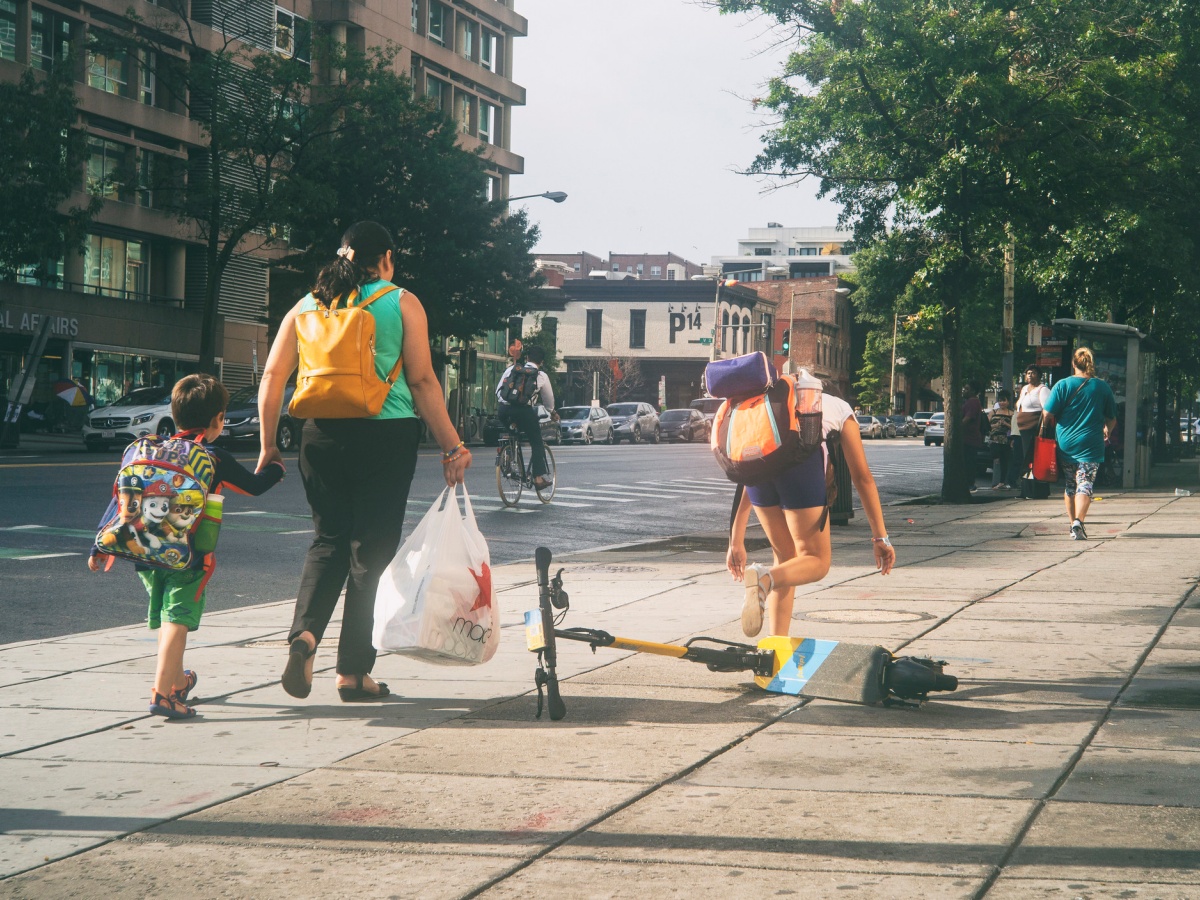
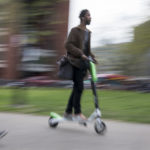
Electric scooters have grown in popularity across the Washington region and are posing nearly identical problems for many local governments trying to regulate the new technology.
The Metropolitan Washington Council of Governments and the Transportation Planning Board hosted a workshop Thursday where localities shared their successes and challenges. D.C., Montgomery County, Arlington County, Alexandria, and others are all in a pilot phase of the technology.
Jim Larsen, of Arlington County Commuter Series, said he never expected to see electric scooters on Arlington streets.
“This is the most challenging, exciting, interesting, and perhaps frustrating thing I’ve ever done in my life,” said Larsen, who has worked in transportation for 45 years.
Among the problems facing officials: how to keep both users and non-users safe, where to park them, education for new users, and how to regulate and enforce rules surrounding scooter use.
Safety
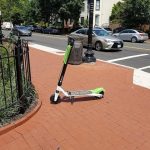
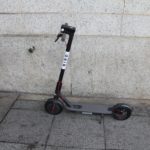
The scooters often block sidewalks if parked haphazardly, causing problems and creating a fall hazard for people who are blind or have visual impairments. They also can block the path for people using wheelchairs and other mobility devices.
And on the same morning of the event to discuss scooter safety and management, a Skip scooter—pretty publicly—caught fire.
We currently have no reason to believe that this affects any other vehicles in our fleet. We are investigating all potential causes, including foul play. We will share as we learn more.
— Skip (@SkipScooters) May 30, 2019
One person was killed when they were struck by a car while riding a scooter in D.C., and several injuries have been reported across the region.
Arlington has had 28 crashes during nearly 250,000 scooter trips.
Sandra Brecher of Montgomery County Commuter Services says that safety and education are important, but there is too much focus on scooters.
“We kill 40,000 people on the roads a year in this nation, and we think that’s ok,” Brecher said. “So with safety on a scooter … I think there’s a disconnect (on how bad it is).”
Parking Solutions
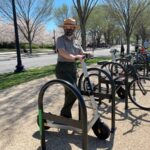
Last year, Arlington introduced seven on-street scooter parking spots near Metro stations to help keep sidewalks orderly. But Larsen says riders aren’t using them as much as city officials hoped.
“This is a whole new evolving technology, so this is another thing we’re trying to introduce,” Larsen said. “We need to do more marketing of it, maybe get operators more involved” to create incentives to park in designated spots.
Baltimore officials say they had success with large scooter parking corrals at Orioles games.
D.C. is studying the best places to install scooter parking on streets in the coming months. Meanwhile a private company is creating docked locations for scooters to be parked and charged.
Education
Montgomery County’s Brecher says that not long after the scooter program began, she was in D.C. and watched a middle-aged man inspect a scooter. He said he was curious about using a scooter, but too nervous to try it in a busy environment.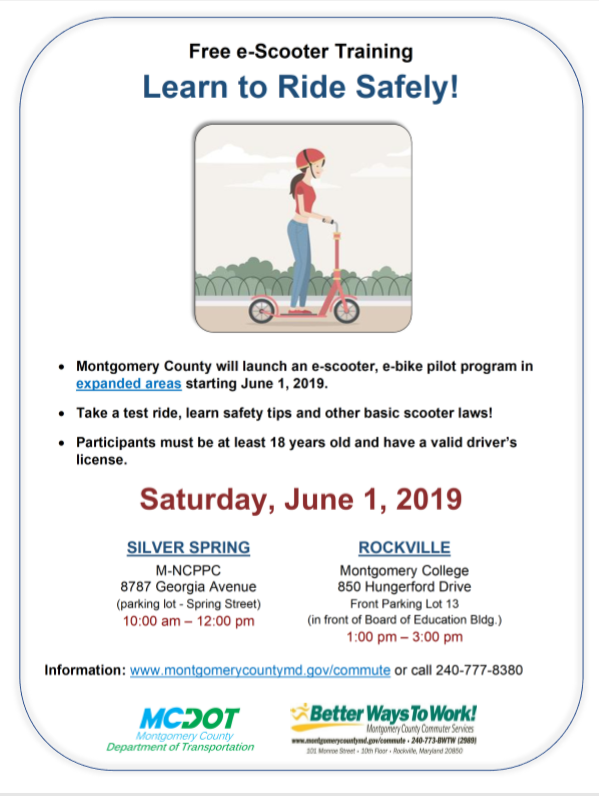
That gave her an idea: a training course to teach people to ride. So as Montgomery County prepares to expand its scooter program to a larger area of the county, they’re hosting two free training sessions on Saturday in Rockville and Silver Spring.
Other officials say companies need to take a bigger role in educating riders on etiquette and rules of the road. Part of the problem for riders is that rules vary across jurisdictions.
Enforcement, Regulations And Where To Ride.
Sherada Strasmore, a micro-mobility planner with the District Department of Transportation, says that while they can be fun, scooters are real-world transportation.
“They’re still regulated as toys,” Strasmore said. “They need to have batteries that can withstand the sun.”
One particularly tough area for D.C. is zones that are off limits to riders.
Federal lands, the U.S. Capitol and National Park Service areas have all prohibited scooter riders, but many devices still end up there.
The Capitol Police recently sent a letter to companies saying they would seize vehicles and fine companies engaging in commerce on federal land.
And, in Ward 7 and 8, companies are required to have at least six scooters available by 6 a.m. Those rules aren’t always followed.
In Montgomery County, scooter zones are expanding on June 1—but not in popular areas like Bethesda and Friendship Heights. Brecher said that’s because there’s too much construction and not enough pedestrian access available right now. Additionally, a few neighborhoods, including like Garrett Park and Washington Grove, wanted nothing to do with the scooters.
This story originally appeared on WAMU.