If you think accessorizing for doggo is a sign of 21st century excess, consider that 5000 years ago, the Japanese were buried with their dogs. Animals are part of every culture’s art, but the Japanese have a unique relationship with the natural world. The fantastical and often functional works that result are on display in the enormous, delightful exhibition The Life of Animals in Japanese Art.
Taking up 18,000 square feet on the gallery’s ground floor, the exhibit is made up of some 300 objects currently on display (a number of pieces will be swapped in on July 13). The show is organized by themes, each of which juxtaposes the old and the new.
Before you even enter the exhibition the gallery concourse just outside the East Building auditorium demonstrates this contrast. One side is festooned with a series of 19th century scrolls by Utagawa Kuniyoshi that depict the signs of the Chinese zodiac. On the other end of the floor, an interactive digital video loop from the art collective teamLab is displayed on eight 55” monitors.
You may need to wander around the exhibit for a while before other connections come into focus. An ivory fox not even three inches high represents a coquettish animal that threatens to distract young monks from their studies. Several galleries later, the photographs of Miyazaki Manabu, who rigged a motion-triggered camera to make hilarious portraits of wildlife, echoes this storied mischief.
While Western art may depict animals in supporting roles—like a faithful Jack Russell at its master’s feet or the big-eyed fishes that frolic in Tintoretto’s “Creation of the Animals”—the Japanese stand out in their dedication to the animal kingdom, featuring them prominently in so many aspects of their art and life.
Shinsuke Sugiyama, the Japanese ambassador to the United States, compares this whimsy to another of his country’s signature exports: sumo wrestling.
“Sumo is not just a transnational sport,” he says, ”but a piece of traditional culture filled with beauty, history, and hidden meaning”—the kind of meaning that goes into Tani Bunchō’s 1807 scroll “Tiger Family and Magpies,” meant to hang during the year of the tiger. The depiction of magpies, which mate for life, emphasize a focus on the family.

What makes Japan’s relationship with animals different from, say, America’s relationship with Bambi? Masatomo Kawai, curator of the Chiba City Museum of Art, and co-curator of this exhibition, explained through a translator that while other cultures do prominently feature animals in their art, “for Western cultures there’s been more of a tendency to conquer or subdue nature.”
By contrast, the Japanese coexist with nature. And much of that attitude comes from religion.
One fascinating section demonstrates that relationship with Buddhist and Shinto art. In the vast 18th century scroll “Shaka Passing into Nirvana,” by an unknown artist, you can see fish and even insects coming to witness the magnificent sight of Siddhartha Gautama transforming into the Buddha, his skin turning gold. As Kawai notes, this shows that the Japanese have respect for creatures of all sizes. Old and new are again juxtaposed in the side-by-side interpretations of a deer bearing symbols of Kasuga deities.
An ambitious film series of some 30 titles running from June 13 to July 18 demonstrates the varieties of animal experience in Japanese cinema, including a double bill of the original Godzilla and Mothra (July 5), the 1968 ghost story Kuroneko (Black Cat) (July 12) and the 2005 operetta Princess Racoon (July 27) from quirky director Seijun Suzuki.
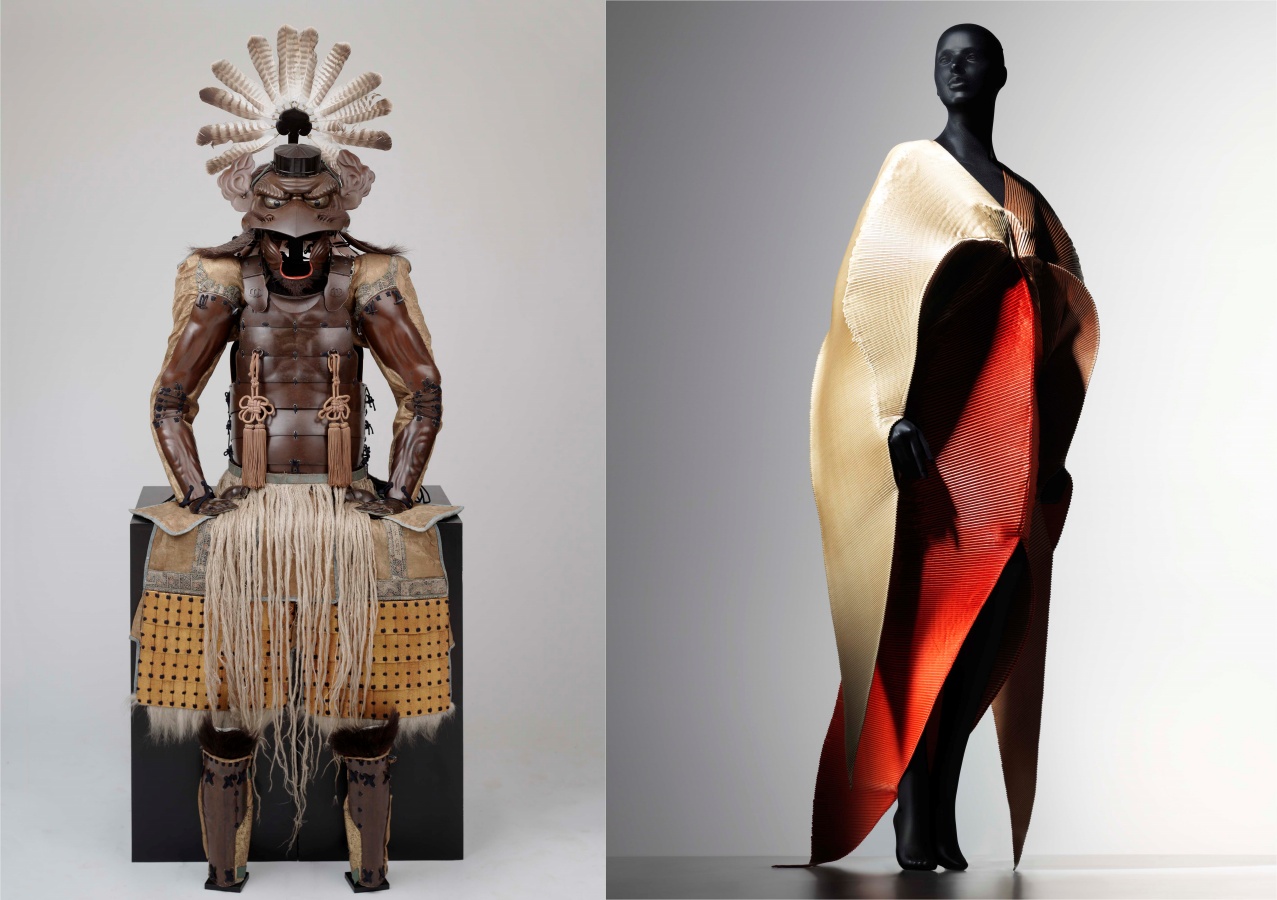
But why, you may wonder, are samurai movies such as Akira Kurosawa’s masterpieces Seven Samurai (July 7) and Ran (June 30 and July 3) on the program? Because samurai armor made use of animal imagery for strength and intimidation as well as for decoration.
Fashion designer Issey Miyake was similarly been inspired by nature, transforming the colors of a swallow’s plumage, for example, into a strikingly modern cape.
The Life of Animals in Japanese Art was co-curated by Masatomo Kawai with Robert T. Singer, curator and head of the department of Japanese Art and the Los Angeles County Museum of Art. Singer began to develop the exhibit more than a decade ago, when a LACMA visitor told him admiringly, “You’re not a curator, you’re a zookeeper!” Drawing from a wealth of private and public collections, and featuring pieces that have never been shown outside Japan before, this exhibit may be your new favorite zoo.
The Life of Animals in Japanese Art is on display through August 18 at the National Gallery of Art, East Building Concourse. Rotation B, which switches out numerous pieces, begins on July 13.