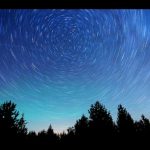
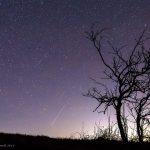
Tonight’s the night for peak Perseids.
The once-a-year summer meteor shower is reaching its zenith, and we’re in for a cosmic spectacle.
The Perseids meteor shower happens every year when particles from Swift-Tuttle—a massive, 16-mile-wide comet also known as 109P—enter the earth’s atmosphere at a whopping 37 miles per second, creating a fiery show in the sky.
What would it be like to watch a meteor shower… from space?
As we get ready for the #Perseids' peak tonight, check out these shooting stars astronauts have spotted in past years from the @Space_Station: pic.twitter.com/KzLRXYJS9j
— NASA Marshall (@NASA_Marshall) August 12, 2019
It’s a stargazing favorite in the northern hemisphere because it happens on warm summer nights from July 17 to August 24, with a peak around August 12 or 13, depending on the year. At the height of it all, you can catch anywhere from 50-75 meteors per hour provided the right conditions, according to the American Meteorological Society.
Perseid meteors are remarkably bright, leaving long-lasting trails of light—or afterglows—in the sky, according to astronomy blogger Dave Samuhel. The color of a shooting star depends on its chemical composition. For example, a meteor made of calcium will have a purple-ish hue, while one made of sodium will be closer to orange.
The Perseids got their name from the Perseus constellation—which is where the meteor shower appears in the sky. In case you were wondering (we were), it’s pronounced pur-see-id.
The good news is that you won’t need any special equipment to check it out—the Perseids are visible to the naked eye. In fact, NASA recommends you don’t bring a telescope of binoculars. What’s more important is to get as far as possible from any source of light that could dim the show, whether it’s light pollution coming from the city or your cell phone screen.
The bad news is that the moon will be 94 percent full tonight, per the American Meteorological Society, and…well there’s really nothing you can do about that. There’s also a chance the weather gods will be against us, too. The District is looking at partly cloudy conditions on Monday night, according to predictions from AccuWeather.
But barring cloudy weather, you’re in for a good time. Just find a comfortable spot to lay down, and look up to the sky. The optimal time to check out the Perseids tonight is between 2 a.m. and dawn, according to NASA. If you’re not much of a night owl, you can still catch the fireworks as soon as its dark out around 9 p.m., but they won’t be as intense.
For optimal watching conditions, Capital Weather Gang recommends driving out to Shenandoah National Park. But if that’s too far out, you could try to find some darkness in Rock Creek Park. Last week, the National Park Service hosted a stargazing event by the Nature Center, in the field south of Military and Glover roads NW.
And if the stars really don’t align and you’re stuck with a cloudy sky, there’s always NASA’s live Perseids broadcast, which starts at 9 p.m. on Facebook.