Hundreds of activists are expected to gather downtown on Wednesday afternoon to protest the imminent closure of D.C.’s only halfway house without a planned replacement facility for men returning from federal prison.
The rally will be held outside the headquarters of the Douglas Development Corporation, at the intersection of 7th and H streets NW, in D.C.’s busy Penn Quarter neighborhood.
Transit officials warned that the demonstration could create major traffic delays in the area due to planned road closures. Several bus routes could be impacted by the protest including route 70, 74, 79, 80, X2, X9, and P6, according to a Metro press release.
Major bus delays possible this afternoon due to planned demonstration in area of Gallery Place https://t.co/wFzTKW0Jzc #wmata
— Metro Forward (@wmata) August 14, 2019
Rally organizers are accusing Douglas Jemal, the founder and president of Douglas Development, of reneging on a promise to lease one of his properties for the creation of a new halfway house. Jemal, an influential local developer, reversed course on a letter of intent to lease his building at 3400 New York Avenue NE in December.
“We think it’s catastrophic,” says Ronald Moten, a longtime anti-violence activist and a leader of the #DontMuteDC movement. “It’s going to be a detriment to our community and all eight wards.” Moten says that advocates are hoping to change Jemal’s mind by picketing starting at 4 p.m.. “We’re going to be a thorn in his side from this day on,” Moten says.
In a petition supporting the new halfway house, advocates say that sending returning citizens to halfway houses outside D.C. will be detrimental to their reentry. “It will set them up for failure. They will be forced to wander their former DC neighborhoods with no place to live and no opportunities to connect to legal ways to survive,” the petition reads.
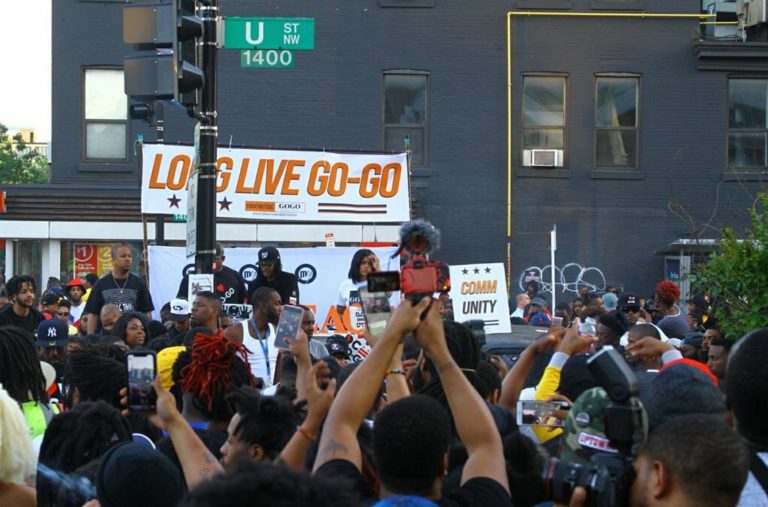
The protest will be followed by a performance by local go-go collective TCB. The #DontMuteDC movement started last April when Shaw’s MetroPCS store was ordered to stop playing go-go music, a genre created in the District and inextricable from its history as a black city. Since then, the movement has morphed into a broad coalition of activists who advocate around a variety of issues related to gentrification in the District. Last week, the movement held a similar rally to protest Douglas Development that drew hundreds of people.
D.C.’s current re-entry facility, which is managed by the company Hope Village, is scheduled to stop operating on October 31. Last year, the company lost its contract with the U.S. Bureau of Prisons following complaints about services and security at the facility.
In 2016, D.C. Corrections Information Council put out a report that claimed that Hope Village was making it harder for inmates to search for jobs by prohibiting internet access and refusing to provide transportation to residents. Three years earlier, a CIC report found that some inmates would rather spend their remaining sentence in prison rather than re-entering society through Hope Village.
Last year, the federal government awarded a five-year contract to a non-profit called Core DC to open a re-entry facility near the U.S. Arboretum in Northeast D.C. But the plan was virulently opposed by neighborhood activists and Ward 5 councilmember Kenyan McDuffie, though the councilmember has since changed his position.
A receptionist at Douglas Development corporation said that Jemal was not immediately available for comment on Wednesday afternoon.