Martin Austermuhle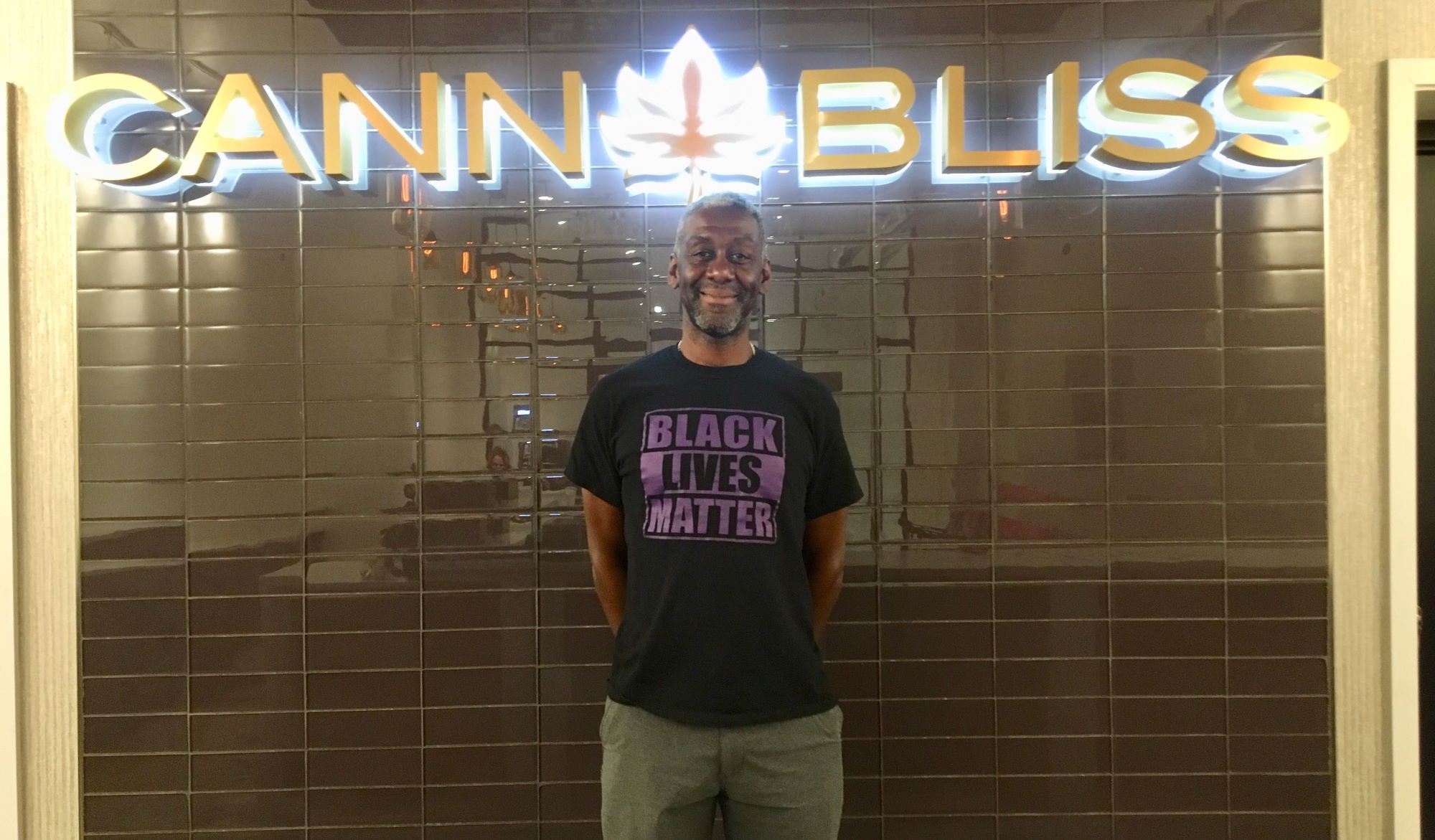
You wouldn’t be faulted for mistaking Cannabliss for an Apple store. There are sleek sales counters, sparsely decorated walls, and just about everything is a shade of gray. Along one wall, there are three large TV screens with iPads underneath.
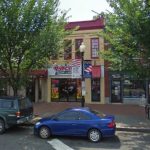
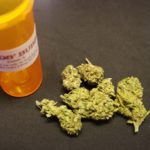
“This area right here is where we’re going to highlight certain products. So there will be Cloud 9, Chill, and Calm,” says Canabliss founder Norbert Pickett, listing some of the varieties of medical marijuana he’ll be selling. The dispensary opened this week on Sheriff Road in the Deanwood neighborhood of Ward 7.
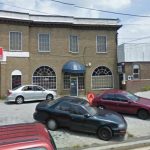
Pickett’s dispensary is the city’s seventh since sales started in 2013. And it’s the second that has opened east of the Anacostia River this year as part of an effort to better serve patients who until now have had to travel across town to get access to their medicine. Of the 6,079 registered medical marijuana patients in D.C., almost 20 percent live in Wards 7 and 8.
“I’m trying to provide medical services to underserved communities, communities that have been neglected by the city, and also provide opportunities to minorities and people of color,” Pickett says.
Those underserved neighborhoods are predominantly black and low-income, and have long suffered from a lack of access to basic amenities and services, like supermarkets and hospitals—and medical marijuana dispensaries.
“They were having to use Uber, Lyft, and other means of transportation to go get their meds, and consequently that’s an additional expense,” says Linda Mercado Greene, who opened Anacostia Organics, the other dispensary located east of the river, earlier this year. “It became very costly for them, so many of them returned to the black market.”
Solution To Lack Of Access
In recent years, D.C. officials took a proactive approach to addressing the problem. They increased the number of legal marijuana dispensaries allowed in the city from five to seven, but required that the two newest facilities be located east of the Anacostia River.
Now that both have opened, it’s not just patients who stand to benefit.
“Everybody I hired on my staff is from Ward 8 and lives in that community,” Greene says.
Legal marijuana is a booming, multi-billion-dollar industry across the country. It’s legal for medical use in almost three-dozen states, and for recreational use in 10. But not everyone has benefited equally from legalization, say advocates.
“Unfortunately there’s far less diversity in the marijuana industry than there should be,” says Karen O’Keefe of the Marijuana Policy Project. “It’s pretty apparent that African Americans are underrepresented in ownership of marijuana businesses. Some states are increasingly looking at what they can do to rectify that.”
But even those efforts have run into obstacles. In Ohio, a judge tossed out a provision requiring that 15 percent of licenses for medical marijuana go to minority-owned groups, saying it was unconstitutional. Maryland has also struggled to ensure that black entrepreneurs can enter the state’s medical marijuana program, which was beset by delays and legal challenges. Illinois took a different approach, though, passing a law that provides financial incentives and assistance to minorities looking to enter the world of legal marijuana.
While D.C.’s law does provide additional points to small and locally owned businesses vying for licenses to run dispensaries or cultivation centers, it doesn’t do much else to promote diversity in the industry. That’s why Pickett thinks the decision to limit the two new licenses to areas east of the Anacostia River was so important. Not only could they better serve patients, but also provide local jobs.
“I’ve hired a lot of people from the community and I’ve given opportunities to people of color to work in this business,” he says. “Some people were crying in interviews when we told them that they got the job. They said, ‘I thought I would never work in cannabis.’”
Motivation Behind A Dispensary
Pickett, 50, is himself new to the marijuana industry. A former basketball player and sports executive turned Hollywood producer, Pickett was rear-ended in 2012, leaving him with severe neck and back injuries that required multiple surgeries to address.
“I was broken in an accident, put together incorrectly, then broken again, then they had to put me together again,” he says. “It’s been quite a process on my body. I was on five different pain pills and muscle relaxers.
A doctor recommended Pickett try medical marijuana, and he says he hasn’t looked back since. It was two years ago that he bought a former liquor store on Sheriff Road in Ward 7 with plans to turn it into the Cannabliss dispensary that opened this week.
“It feels amazing. As a former athlete, the only way I can compare it is to feel like I won a championship. If I was a woman I’d say I feel like I gave birth,” he says.
And along with serving and hiring the area’s black residents, Pickett also says he’ll be opening an urgent care clinic and a special space above the dispensary for low-income marijuana users who have nowhere else to go.
“What it’s there for is for low-income patients, patients that are in Section 8 housing, so they get an opportunity to medicate with cannabis. Because if they do it at home they will lose their government subsidies which pays for their rent,” he says.
Legalizing And Diversifying
Later this year, the D.C. Council is likely to start debating a bill to legalize sales of recreational marijuana. And city officials have already said that diversity will be a big part of their thinking in fostering the new industry: A bill from Mayor Muriel Bowser would require that 60 percent of employees and owners be D.C. residents. A separate bill from At-large D.C. Councilmember David Grosso would direct revenues to communities impacted by the war on drugs, and expunge the records of anyone convicted of a nonviolent marijuana offense in the past.
Greene applauds those efforts, but she thinks it will take more to diversify the industry, such as offering financial assistance to help minority entrepreneurs jump into an industry where startup costs can be extremely high.
“You go around the country, those people who have licenses are extremely wealthy people. It’s hard to find people that started grassroots,” she says.
As for Norbert Pickett, he says he’s reserving a part of his building for an expansion into retail sales, once those are legalized. And he says he understands the fight the minority and local business owners wage to get into the world of legal marijuana.
“There’s a lot of multimillion-dollar corporations coming in trying to get dispensaries all over the country, just trying to plant flagpoles everywhere they go. I had to beat out a few of those. I’m the small guy,” he says. “Luckily I was able to come out on top. When you’ve had to fight for your life, fighting for this type of stuff is easy.”
This story originally appeared on WAMU.