Martin Austermuhle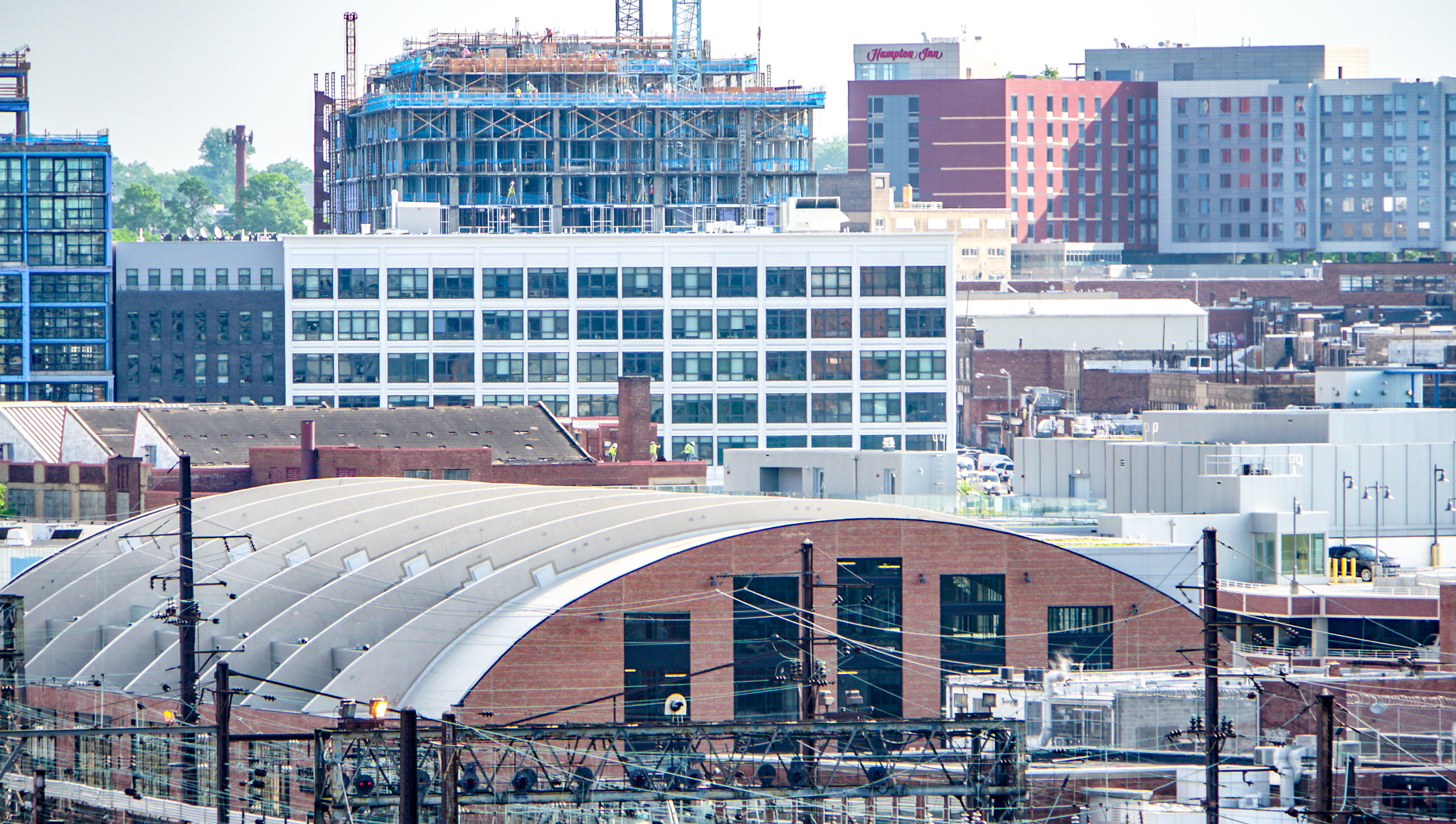
For the first time in more than a decade, D.C. could get a new voting precinct—and it’s coming to NoMa, a neighborhood that has seen explosive residential growth in recent years.
The D.C. Board of Elections is considering splitting Precinct 83—which includes a large swath of NoMa—in two, creating a new Precinct 144 in the process. That precinct would include many of the newer residential buildings that have popped up between Union Station and New York Avenue NE over the last decade, while the area’s older single-family homes north of H Street NE would remain in Precinct 83.
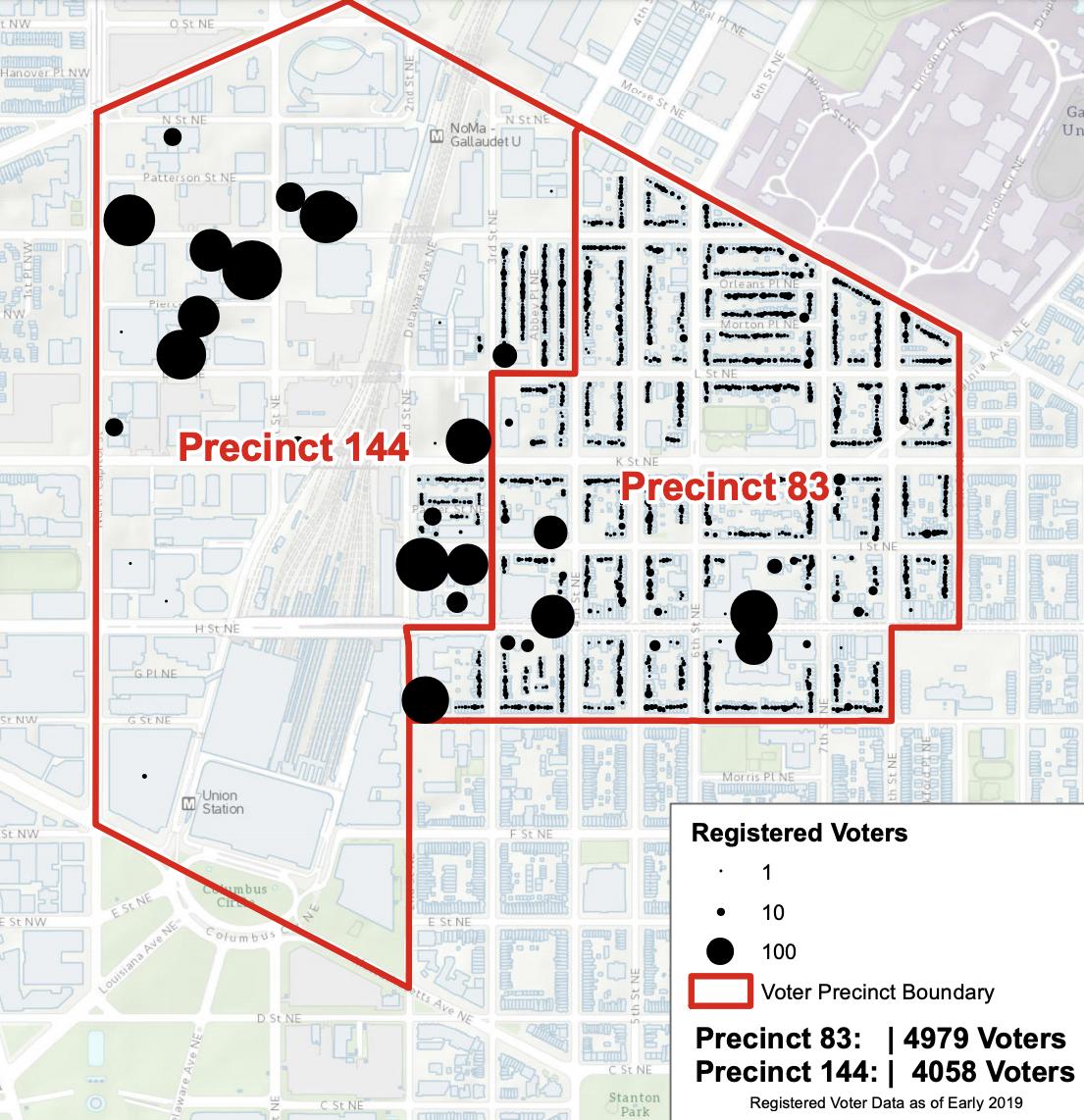
A map of the proposed split of Precinct 83 in NoMa, creating a new Precinct 144. Graphic courtesy DC Board of Elections
Precinct 83 is currently the largest in the city, with 9,377 registered voters as of the end of July. That’s 79 percent higher than the same time five years ago, when the precinct had 5,218 voters in it.
By splitting it in two, Precinct 83 would have just under 5,000 voters and the new Precinct 144 roughly 4,000. According to Rachel Coll, a spokesperson for the elections board, the decision to create the new precinct is largely based on two factors.
“When a precinct starts to have 5,000-6,000 registered voters, we begin to look at turnout to see that percentage. When turnout is higher for those precincts, we start to consider adding another location,” she wrote in an email.
In last year’s general election, turnout in Precinct 83 was 52 percent, higher than the citywide average of 46 percent. And in the 2016 election, it was just shy of 70 percent, five percentage points higher than the average across the city.
The last time a new voting precinct was created in D.C. was in 2008.
Over the last decade, NoMa—once a largely industrial area around the train tracks carrying Metro’s Red Line and Amtrak—has grown dramatically. According to the NoMa Business Improvement District, the neighborhood had fewer than 100 residents in 2010, while it currently has more than 10,000. And more are expected: while there are currently 6,398 residential units already built in the BID’s boundaries, another 1,378 are under construction and 7,261 planned. By 2020, NoMa is expected to have more than 12,000 residents.
Similar growth has been seen in other neighborhoods in Ward 6, including Navy Yard. In 2014, the voting precinct that includes Navy Yard had 2,814 voters; last month, there were 6,532.
That growth is expected to have an impact on the redistricting process that takes place after every national census count. According to D.C. law, each of the city’s eight wards should have roughly the same population, give or take 5 percent.
According to 2017 population estimates from the American Community Survey, that would mean each ward should have between 79,846 and 88,250 residents. Ward 6, though, had 91,093, while Ward 2 had 77,940. That could mean that neighborhoods in Ward 6 could move over to Ward 2, reversing a swap that came as part of the 2010 redistricting. Ward 7 could also gain new neighborhoods.
D.C.’s population jumped across the 700,000-person mark last year, reaching a milestone that hasn’t been seen in over four decades.
This story originally appeared on WAMU.