When second-grader Relisha Rudd went missing in 2014, the first person to notice was a social worker at Payne Elementary School who works as a homeless liaison.
In addition to highlighting the decrepit and dangerous conditions at D.C. General, the former hospital-turned-family-shelter where Rudd lived, the tragedy of her disappearance also shone a spotlight on the role of homeless liaisons in D.C. Public Schools. These liaisons act as a point person at schools, coordinating between families, the school district, and agencies throughout the city.
Students experiencing homelessness face a unique set of challenges on a day-to-day basis. “They see much higher rates of attendance difficulty. They see higher rates of chronic absenteeism. And they see poorer student outcomes,” Deputy Mayor of Education Paul Kihn tells DCist. Basics like clean clothes and transportation can be difficult when your first priority is determining where you’ll sleep that night.
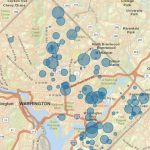
DCPS has 136 homeless liaisons, who work to meet a number of needs for the 5,593 of students experienced the uncertainty of homelessness.
“The schools in particular that have higher rates of student homelessness do all kinds of things: from academic support, to support with some family needs including clothing,” Kihn says. “Certainly housing referrals and things of that nature.”
Living in a city where affordable housing is at the top of mind for so many can create specific challenges for families with school-age children. While there is work to find solutions to the problem of homelessness in the District overall, liaisons deal with the here and now.
Tierra Washington is the Homeless Children and Youth Program Specialist for DCPS. “It’s a lot of triage every day,” she says, describing the daily job. Often what would be considered small things—like arranging transportation in the form of MetroCards—is a major component of the job.
“Families have a right to stay at their school of origin,” she tells DCist, referring to the school a student attended when they last had permanent housing. Families also have the right to send their kids to the school that’s closest to their temporary address. “Throughout the year homeless families are transient, so they’re moving often between shelters or getting into permanent housing or transitional housing or rapid rehousing.”
Liaisons receive training throughout the year and have other primary jobs at the schools where they work, many as their school’s social workers. “What that means is that they don’t only have students or experiencing homelessness in their caseload,” Washington says. “They also have other students on their caseload.”
Liaisons are sometimes the first to notice when something is out of the ordinary, as in the case of Rudd. Washington says that liaisons are often on the lookout for signs that something is amiss.
“We look for red flags: if a child is hungry, if a child is consistently late, if a child doesn’t have uniforms, if the child’s uniforms aren’t clean, if the child has some behavioral issues,” she says. “Some signs of depression or anger, anxiety. Anything that triggers you to think, ‘Maybe this child is going through something.’”
Washington says that liaisons also link families with other services, like community or government agencies, depending on their individual needs.
“There are a few different ways in which families are captured as experiencing homelessness in the city,” she says. “Virginia Williams Family Resource Center is the main intake center for all families who are placed in a shelter or emergency hotel. So that is where a lot of the families are actually captured and experiencing homelessness and then connected to resources or housing and enrollment for their children into school.”
The role complies with the McKinney-Vento Homeless Education Act, which requires that school districts provide the same access to educational opportunities to students experiencing homelessness and those whose residence may be more stable. The legislation also provides DCPS with grant funding. Schools were eligible to apply for funds from a pot of almost $70,000 for the 2019-2020 school year, though the ones that don’t receive these grants are still required to have a point person available to assist students and their families.
“One of our goals in DCPS is to make sure that our students show up every day and that they are cared for; that they feel loved and that they are prepared,” Washington says. “So even though it is definitely an emotional job role and it’s very taxing and there’s a lot of self-care needed to continue to be effective in the role, it is extremely rewarding to know that we are providing services and removing barriers and really making a difference in our families who are in transition.”
This article is part of our 2019 contribution to the DC Homeless Crisis Reporting Project in collaboration with other local newsrooms. The collective works will be published throughout the day at DCHomelessCrisis.press. You can also join the public Facebook group to discuss further.
There’s No Paywall Here
DCist is supported by a community of members … readers just like you. So if you love the local news and stories you find here, don’t let it disappear!