When Cheryl Bell, executive chef at Miriam’s Kitchen, comes to work, she cooks with a purpose. At Miriam’s Kitchen, food is served twice a day during the week to people experiencing chronic homelessness. And for Bell, every meal must be a special experience.
“They’re treated like they’re invisible,” she says of the guests when they’re out on the streets. But in her kitchen: “People recognize you. They acknowledge you. They speak to you.”
But it isn’t just the way Bell and countless other homelessness organizations in the District serve meals that make them special: The journey of all the ingredients that go into the dishes is unique, too, often starting with recovering food that would otherwise be wasted.
According to the Food and Agriculture Organization of the United Nations, about one third of all food in the world goes uneaten. And in the District, about one in nine families will experience food insecurity.
The path connecting D.C.’s would-be-wasted food to shelters and other organizations is often complex, multi-sourced—and sometimes even underground.
The path of fresh food
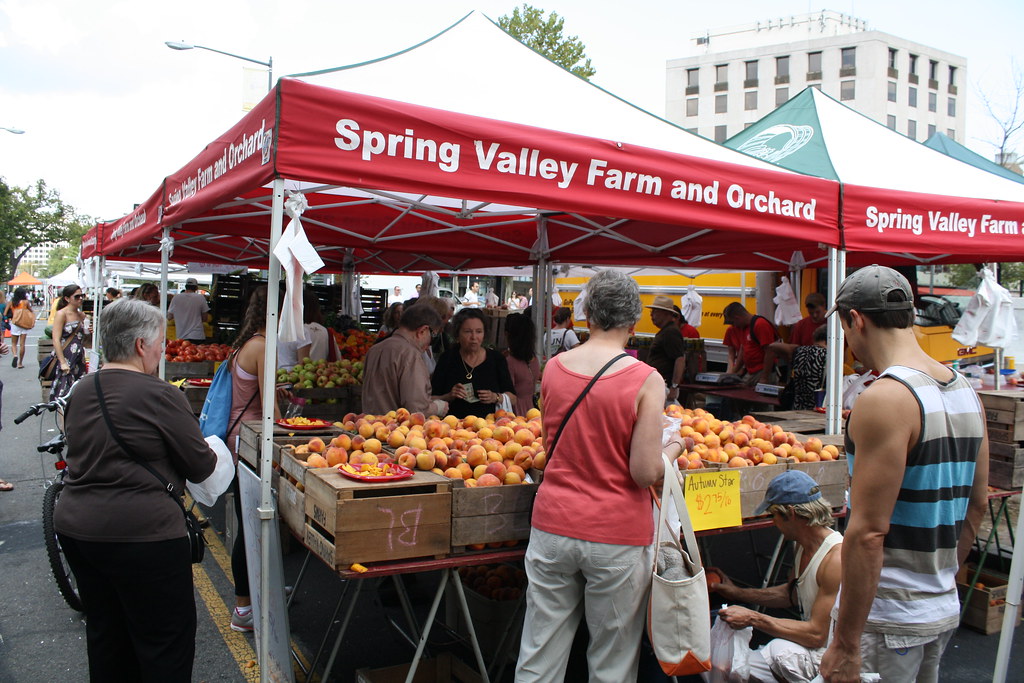
The food that will make its way to organization serving D.C.’s homeless community often starts somewhere recognizable to many people: Grocery stores and farmers markets.
When the shoppers disperse with their groceries, that’s when the gleaners come in. Gleaning is the ancient practice of collecting unsold or unharvested fresh food. As part of modern-day gleaning, volunteers will comb through booths at a FRESHFARM farmers market, for example, to pick up a leftover basket of apples or other produce.
The Food Recovery Network, a national student-led organization born at the University of Maryland, is one of the first places that leftover basket may go. The network, which has a chapter at George Washington University, as well as partnerships with Gallaudet University and Georgetown Law Center, serves as an intermediary by connecting recovered food with groups in need of it.
Regina Anderson, executive director of the Food Recovery Network, says students at chapters like George Washington University will often work with schools to glean food from farmers markets or pick up leftover food from events and the dining hall to deliver to local organizations. Gallaudet and Georgetown have specific partners they work with: House of Ruth and Thrive DC, respectively, and donate food surpluses to them once a month.
Anderson says having students involved helps them see the impact of recovering food.
“‘Throwing away food is stupid,’ as one student said,” Anderson says. “When we throw away food, it’s mostly destined for the landfill. When food is good, when it can be used by humans, that’s what we should do with it.”
However, sometimes restaurants or businesses or even other non-profits might find themselves with food they aren’t sure what to do with. That’s when MEANS Database, founded by American University student Maria Rose Belding, comes in.
The MEANS food recovery platform works kind of like Craigslist: Donors can post that they have a fresh basket of apples, for example, in their area and wait for an interested organization to want it.
According to Sammie Paul, chief operating officer at MEANS, that sends a notification to nearby organizations in need of food. Organizations can even filter by the type of food they’re looking for, whether it’s fresh fruit or protein.
Not only does this help prevent food waste, but it also gives organizations more choice, Paul says. “Donors have good intentions, but the food is not always needed,” she says. Take that basket of apples, for example, which may not be a good fit for one shelter that just received a basket of apples from another organization. They can use MEANS to move the food before it spoils to an organization that wants it.
So, when a basket of apples makes it to an organization like Miriam’s, what happens next? “It’s like an episode of Chopped,” Bell says. “We never know what we’re going to have. We start making the menu based on what we have available and the menu develops throughout the week.”
The focus, she says, is making sure the meal is healthy with protein, whole grains, fruit and vegetables—something that prepared food doesn’t always have. An apple might find its way onto a plate with roasted vegetables or cooked into homemade applesauce, for example.
“We make everything from scratch,” she says. “Our own applesauce, our own hot sauce.” Bell calls it elevated comfort food: It’s meant to evoke happy memories for people, perhaps a time with family or friends. And those are the memories she hopes to surround guests with when they come to eat. “It’s about creating an environment for these guests, making sure that they belong and that they matter,” she says.
At Thrive DC, Alicia Horton, executive director, says much of the food they collect goes into the organization’s pantry program. The program provides families with grocery bags each week, where, for example, those apples might become a much-needed part of a balanced meal.
Additionally, those apples might be incorporated into one of the meals Thrive DC serves twice a day for low-income people and people experiencing homelessness, prepared by an executive chef and trainees in a culinary training program. And on Fridays, any apples and other fresh produce leftover will be given away farmers market-style by the organization.
Thrive DC’s various levels of accessibility to recovered food—from grocery kits, to meals, to farmers market-style gatherings—is part of its mission to create low-barrier programming that appeals to various types of people experiencing poverty or homelessness in D.C.
“We have folks who are challenged with mental health issues,” Horton says. “People who are returning from incarceration.” To serve these communities, food programs are structured to different niches.
For example: “Our evening meal program is just for women and children,” Horton says. “Recognizing they have particular vulnerabilities, we want to make sure they have a safe space and perhaps take part in some activities [at Thrive DC].”
The pathway of prepared food
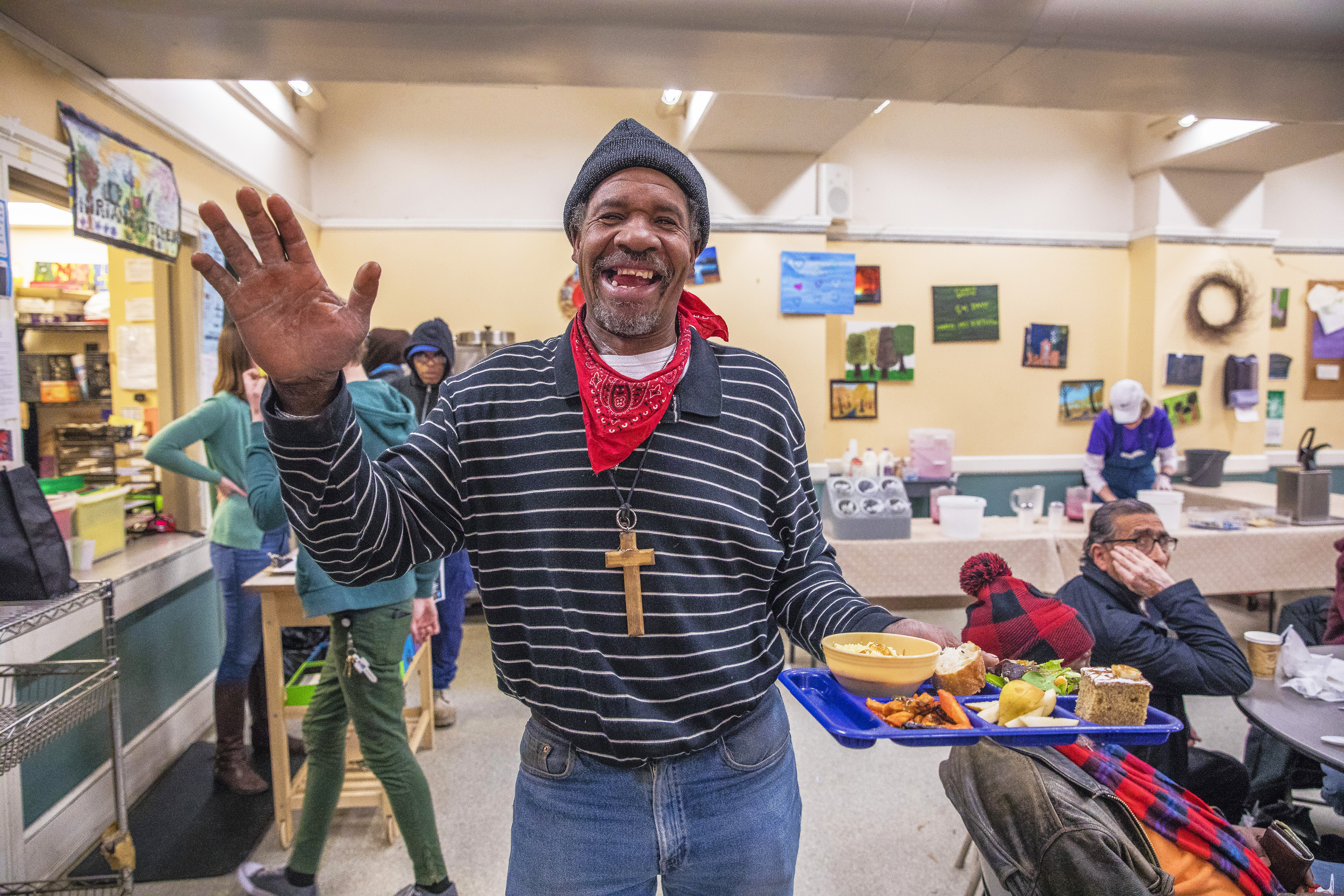
While some organizations don’t accept prepared foods (Miriam’s Kitchen, for example, does not), some groups even prefer it, like the Food Recovery Network. Of course, when prepared food, such as a tray of pasta, has been gleaned from a dining hall or a corporate event, it’s a race against time.
Organizations like the Food Recovery Network, which prefers prepared food so shelters, soup kitchens, and other groups can immediately serve it, said that means adhering to strict food safety guidelines.
The network adheres to the Temperature Danger Zone for food (between 40 and 140 degrees) and checks with food donors how long food has been in that condition. If longer than two hours, the food is no good. Meanwhile, partners must heat up hot foods to certain temperatures and immediately serve them.
Prepared food is welcome at Thrive DC, but Horton says they have stringent safety mechanisms in place for taking prepared foods. On top of that, she also asks that prepared food is fresh and unopened, nothing that has been picked over at parties or events. So a tray of pasta that’s been touched is a no-go, for example, but an unopened tray of cooked vegetables is good.
Preventing food waste is a learning process, says Amy Bachman, director of procurement and sustainability for DC Central Kitchen. The organization tracks how much food is left over at different shelters so they can be mindful of how many meals to provide going forward.
For Bell of Miriam’s Kitchen and many other leaders at these organizations, the most important part of the meal, however, is the impact. Recovering, transporting, and serving food is more than giving someone breakfast or lunch to eat. It can give them the support and recognition they need and help invest in their health, something those experiencing chronic homelessness can’t always do.
“Food becomes a gateway to getting people in housing,” Bell says.
What about the leftover … leftovers?
After the meals are served and the pantries stocked, sometimes food is still uneaten. When it comes to leftovers, a little-known secret connects many of these groups. “There’s a wonderful kind of underground network with organizations like ourselves,” Horton of Thrive DC says.
When Thrive DC is closed on weekends, its drivers might give food recovered to Loaves and Fishes, an outgrowth of St. Stephen and the Incarnation Episcopal Church that serves lunch every Saturday and Sunday. Horton says they even have a trade with N Street Village. “We will trade coffee for ham bones,” she says with a laugh. Leftovers that are safe to eat may even find their way back on the MEANS Database.
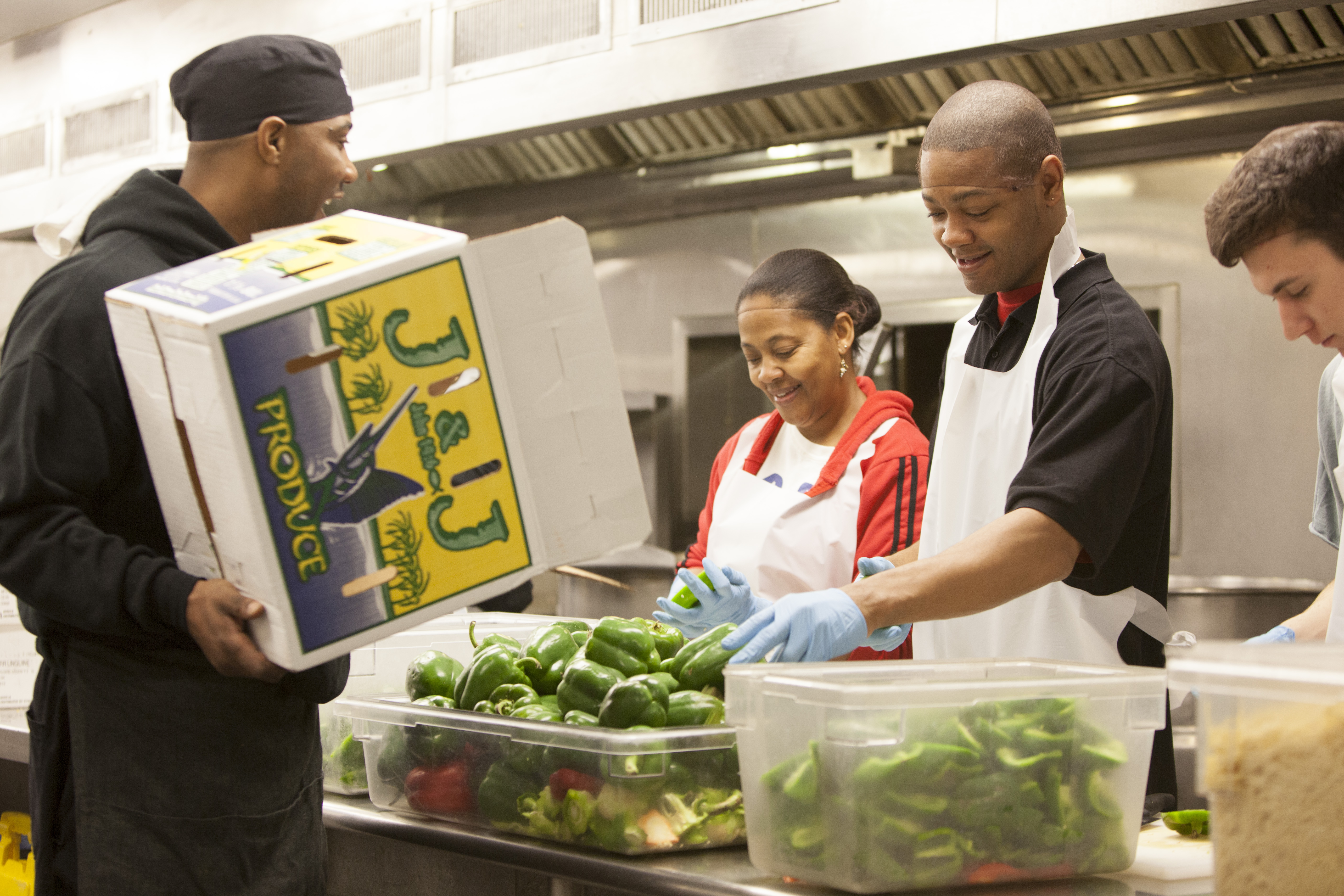
Meanwhile, Miriam’s Kitchen has three unique ways of dealing with leftover food. They might use it to feed volunteers who help serve, or it might be packaged up to give to case workers going to meet people who have been connected with housing, but still need a level of support.
And every Friday, the organization holds a staff-wide dinner, made up largely of leftovers. Bell says this shows staff and volunteers the core of the mission in food recovery. “We’re saving food,” she says of Miriam’s work. “We shouldn’t turn around and waste it.”
This article is part of our 2019 contribution to the DC Homeless Crisis Reporting Project in collaboration with other local newsrooms. The collective works will be published throughout the day at DCHomelessCrisis.press. You can also join the public Facebook group to discuss further.