Natalie Delgadillo
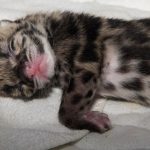
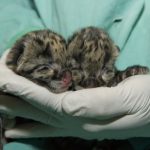
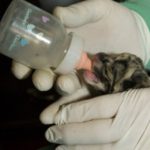
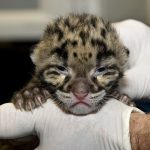
A crucial announcement: The Smithsonian National Zoo has obtained two very cute, very important clouded leopard cubs named Jilian and Paitoon, and the pair will be available for their first public viewing on Wednesday.
Here are some facts to know about Jilian and Paitoon: They were both born at the Nashville Zoo, but they are not brother and sister. They will live together as a socially bonded pair at the zoo, but they will forever be ~just friends,~ as scientists have determined that they are “not an ideal genetic match” (???). Also, they are the kind of adorable baby animal that has proportionally gigantic paws—indicating, of course, a fearsome and predatory future, but currently causing them to seem kind of clumsy.
Observe:
Per a zoo press release, Jilian and Paitoon are spending a majority of their time wrestling and vocalizing with one another (typical of baby leopard social life). In addition to their talents for leaping onto tree branches and gnawing things, the pair are advanced explorers for their age. “The cubs are extremely curious and precocious,” zoo curator Michael Brown-Palsgrove said in the release. “They have been exploring and investigating every nook-and-cranny of their new home.”
Zoo staff are also busy training the pair to complete some crucial tasks. They are being taught to go only to their own individual food stations at mealtimes, to touch a target so keepers can examine their body parts, and to hold still for shots.
Clouded leopards are arboreal, and they generally need at least 15 feet of climbing space for successful breeding, per the zoo. The species is listed as vulnerable in the wild by the International Union for the Conservation of Nature, and scientists have been working on strategies to help them breed better in captivity—including artificial insemination. Jilian’s mother, Niran, was the third leopard born in captivity from artificial insemination using frozen sperm.
The cubs will be viewable at the zoo’s Asia Trail, at first only in the morning from 10:30 to 11:30 a.m., and then for longer stretches as they grow.