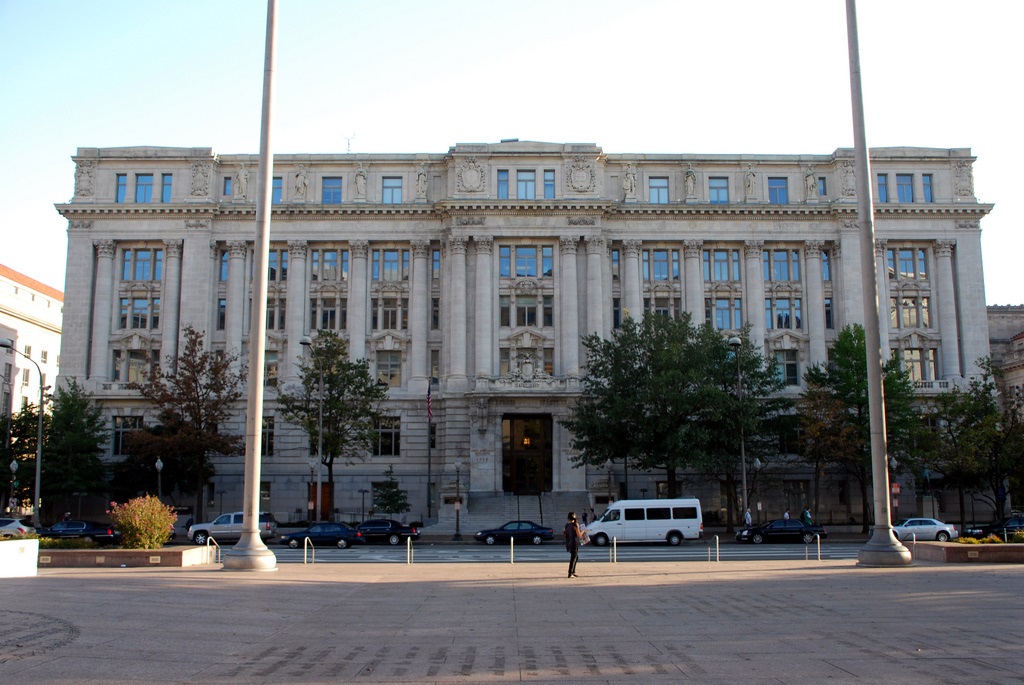
The chill is back in the air and the D.C. Council back to work after its summer recess. A friendly reminder: the 13-member council and the mayor set policy for more than 700,000 people (except for the minority of cases when Congress meddles, of course). If you care about the course of the city, it’s well worth paying attention to the goings-on at the Wilson Building. Here are some—though by no means all— of the issues that we’re keeping an eye on over the next few months.
Arts Commission restructuring
The District’s cultural and artistic leadership has been at the center of a tug-of-war between the D.C. Commission on the Arts and Humanities and Mayor Muriel Bowser for months now. First, Bowser’s 2020 budget proposed replacing DCCAH’s dedicated funding stream with a mayoral appropriation. Then in April came the long-awaited Cultural Plan, a behemoth (224 pages!) agenda that most controversially included a plan to convert the city’s robust portfolio of grants into a loan program for artists.
Following backlash from the arts community, D.C. council Chairman Phil Mendelson blocked the proposed change to DCCAH’s funding.
In August, Bowser created her own Creative Affairs Office, meant to be a liaison between the government and artists, and operated under the Office of Cable Television, Film, Music, and Entertainment. (Notably, among the list of functions of the Creative Affairs Office is maintaining works of art owned by the District. That might explain why, over Labor Day weekend, DCCAH staff suddenly found themselves locked out of the city’s vault of public art, according to Washington City Paper.) The new Creative Affairs Office, by the way, is run by Angie Gates, who briefly served as DCCAH director over a tumultuous period last year.
While no legislation has been put forth yet, we’re expecting Mendelson’s office to push the issue forward during this session. We’re also watching for Oct. 1, when DCCAH’s status as an agency independent from the mayor’s office goes into effect. —Lori McCue
Domestic workers protections
The D.C. Human Rights Act protects workers in D.C. from harassment in the workplace and discrimination on the basis of race, ethnicity, gender, pregnancy, or disability. But here’s a thing you probably didn’t know: domestic workers, like nannies and au pairs, are specifically excluded from this law. One section of the code makes an exception for “domestic servants, engaged in work in and about the employer’s household.”
What does that mean in practice? Essentially, that these workers have no local legal recourse if they are, say, fired for getting pregnant, or not hired due to their race or gender. One nanny in the District told her lawyer that she was fired from a job after telling the family she worked for that she was pregnant, per the Washington Post. She had no recourse under D.C. law.
As the issue has started coming to light thanks to advocacy work from groups like the First Shift Justice Project, the D.C. Council has started taking notice, too. Ward 4 Councilmember Brandon Todd introduced a bill at the D.C. Council, with the support of nearly half his colleagues, which would extend D.C.’s employment and labor protections to domestic workers.—Natalie Delgadillo
Charter transparency
Although they are funded by city dollars, the District’s charter schools aren’t subject to the same public records requests and open meetings laws. Legislation introduced by Ward 6 Councilmember Charles Allen would change that. “To me, this is very straightforward: public schools should all be subject to FOIA and open meetings. Whether it’s a public school or a public charter school, those are your tax dollars and students, parents, teachers, and lawmakers all deserve transparency,” Allen said in a press release announcing bill, noting that 39 states have similar laws on the books. But expect a tough fight from a robust crew of lobbyists for the charter sector, who argue that it will divert resources from education and put an undue burden on schools. —Rachel Sadon
DCRA reforms
The D.C. Department of Consumer and Regulatory Affairs is every lawmaker’s favorite agency to complain about—but it has also escaped major reform in recent years. If there’s ever a time that that could change, it may be this fall. Fresh off of the bureaucratic failures that resulted in the deaths of two people — including 9-year-old Yafet Solomon—DCRA may well get the axe, literally. A bill to break the agency in two is still pending before the Council, as is a measure from Ward 1 Councilmember Brianne Nadeau that would do everything from set licensing requirements for contractors to increasing the number of housing inspectors. But even before that, Chairman Phil Mendelson has pledged to hold a hearing on the Kennedy Street fire, but not until an outside assessment of what went wrong is completed. —Martin Austermuhle
Jack Evans investigation
The Council’s investigation into accusations of self-dealing by its longest-serving member was supposed to have been done by this month, but refusals by some of his former clients to speak to investigators has delayed it until at least mid-October. Once the Council gets it, it will be up to an ad hoc committee (which Mendelson has to create) to decide if Evans violated the Council’s code of conduct, and if he did, what punishment he should face.
The mere publication of the investigation will have broader political consequences, though: Evans is up for re-election next year, and another potential news cycle of rules he may have broken will only serve as fuel for the many candidates currently vying for his seat. —Martin Austermuhle
Marijuana
For the first time since D.C. residents voted to legalize recreational marijuana, the House of Representatives did not include a provision in its spending bill that prevent the city from spending its locally raised funds to figure out how to tax and regulate cannabis (currently only home growing and gifting is allowed). This was widely expected: indeed, the day after Democrats took the House in the 2018 elections, Mayor Bowser pledged that she would send the D.C. Council a bill that would allow recreational dispensaries and the like in the District.
Ultimately, At-large Councilmember David Grosso beat her to the punch, re-introducing his measure to legalize marijuana sales in D.C. (he never let the Congressional rider stop him). This go around, Grosso’s measure has some new elements. As DCist explained previously, “it automatically expunges criminal records that only involve marijuana; allocates a portion of funds raised from marijuana taxes to drug-abuse services; and it prioritizes licenses for applicants who are African American, longtime D.C. residents, or formerly incarcerated.”
Bowser’s bill, introduced in May, similarly tries to ensure that D.C. residents are benefiting from legalization, requiring that at least 60 percent of license employees and owners of each new license are D.C. residents. Both bills also see regulation of marijuana falling under the Alcoholic Beverage Regulation Administration, though ABRA would get a new name. Bowser would tax cannabis products at 17 percent, and direct all sales and tax revenue towards housing programs after three months.
These bills have to go through a few committees, but expect discussion about marijuana legalization to take front and center at the D.C. Council this season.
Separately, there’s an issue of which D.C. government employees are allowed to treat ailments with medical marijuana. While a recent mayoral order permits most workers to use both medicinal and recreational cannabis, some categories of employee are still barred. There’s a council hearing on September 25 to see if safety-sensitive workers (those who, if they mess up at work, could cause harm or death to themselves or others) can also be a part of the city’s medical marijuana program. A more limited version of the Medical Marijuana Program Patient Employment Protection Amendment Act of 2019 passed as emergency legislation before the council left for recess. —Rachel Kurzius
Paid Leave oversight
Wait, didn’t this become law in late 2016? Yes, it did, but the program that will provide employees of private businesses in D.C. up to 8 weeks of paid leave actually takes effect next July. At-large Councilmember Elissa Silverman has been holding quarterly hearings on the program’s implementation; the next one is likely to happen in October. This one will focus on two critical elements: funding and regulations. The entire program is funded by a 0.62 percent payroll tax on employers; the city started collecting the tax this July. And over the summer the city issued draft rules outlining how the program will work and who will get leave; some advocates have objected to a provision limiting leave benefits only to people who are actively employed at the time. —Martin Austermuhle
Record sealing and expungement
At-large Councilmember David Grosso has re-introduced a bill from 2017 that would update D.C.’s expungement and sealing laws. This updated version of the law outlines a number of measures to expand the number of criminal records eligible for expungement or sealing, based on the logic that “a criminal record negatively harms individuals as they seek to reintegrate into society.”
Here are some things this law would do: establish automatic expungement of arrests that are never prosecuted; establish automatic expungement of criminal cases that don’t end in a conviction, except for most “severe felonies;” shortens the waiting period for record-sealing; creates a presumption that a person’s record will eventually be sealed, instead of requiring individuals to petition and prove they deserve to have their record sealed; allows for the sealing of more than one record; and expands record sealing eligibility to all convictions except for “the most serious felonies.”
The legislation has been sent to the Committee on the Judiciary and Public Safety, chaired by Ward 6 Councilmember Charles Allen. It joins another proposal put forth by Bowser, which is similarly aimed at giving Washingtonians a “clean slate.” This one would seal, rather than expunge, records for people who have been no-papered or not convicted of crimes. It would also lessen wait times for sealing crimes, and create a board that would look at which crimes are eligible for record-sealing.—Natalie Delgadillo
Sex work decriminalization
A version of this bill was also introduced in 2017, but never got a hearing in the Committee on the Judiciary and Public Safety. This time around, At-large Councilmembers David Grosso and Robert White were joined by two more colleagues—At-large Councilmember Anita Bonds and Ward 1 Councilmember Brianne Nadeau—in introducing a bill that would decriminalize sex work. What the bill aims to do is simple: “remove certain criminal penalties for engaging in sex work in order to promote public health and safety.” Trafficking, including child trafficking, would still be illegal (proponents of the bill claim it will make it easier to crack down on trafficking, because sex workers would no longer fear reporting to law enforcement), and the bill does not create any form of Red Light districts in D.C.
Over the council recess, the Washington Post editorial board came out against the measure, alleging that it would “hurt the people it aims to help.” (The bill’s supporters disagree with this.) Then again, the WaPo editorial board’s endorsement, or lack thereof, rarely seals the deal in District politics.
Ward 6 Councilmember Charles Allen, who heads up the Committee on the Judiciary and Public Safety, will hold a hearing on the bill this fall. —Rachel Kurzius
Scooters
Proposed scooter legislation introduced by Ward 3 Councilmember Mary Cheh would put some brakes on the polarizing rides. Specifically, the bill would make it illegal to ride electric scooters between 10 p.m. and 4 a.m and change the scooter speed limit–which is currently 10 miles per hour everywhere—by lowering it on sidewalks to 6 miles per hour and raising it on streets to 15 miles per hour. Wondering how one would know if they’re going precisely 6 miles per hour? The bill also require that e-scooters have a speedometer. (The legislation also sets a limit for e-bikes, only allowing assistance up to 20 miles per hour).
And that’s only the beginning of the bill’s list of provisions, which would augment and supplant rules currently set by the District Department of Transportation. The legislation would also require a 24-hour hotline for scooter complaints, that companies submit data to the city, and mandate operators to rebalance their fleets across all eight wards every day.—Rachel Sadon
Vision Zero
While traffic fatalities have fallen dramatically from a peak of 72 people killed in 2001, the last few years have seen the numbers trending upward, despite Bowser’s pledge to eliminate such deaths by 2024. Over the past year or so, pedestrian and bike advocates have been arguing that the mayor hasn’t done enough, and clamoring for the D.C. Council to pass legislation.
After his first traffic safety legislation failed to make it through the last council session, Ward 6 Councilmember Charles Allen introduced another ambitious bill in May. It has more than 20 provisions that range from pretty uncontroversial to letting some citizens enforce traffic violations. —Rachel Sadon
This story has been updated to reflect that Councilmember Todd has already introduced his domestic worker bill.