 Mikaela Lefrak
Update, 10/22/19: The D.C. Council voted to override Bowser’s veto on October 22, effectively backdating the day the D.C. Commission on the Arts and Humanities became an independent agency. This is the second time the Council has overridden a mayoral veto in Bowser’s five years on the job.
Original: Another day, another move in the chess game between D.C. Mayor Muriel Bowser and the D.C. Council over control of the city’s arts commission.
Bowser issued her third-ever veto in her five years as mayor on Tuesday. The legislation in question was an emergency bill that would have retroactively amended the date the D.C. Commission on the Arts and Humanities became an independent agency within the D.C. government, and no longer part of the executive branch.
Bowser first used her veto power last year to block emergency legislation that would have allowed chronically absent students in D.C. public high schools to still graduate. She used it again in January on a bill to decriminalize fare evasion on Metro; the Council later overruled her veto.
The subject of her third veto might seem rather in-the-weedsy to anyone who has not been closely monitoring the arts commission, the government office that oversees the city’s grants program for artists and arts organizations, and manages public art projects.
Over the past year, Bowser has been working to change the way the arts commission doles out money to the arts community, moving more towards loans rather than grants. She has also suggested expanding its mission to include trades like cosmetology and culinary arts, and established her own program, 202Creates, to support and celebrate the arts.
In response, the D.C. Council voted to make the arts commission an independent agency rather than one headed by a mayoral appointee who had to report to one of Bowser’s deputies. The change was to go into effect October 1.
The transition has led to a number of tense moments between the Council and the mayor, particularly after Bowser established a new Creative Affairs Office within her administration in August.
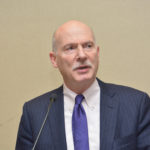
Then, D.C. Council Chair Phil Mendelson’s office said the bill that made the commission independent inadvertently left out the intended applicability date. The Council then passed the emergency bill to backdate the commission’s independence to July 22, and Bowser vetoed it.
In a letter to Mendelson obtained by the Washington Post, Bowser wrote that the bill “only creates further confusion and stress among staff who have been working diligently to ensure the Commission is able to run independently beginning October 1.”
“Further,” she continued, “while Council views this bill as a ‘technical’ fix, I do not. The full range of legal consequences of inserting an applicability date that has already passed have not been determined.”
Mendelson will hold a vote to override the veto in two weeks. The Council needs nine votes to overturn a mayoral veto.
Want to know more about the power struggle between the mayor and the Council over the arts commission? Here’s a breakdown of key events:
- Last fall, the Arts Commission slipped in an amendment to the grant agreement that recipients had to sign to receive funds. It would have banned “lewd, lascivious, vulgar, [or] overtly political” works, but it was scrapped within a week due to a backlash from the arts community.
- In April, the city introduced its long-awaited Cultural Plan, an inter-agency effort that laid out ways the city would support D.C.’s cultural economy. Some artists and cultural leaders said the document lacked a clear rollout plan and overemphasized loans over grants.
- Before Arts Commission Director Terri Rouse-Rosario resigned, she hired a number of senior positions with six-figure salaries, as the Washington City Paper reported. Mendelson then demanded a full accounting of all hirings and firings by her before she left.
- Late last month, Bowser introduced a new Creative Affairs Office to serve as an intermediary between the executive office and the Commission on the Arts and Humanities.
- At the same time, Bowser announced the return of the Mayor’s Arts Awards, which Rouse-Rosario had announced would be canceled this year. In the past, the Arts Commission oversaw the awards and a panel would select the winners, but the program will now be under the purview of the Creative Affairs Office.
- In early September, the City Paper reported that Bowser’s office locked Arts Commission staff out of the agency’s vault of public art.
- In late September, the Arts Commission board chair directed staff to suspend all major business until October 1, when they would become officially independent. She then received what Mendelson called a “threatening call” from longtime Bowser advisor John Falcicchio, who also serves as the Interim Deputy Mayor for Planning and Economic Development.
- That same day, in a heated phone exchange, Bowser told Mendelson that she aims to replace the entire Arts Commission board with new mayoral appointees.
This story originally appeared on WAMU. It has been updated to reflect the D.C. Commission on the Arts and Humanities is still part of the D.C. government, but it is no longer part of the executive branch.