

Don’t mistake Hatoba, the fourth restaurant from the Daikaya group now open in Navy Yard, for just another Sapporo-style ramen shop. Partners Daisuke Utagawa, chef Katsuya Fukushima, and Yama Jewayni, who have dominated D.C.’s ramen scene with Daikaya, Bantam King, and Haikan, say they are careful to make each project a reflection of the neighborhood they serve. One aspect stays steady: Diners can count on a stunning bowl of noodles.
“There are over 32 types of regional ramen in Japan and over 1,000 ramen shops in Sapporo,” says Utagawa, a former sushi chef from Tokyo. “If you have more than a thousand in a city, you can imagine this is a food that’s battle-tested. Ramen is quite popular these days, but even a fraction of what they have in Japan is not represented [in D.C.]. There’s a lot of room.”
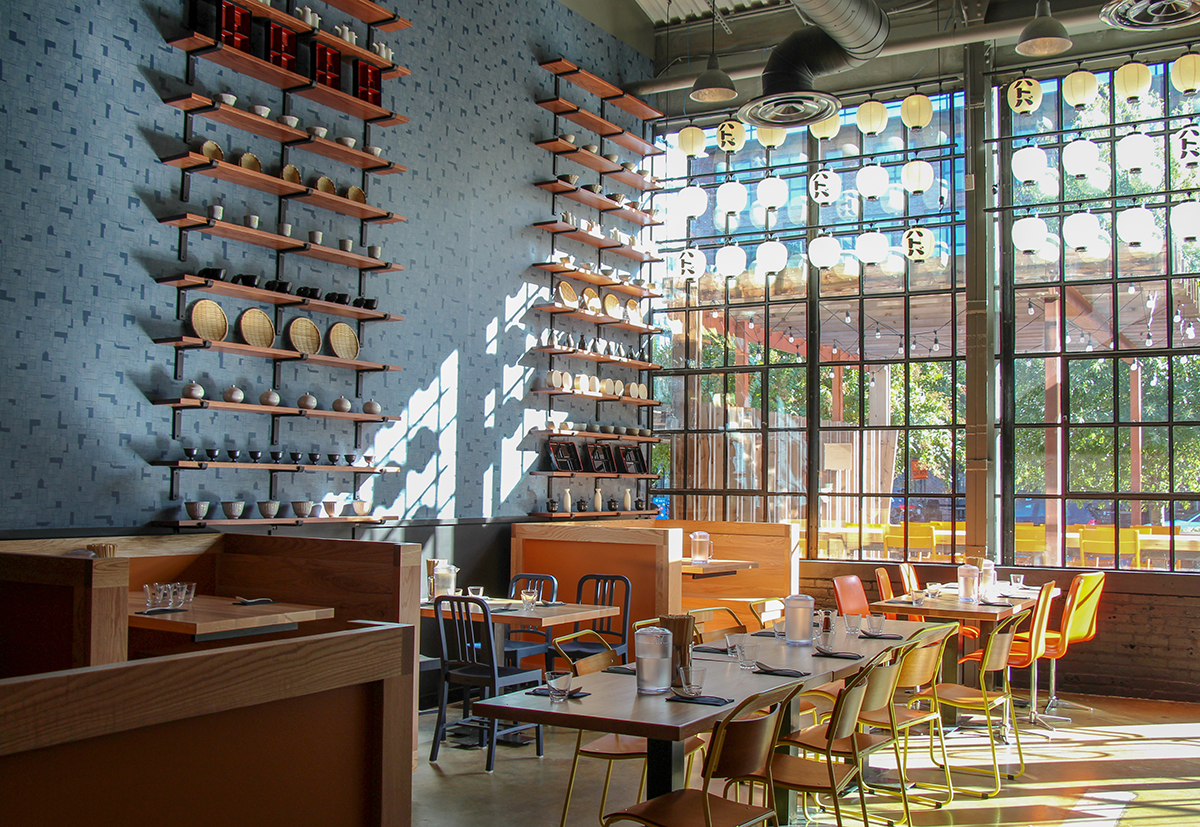
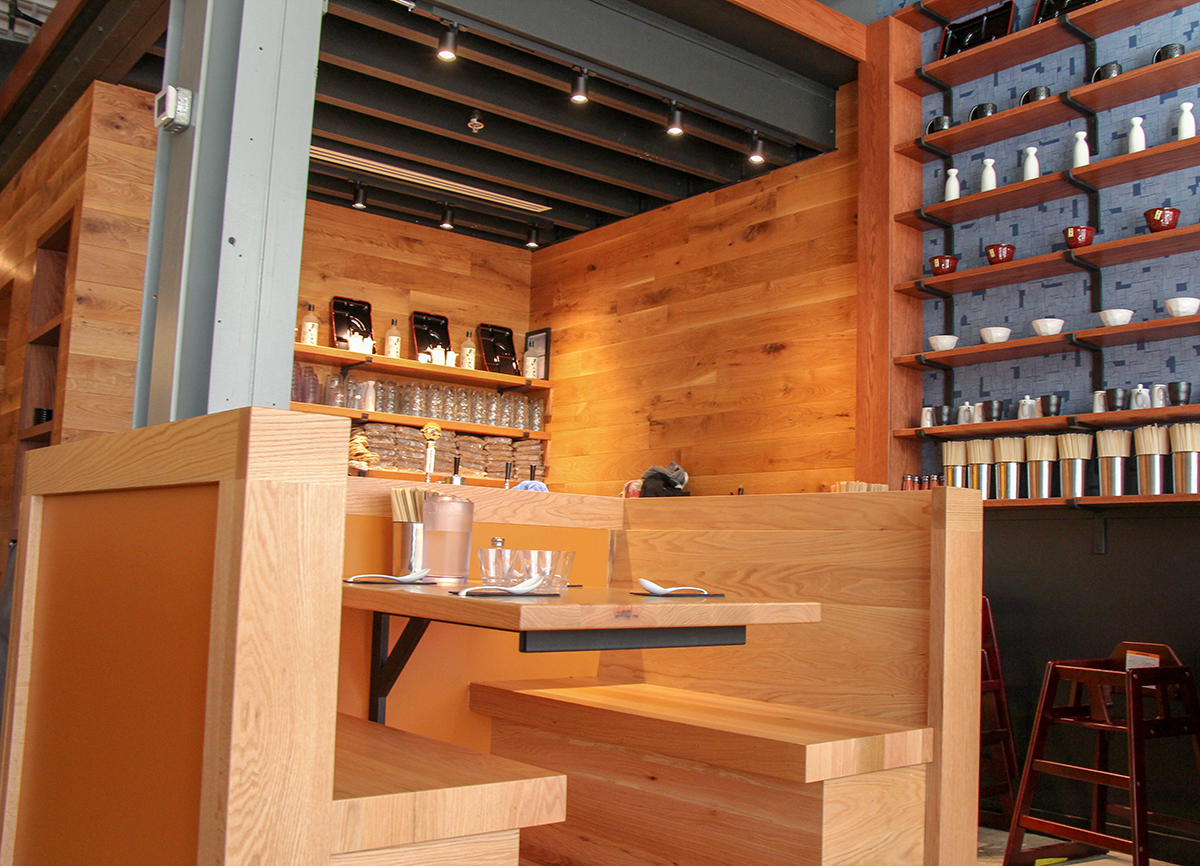
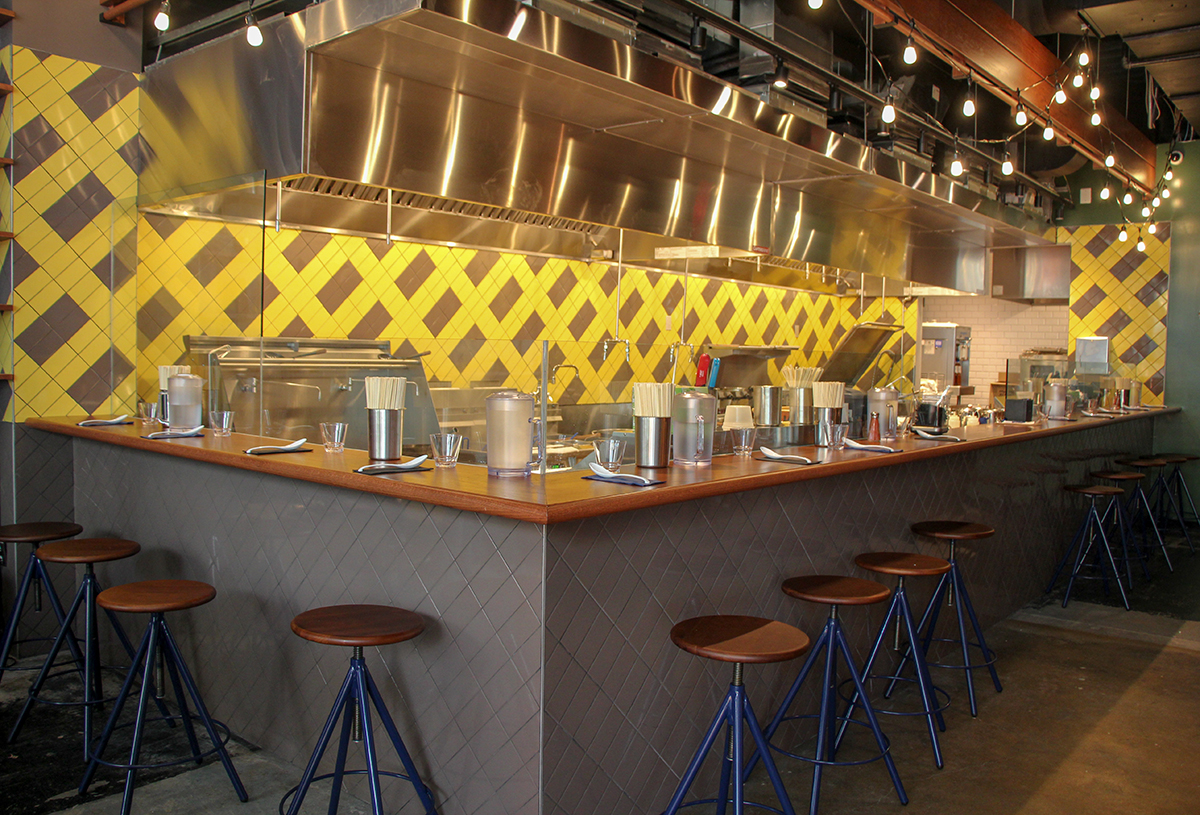
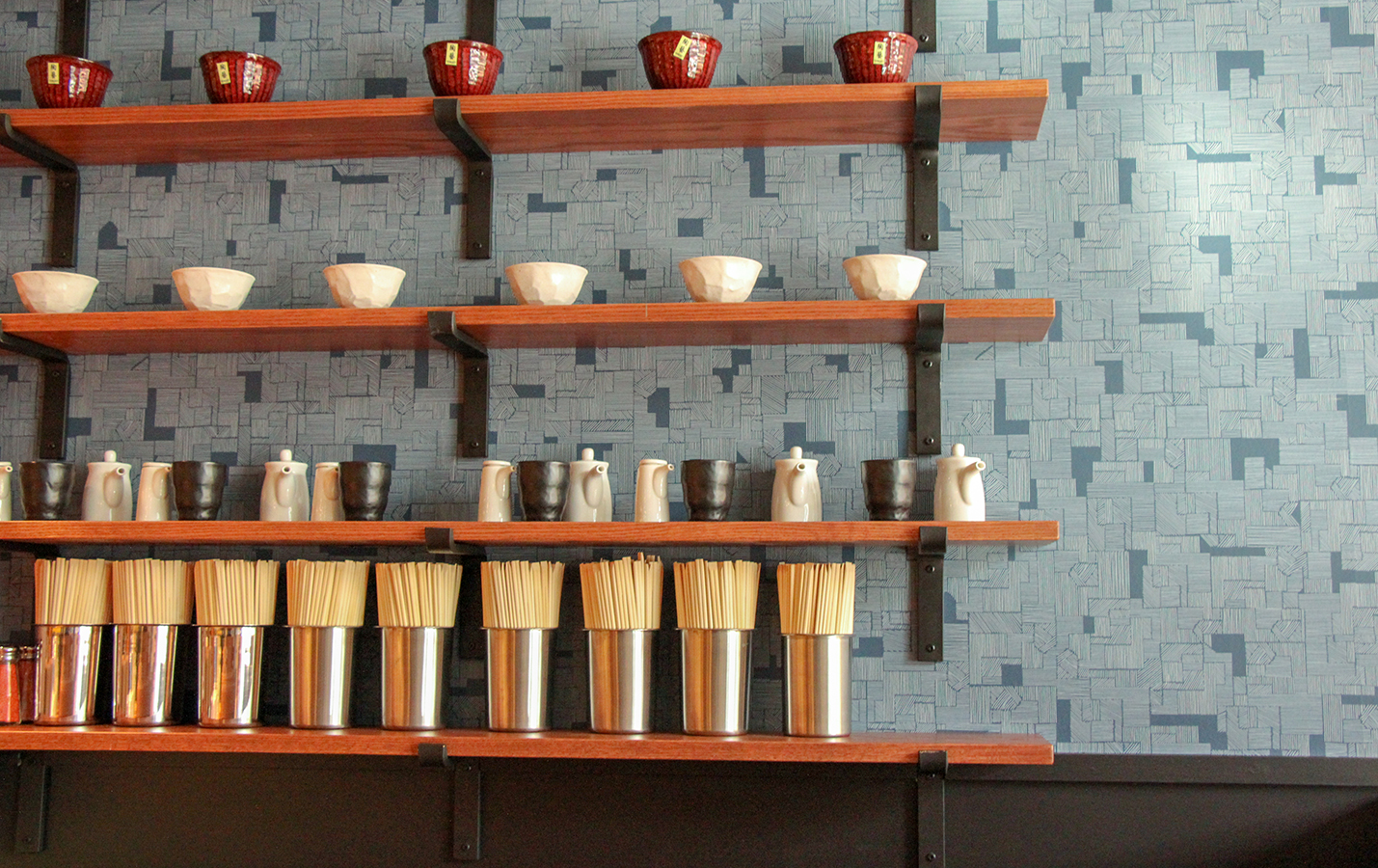
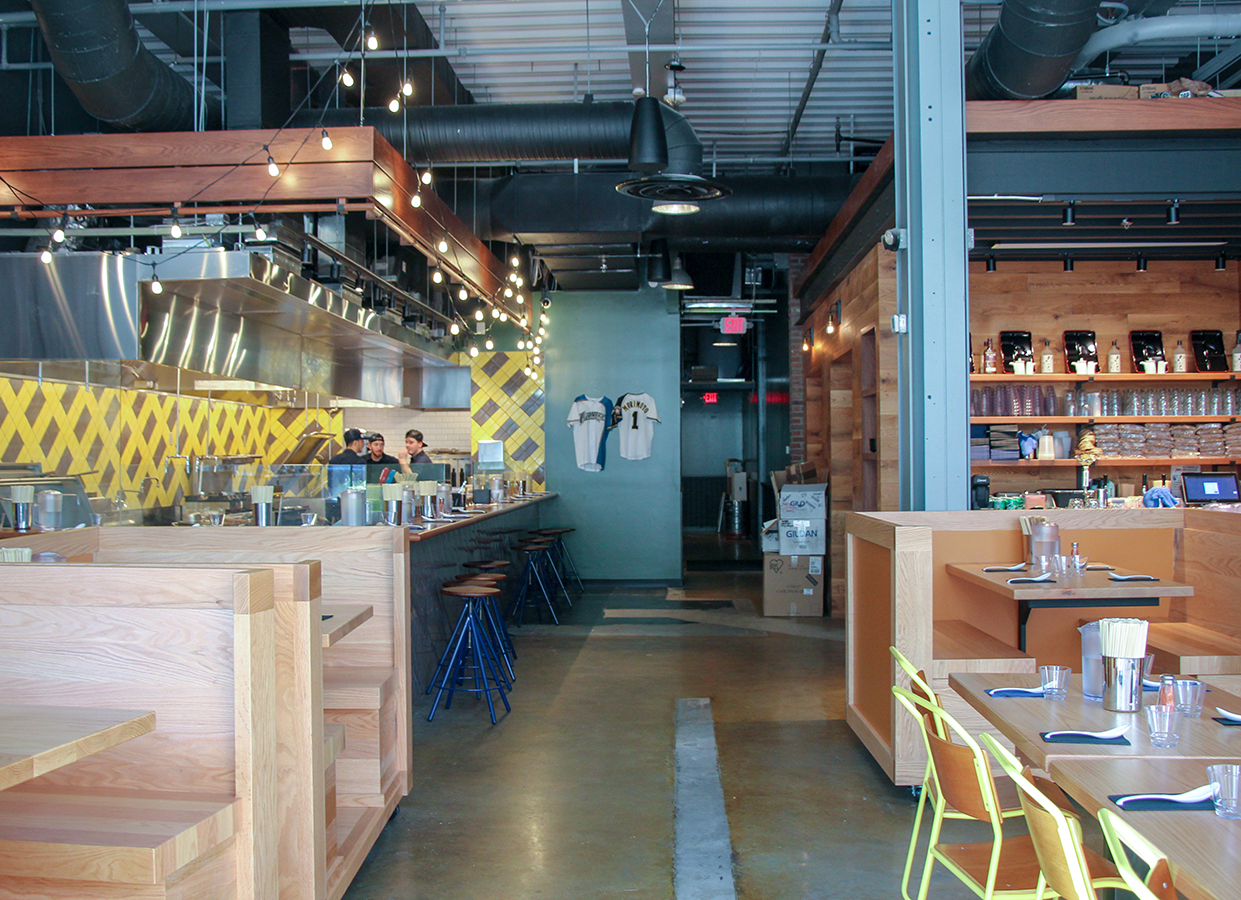
In this case, Hatoba, the Japanese word for “dock,” pays tribute to its 89-seat warehouse location near Nationals Park with baseball and seafood. An entirely new slate of recipes incorporates clams, red miso, and curry. Jerseys from Sapporo’s baseball team, the Hokkaido Nippon-Ham Fighters, decorate the walls, and past games are broadcast in the bathroom. Jewayni again teamed up with Brian Miller from Edit Lab at Streetsense to design a space reminiscent of Kappabashi, a Tokyo street that only sells wares for restaurateurs. They decked the former 1900s boilermaker building in walls of tools, a lantern-lined front, and boxy booths shaped like shipping containers.
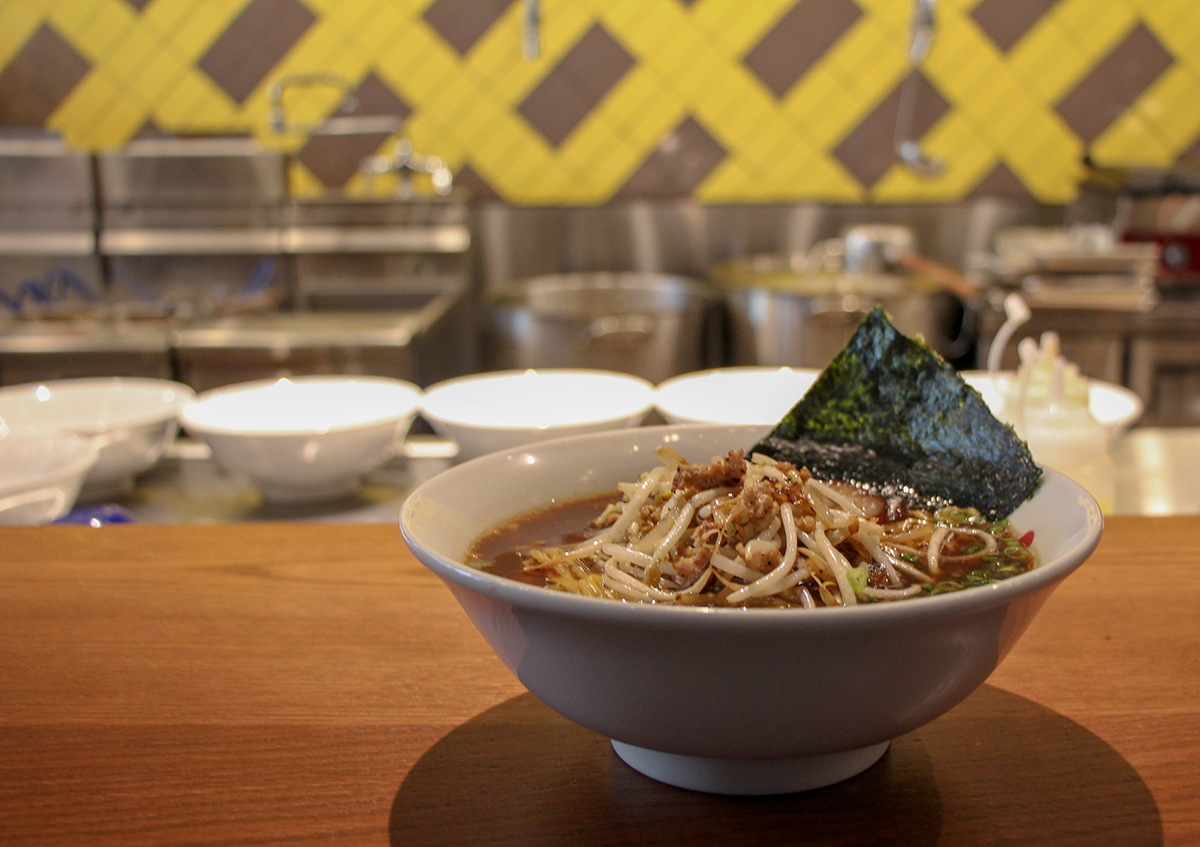
Each of the more than 500 bowls of shio, shoyu, and vegan ramen Hatoba serves daily is the result of thorough workshopping. To find the right combination of ramen’s four components—stock, tare, noodles, and flavor oil—the team has tested hundreds of iterations. The noodles for all four restaurants come specially made for the Daikaya group from Nishiyama Seimen Company in Sapporo, Japan.
“When we started [Daikaya], ramen was not available, period,” says Utagawa. “We looked for a noodle here but couldn’t find anything that we liked. Nishiyama won’t sell you noodles unless they see that you are serious.”
Once put together, the ramen is a mix of aged and fresh flavors, what Utagawa calls a “contradiction in a bowl.” Their tare takes about a month to make; noodles age about seven days (depending on the weather and conditions) and cook moments before they go in the broth; stock simmers for 16 hours, but its best window for consumption lasts only a few.
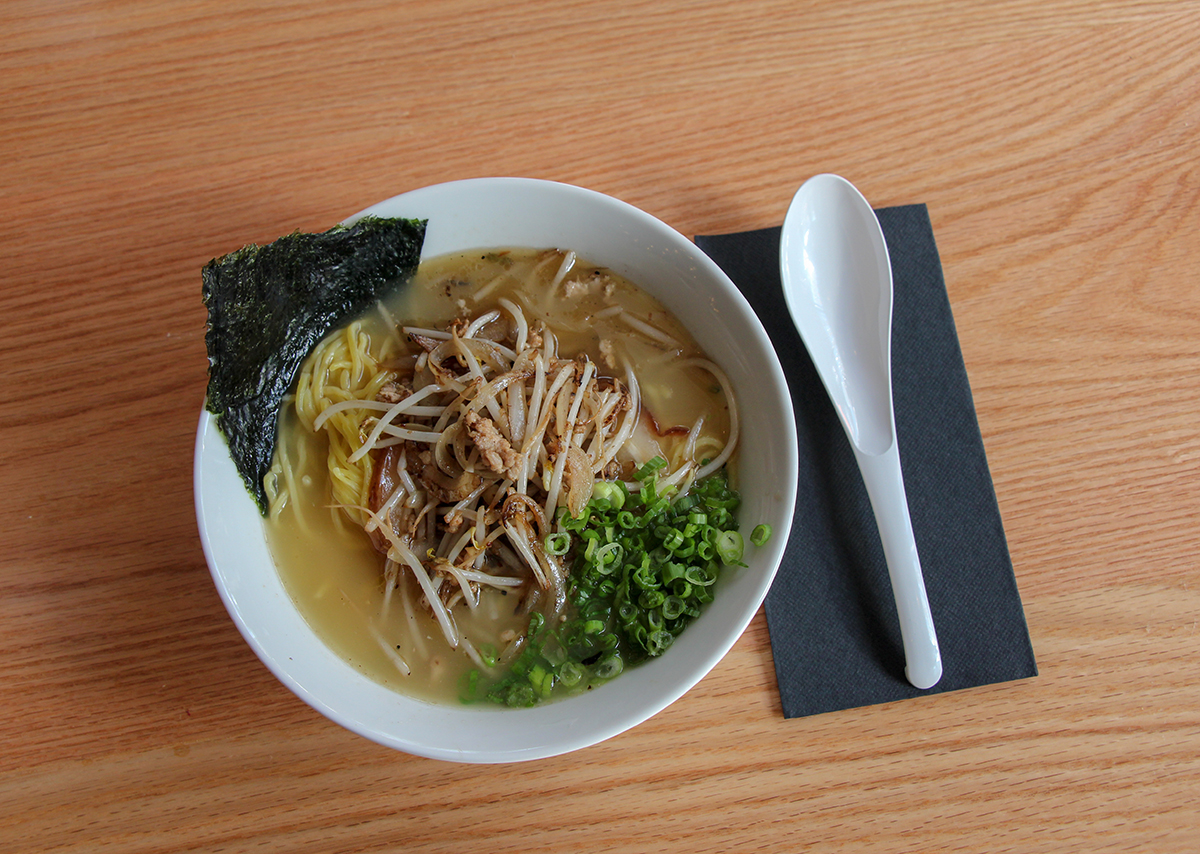
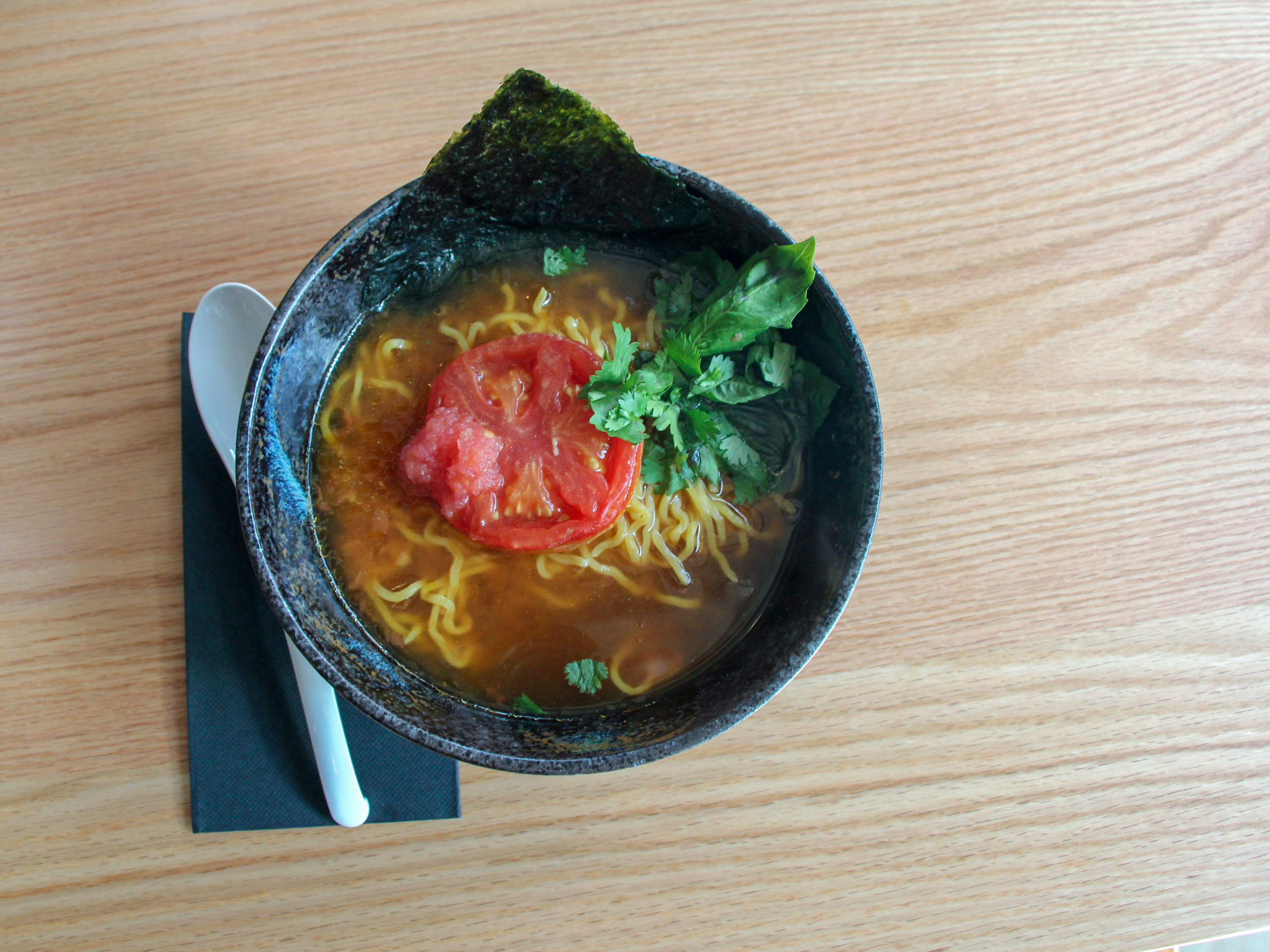
The menu’s five options get extra boosts from optional toppings like corn, nori, soft-boiled eggs, and spice bombs. Hatoba’s version of miso ramen, which was invented in Sapporo and uses a wok, fat-aged, chewy noodles, and a lighter Chintan stock, features a rare red miso—one bowl with clams and seafood broth, the other a spicy pork. The shoyu garlic soup has a nuttier, soy sauce broth topped with caramelized garlic cloves and wok-fried pork and bean sprouts. The yuzu shio, also made with pork, has a slight citrus flavor. While traditional Japanese ramen isn’t vegan, the team also opted for a curry bowl topped with a beefsteak tomato.
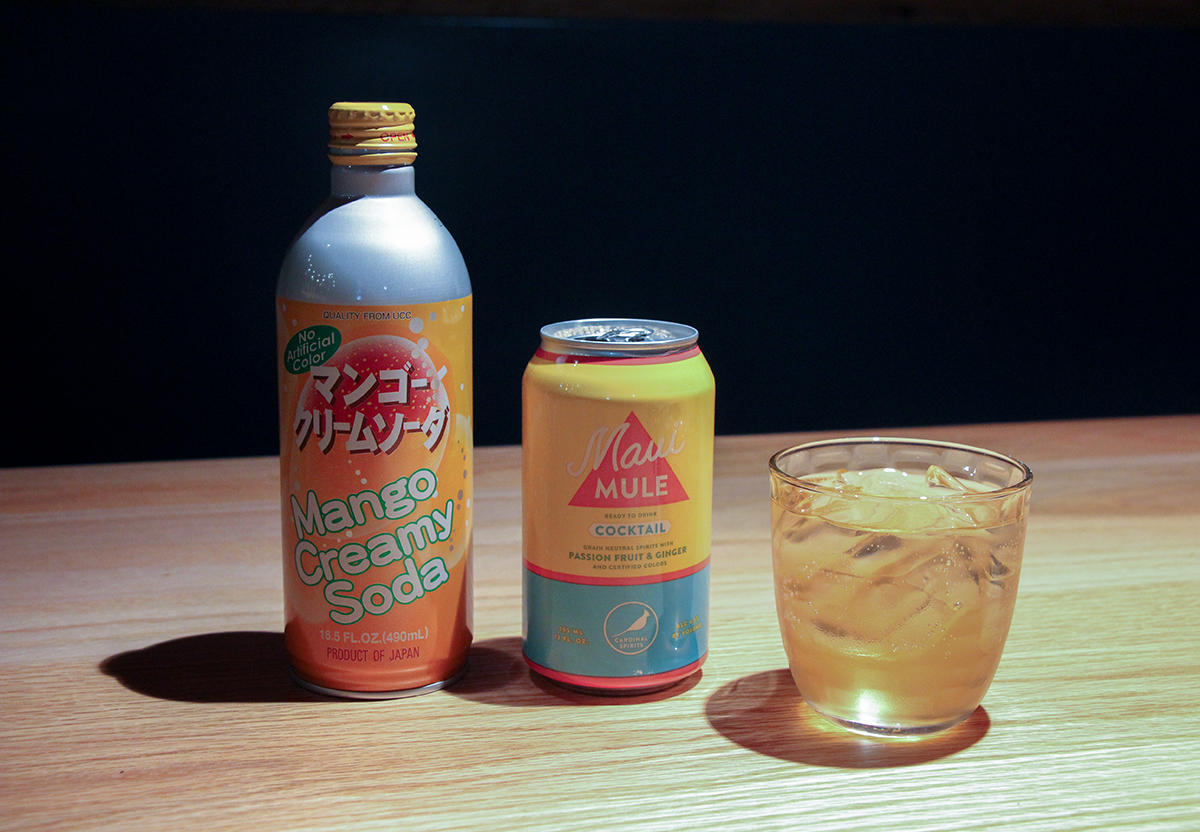
Instead of a regular cocktail menu, the bar serves shatterproof beer, wine, sake, and mule cocktails in cans, as well as Japanese mango and yuzu sodas and green tea. A few beers and one sake are also available on draft.
The team will open a fifth project later this winter next door to Daikaya, in the former Graffiato location, but haven’t announced details. Hatoba also plans to offer specials as crowds head to watch the Nationals in the World Series this week.
“It’s exciting for me to share what I grew up eating, what I think is very close to my heart,” says Utagawa. “That combination of fleeting goodness and comfort is, I think, what makes people love ramen. It’s particularly exciting when people who are not from the culture are eating it and getting the same vibe.”
Hatoba is located at 300 Tingey St. SE in Navy Yard. Open Sunday-Thursday 11 a.m.- 10 p.m., Friday-Saturday 11 a.m.-11 p.m.