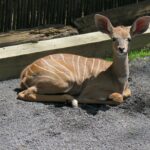
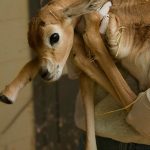
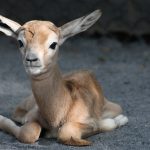
D.C. has a new baby animal to get starry-eyed over. The Smithsonian National Zoo announced on Thursday the birth of their newest addition, a lesser kudu calf.
This birth comes after a major loss for the zoo’s lesser kudu family. On September 28, the matriarch of the herd, Shirley, died after complications while giving birth to a calf of her own. Shirley’s calf did not survive its birth.
The new calf, which doesn’t yet have a name, was born on October 14 to Shirley’s daughter, Rogue, and the male lesser kudu at the zoo, Garrett. This is their second calf following the birth of 10-month-old Kushukuru. With the new calf, there are now three males and one female lesser kudu living at the zoo.
Zookeepers have observed the calf moving well and nursing normally, per a press release announcing the calf’s birth. An exam performed the day after he was born found the baby lesser kudu to be healthy and gaining weight. The little guy is “bold and alert,” and visitors can look forward to seeing him roughhouse with his brother and dad once he’s finally allowed into the public enclosure, the zoo says.
Gil Myers, the cheetah conservation curator at the zoo, tell DCist the calf is actually larger by around two pounds in comparison to other lesser kudus in his age group. According to Myers, the young calf has spent the past week tucking himself in piles of hay and hiding away to sleep in corners.
In the wild, lesser kudu are found across East Africa in countries like Kenya, Somalia, Uganda, and Ethiopia. They have white stripes crossing their backs, and males have spiraling horns, Myeser says. (Lesser kudu are not to be confused with greater kudu, which are larger and have different markings.)
Only 16 zoos across the U.S. display lesser kudu. At the National Zoo, the lesser kudu family lives with two Absyssinian ground hornbills named Karl and Karoline in the Cheetah Conservation Station.
The new calf won’t be available for the public until late fall, per the zoo. Zookeepers are giving the calf time before he faces the public to hang out with family and learn about his new surroundings.
Visitors can stay updated on news of the calf’s naming and debut through the zoo’s social media accounts.