Rachel Kurzius
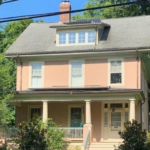
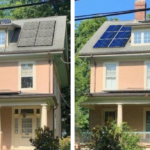
Steve Preister is readying another application for solar panels on his front-facing roof in a historic district, and this time, he has reason to believe that the D.C. Historic Preservation Review Board could approve it.
The board’s decision to reject Preister’s previous application in October drew widespread criticism, including from Tommy Wells, the director of the District Department of Energy and the Environment. It comes at a time when is D.C. is transitioning to 100 percent renewable energy by 2032, including 10 percent from local solar sources, as part of ambitious climate legislation.
The issue with Preister’s application, according to the board, was that the panels were visible from the street. He already has board-approved solar panels on his porch roof and the front dormer of his home, but has now twice been rejected for ones on the main front roof, where he says all the best sun is. For the past 35 years, Preister has lived in a home in Takoma, one of D.C.’s 37 historic districts. There’s an extra layer of bureaucracy for construction on D.C.’s 25,000 historic properties—the historic board needs to approve the work, keeping in mind whether it is “historically compatible.”
And for years, the board has viewed visible solar panels on front-facing roofs as incompatible with historic districts. However, Preister’s Advisory Neighborhood Commission, which unanimously approved his petition in September (before the Historic Preservation Review Board weighed in), urged the board to think differently about solar. As Preister’s ANC commissioner Erin Palmer explains it, the idea was to have the board consider solar panels the way they do essential tools of modernity like gas meters. “We know they exist, so it’s about finding the best way to put them in,” Palmer says. “We’re not trying to erase historic preservation or historic compatibility.”
Now, a new set of sustainability guidelines for historic properties could change how the board evaluates solar panels. The Sustainability Guide for Older and Historic Buildings has been in the works for years, and is the culmination of work from DOEE, the D.C. Office of Planning, and the Historic Preservation Office. The 70-page document outlines a comprehensive series of practices for older buildings, but the short section about solar panels is likely to make the biggest stir.
“There’s now a provision to allow for front-facing solar on sloped roofs in historic districts if it meets certain requirements,” says Andrew Trueblood, the director of the D.C. Office of Planning. “It does say that you try to avoid front-facing and street visible where possible, but we recognize that there are situations where, for energy purposes, it needs to be on a front-facing roof.”
Steve Callcott, a deputy preservation officer at the Historic Preservation Office, says that the change is in line with what the board told Preister in October. “They didn’t say in that case or any other case, ‘You can never have solar on the front.’ They were just pointing out what they thought was incompatible about it and they encouraged [Preister] to look at whether the use of a particular product or solution might achieve compatibility.” Callcott says. “So what we’re doing here is capturing that idea and putting it into the guidelines, so the board can adopt that as their official policy now.”
While the board of nine may have never explicitly said that they opposed front-facing visible solar panels, they also never approved any. One board member, local architect Chris Landis, explained to DCist last month that it was a matter of finding “a product that is developed that looks like slate and develops energy—I would imagine that those would probably be acceptable. We’re not there yet, but we’re close.”
In Preister’s new application, for instance, he is including sleeves that will mimic the color of his historic roof. But Preister, who sees it as his “civic duty” to fight climate change, wants people to see his solar panels and perhaps be motivated to consider getting some of their own. Is that dream impossible while living in one of D.C.’s historic districts?
Callcott maintains that would be allowed under the new guidelines, which outline “a way for panels to be visible, facing public streets, but at the same time also being compatible,” he says.
The guideline’s text reads that “it is imperative that our city’s older and historic buildings fully contribute to [D.C.’s] goal” of 100 percent renewable energy by 2032, including 10 percent from local solar sources, adding that the design guidelines are “intended to promote these types of installations in a manner that retains historic building characteristics and minimizes alterations that could adversely impact an historic building or district … If visible from public street view, use low-profile panels set flush with the roof and in a complementary color with the roof finish to avoid a discordant appearance.”
Most of the approvals for changes to buildings in historic districts go through the Historic Preservation Office, which uses previous board decisions as a guide. The office has approved more than 1,400 solar installations from 2009-2019, per Callcott. The board itself only hears and weighs in on cases that could fall into a grey area: In looking over 14 applications at 11 different properties over the past decade, it has only denied two solar applications, including Preister’s.
While those approval numbers are high, Preister says that many people in historic districts don’t even bother applying for visible solar, because they assume they’ll be rejected. The neighbors on Preister’s street all supported his solar application, he says, and a few expressed interest in their own solar panels, “but several said, “We’re not going to make any application till we see what happens to you. And we’re not going to apply if you get rejected.'”
Needless to say, Preister is thrilled by the potential shift, which the nine-person board needs to vote on at its December 19 meeting following a period of public comment. Folks in favor of solar plan to advocate for even more explicit language in the guidelines. Preister will also be presenting his new plans for his panels.
While the guidelines may have been in the works for some time, the denial of Preister’s application in October brought them a new round of attention. Some people argued that historic preservation was getting in the way of working towards solutions for the climate crisis.
Michelle Moore, the CEO of nonprofit solar organization Groundswell, told DCist that attempts to reject solar on historic preservation grounds “risk turning the historic aspects of Washington neighborhoods into a mausoleum.”
City agencies heard that feedback, says Trueblood. “People were using it as was an opportunity to bring up the discussion of the challenges that we’re facing in terms of climate issues and challenges, and how we can best align those with our historic preservation goals,” says Trueblood. “I think we came up with an answer that is pretty elegant and I think can help achieve both ends.”
Callcott says that often, historic preservation and energy efficiency can go hand in hand: “The renovation of historic buildings or older buildings is inherently a sustainable practice,” he says. “And getting people to think through not just one component of their building, whether it’s solar or windows, but to think about their building in its entirety.”
There’s No Paywall Here
DCist is supported by a community of members … readers just like you. So if you love the local news and stories you find here, don’t let it disappear!