Natalie Delgadillo
One of the District’s most notorious accused slumlords, Sanford Capital, has reached another settlement agreement with the D.C. attorney general, agreeing to return $1.1 million in rent payments to 155 tenants at three properties in the District.
“I think the settlement is a very very clear and loud message to would be developers, landlords, and management companies who would look to profit off of becoming slumlords,” D.C. Attorney General Karl Racine tells DCist in an interview. “It’s clear that the Office of the Attorney General prioritizes these cases, that in our prioritization we will use novel theories of law to hold them accountable, and that we will do everything we can to get money back to tenants who have been disregarded.”
Sanford Capital has a long and troubled history in the District. At one time, the company owned more than 65 buildings in the city, and tenants in several of them have described dilapidated conditions like mold, broken refrigerators, a lack of heat and air conditioning, nonfunctional toilets, and vermin infestations. Racine’s office has been taking legal action against Sanford and related companies since 2016.
In April last year, Sanford reached a settlement with the OAG that required the company to pay $325,000 in restitution and fines and divest from every property it owned in the District within six months. The company will still be required to comply with those terms.
And earlier this year, two Sanford properties—the Terrace Manor apartments in Ward 8 and the Congress Heights Apartments in Ward 7—were placed under receivership by D.C. courts earlier over the amount of repair work necessary and Sanford’s delays in performing it. Terrace Manor tenants received restitution in last year’s settlement, and they are not included in the current settlement.
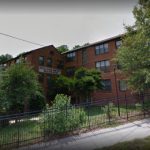
The new agreement covers three properties in Wards 5, 7, and 8: One on Franklin Street NE, another on Alabama Ave SE (the Congress Heights apartments), and a third at G Street SE. Under the terms of the agreement, the company will reimburse 155 tenants a total of $1.1 million for rent paid while living in these buildings. Sanford must also continue divesting from its properties in the District (the company has not yet successfully sold all of its properties, though they no longer manage any properties in the city, per the OAG).
A lawyer for Sanford Capital did not respond to DCist’s request for comment by the time of publication.
“Tenants endured water leaks, sewage backups, mold, and infestations of rats and bugs in their apartments. Many tenants lacked heat in the winter, and some did not have access to working toilets, stoves, or refrigerators,” Racine’s office said in a release announcing the settlement. “At some buildings, Sanford refused to take simple security measures like fixing broken locks and allowed drug and gun activity to go unchecked.”
In addition to restitution for tenants, Sanford must pay $27,000 to D.C.’s Department and Consumer and Regulatory Affairs over housing code violations. Any remaining funds after the District pays restitution to tenants will go into D.C. coffers as a penalty for violating consumer protection law.
The settlement also resolves 32 claims from the Legal Aid Society related to the Congress Heights Apartments, per the press release from the OAG.
“Our clients lived for many years with serious housing code violations and a landlord that ignored their repeated requests for much-needed repairs,” said Rachel Rintelmann, Legal Aid Society of D.C.’s supervising attorney in the housing unit. “It is our hope that the financial recovery will both compensate our clients—in part—for their losses, and also send a message to landlords that they cannot violate the law with impunity.”
The average amount of restitution is upwards of $7,000 per tenant, according to the OAG.
Tenants at the Congress Heights property will continue in their own lawsuit against Sanford Capital and another company, City Partners, whom they say violated their tenant rights through an illegal transfer of property. They accuse Sanford and City Partners of conspiring to allow the property to fall into disrepair in order to force tenants to move out and eventually raze the complex to build a new mixed-use project. The new settlement has no effect on that suit.
This story has been updated with a statement from D.C. Attorney General Karl Racine.
There’s No Paywall Here
DCist is supported by a community of members … readers just like you. So if you love the local news and stories you find here, don’t let it disappear!