Colleen Grablick
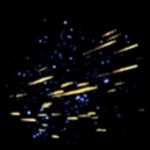
Some scientists are predicting a rare “unicorn” meteor storm in the sky tonight, as the Alpha Monocerotid meteor shower potentially puts on a far more dramatic version of its annual show.
We hadn’t heard of the astronomical phenomenon either, but the possibility of an explosion of meteors across the sky sounds pretty fascinating, so we wondered if the headline-grabbing prediction was justified.
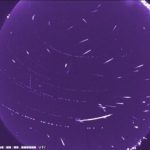
The annual meteor shower usually peaks around Nov. 21-22. With only a few visible meteors every hour, it’s not usually a big deal. But researchers with NASA are saying that shower could potentially turn into a storm tonight, with hundreds of meteors flying through the sky.
The name “unicorn” comes from the Alpha Monocerotid’s close proximity to the constellation “Monoceros,” which means unicorn in Greek. Over the last 100 years, the meteor shower has had four “outbursts” such as the one scientists are predicting for tonight. The most recent one, in 1995, produced around 400 meteors per hour (that’s even more intense than the Perseids).
Peter Jenniskins, one of the scientists leading the predictions on the 2019 Alpha Monocerotid shower, correctly predicted the outburst in 1995. His research proved that the conditions of this year’s meteor shower are similar to that in 1995, prompting the possibility of a “unicorn” storm.
Scientists say the outburst, if it occurs, would happen around 11:30 p.m., but those wishing to view the storm should head outside an hour early to adjust their eyes to the darkness. The whole thing would last less than hour, according to the American Meteor Society.
The chances of actually seeing the outburst depend on a city’s location in relation to the meteor’s radiant point in the sky, according to NASA scientist Bill Cooke. The lower the degree of the radiant point, the harder it will be to see the meteors over the horizon. The meteors will originate low in the sky of the eastern United States and Canada (South America has the best possibility to witness the storm, and parts of northern Africa and western Europe may have a chance to catch the sight before dawn, according to the Washington Post.)
If the scientists’ predictions hold true, the D.C. area could see between 75 and 85 meteors per hour, according Cooke’s map. But he is skeptical that the shower will live up to the hype. “I now think there is a pretty good chance there may be no outburst at all. And even if there is, it won’t be as impressive as many think,” Cooke writes.
If you want the chance to see how it plays out, don’t expect to look up into the sky on U Street and easily witness an explosion of meteors. Weather conditions and light pollution will also affect potential visibility, and the WUSA9 Weather Team predicts cloudy skies tonight. They suggest finding a location far away from light pollution and city lights for optimal visibility. The best viewing points will be 30 miles or more west of the Beltway, according to the outlet.
There’s No Paywall Here
DCist is supported by a community of members … readers just like you. So if you love the local news and stories you find here, don’t let it disappear!