Jacob Fenston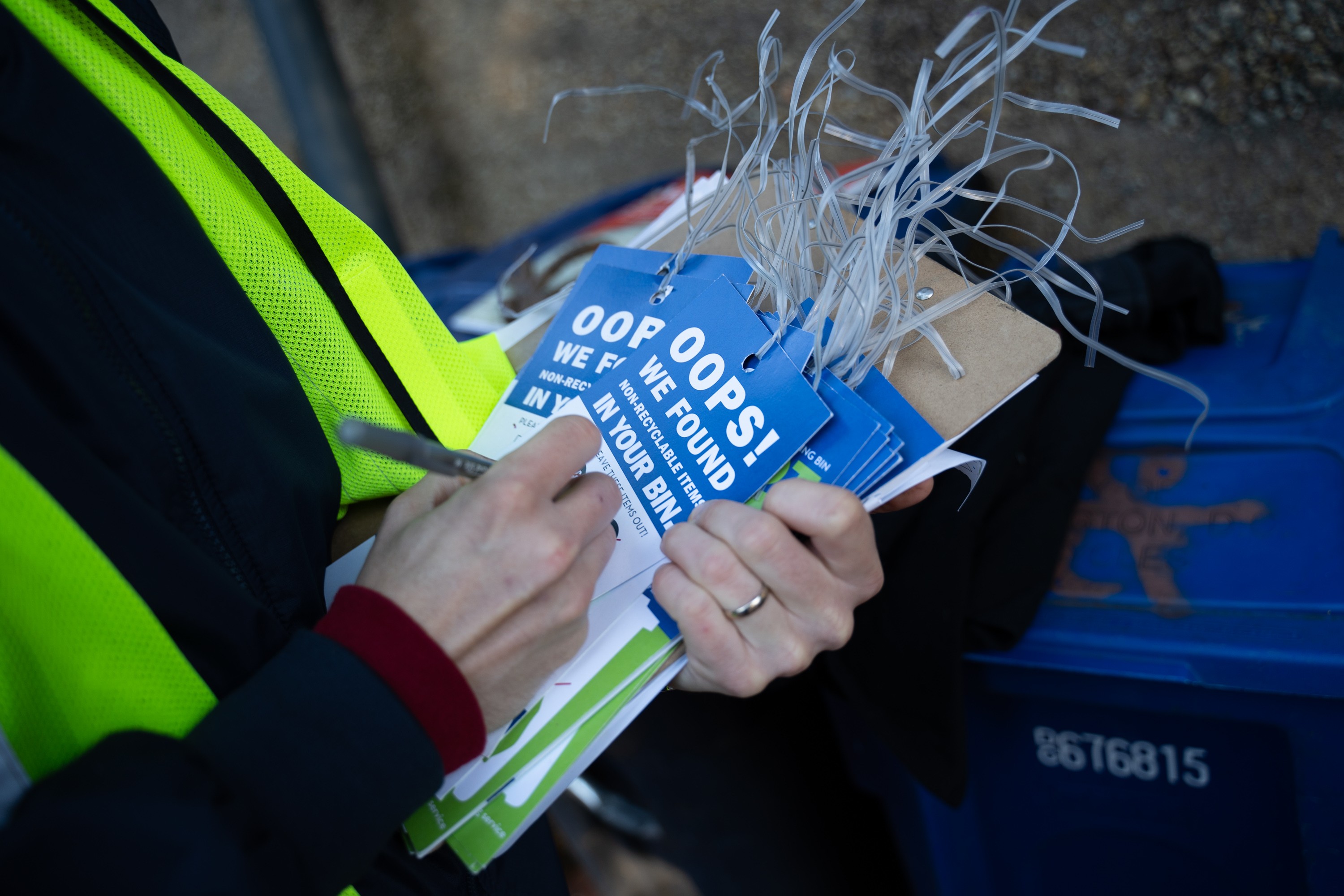
If you put a plastic bag, an old shirt, or a banana peel in your recycling bin in D.C., you may get a friendly note back: “Oops! We found non-recyclables in your bin.”
This fall, inspectors with the city’s Department of Public Works have been peeking in recycling bins, and giving residents feedback—in the form of a card tied to the recycling bin—if there are items in the bin that shouldn’t be there.
On a cool autumn morning, inspectors Howard Lee and Stefan Roha make their way through the alleys of Mt. Pleasant, lifting the lids of blue recycling bins.
“This looks pretty good and clean,” says Lee.
You can tell a lot by going through someone’s waste—it’s sort of like an anthropological dig. This household, apparently, includes a dog and someone who really likes yogurt. The bin is filled with plastic yogurt containers, dog food cans, as well as cardboard boxes, envelopes, and paper.
“All that stuff is recyclable,” says Lee.
Clearly, these are conscientious recyclers—they’ve even rinsed out the yogurt tubs and dog food cans. But even conscientious recyclers make mistakes.
“Oh, actually, I do see a little bubble wrap in here, which is a no-no,” says Lee.
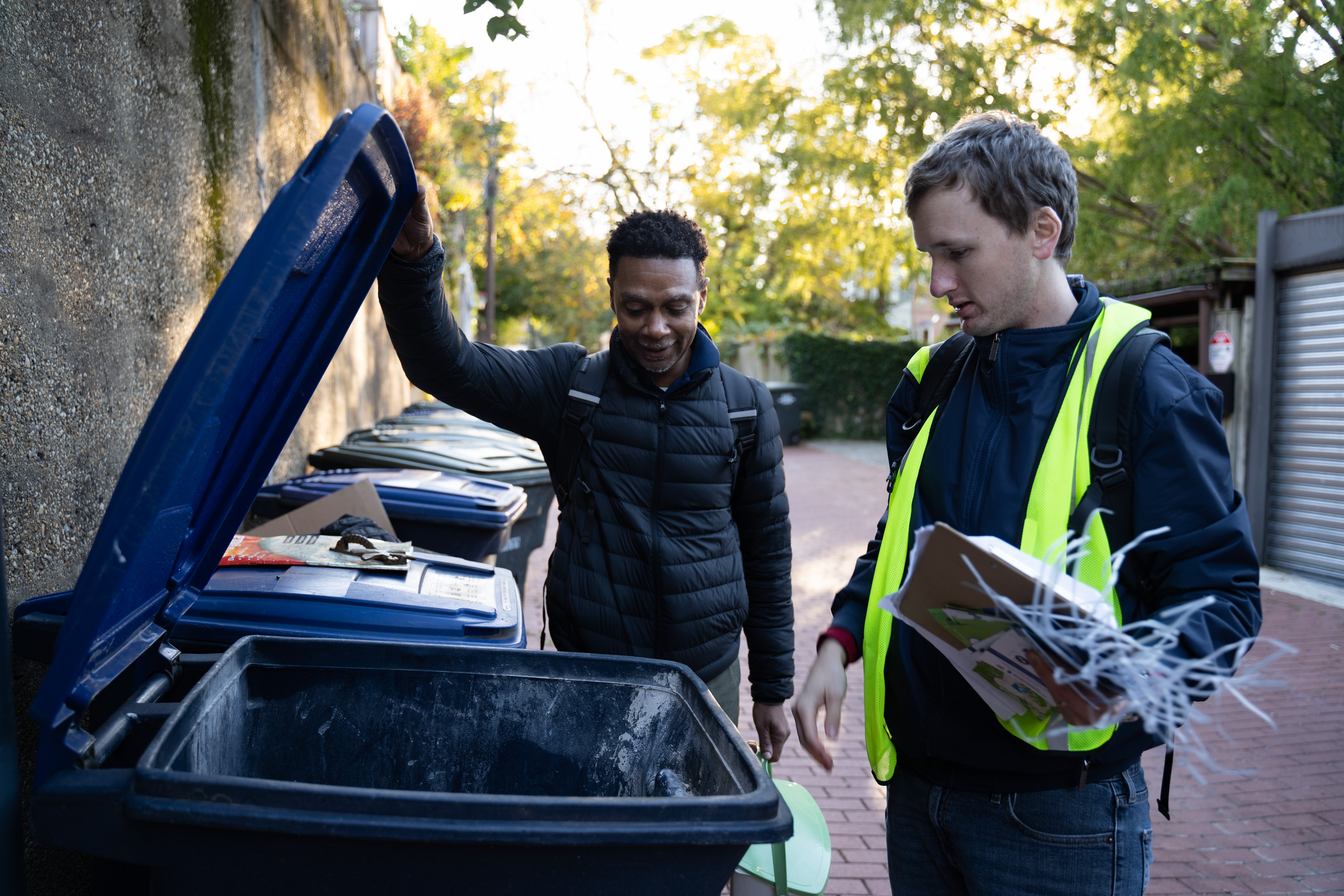
Over the past few months, Lee and Roha have been getting up early to hit alleys all over the city before the recycling trucks get there. On carts like this one, with the bubble wrap, they tie on a blue and white card with big letters, and check off the offending item or items. The prohibited items include plastic bags, clothing, yard waste, “tanglers” like cords and hoses, scrap metal, wood, and furniture.
The most common non-recyclable item is the plastic bag: many residents bag their recycling before tossing it in the bin.
Other recycling carts on this route are much worse—Lee lifts one lid and shakes his head in puzzled disappointment.
“It’s all trash,” Lee says. So is the cart next to it, filled with tree limbs and plastic bags.
‘People Want To Do The Right Thing’
D.C. started checking and tagging recycling bins last year as a part of a pilot program. This year, the city has expanded it—with a goal to reach about 10 percent of recycling routes in the District this fall.
The idea—and design of these “Oops” tags—comes from a non-profit called The Recycling Partnership. Chris Coady is director of community programs for the group.
“For the most part, people want to do the right thing with recycling,” Coady says. “Traditionally, they just haven’t gotten clear, consistent information.”
Coady says cities around the country are trying to clear up confusion, and get residents to pay more attention to what they put in recycling bins. This is due, in large part, to recent changes in the international market for recyclable material: international buyers have gotten a lot pickier. In 2018, China, one of the largest processors of recycling in the world, stopped accepting most material from the U.S. because it’s too contaminated with trash.
“I look at it as a resource that we all produce,” says Coady. All that cardboard, plastic, glass, and metal that we put in recycling bins has value; it’s raw material to make new boxes and bottles and jars. But if it’s mixed up with garbage, it’s unusable.
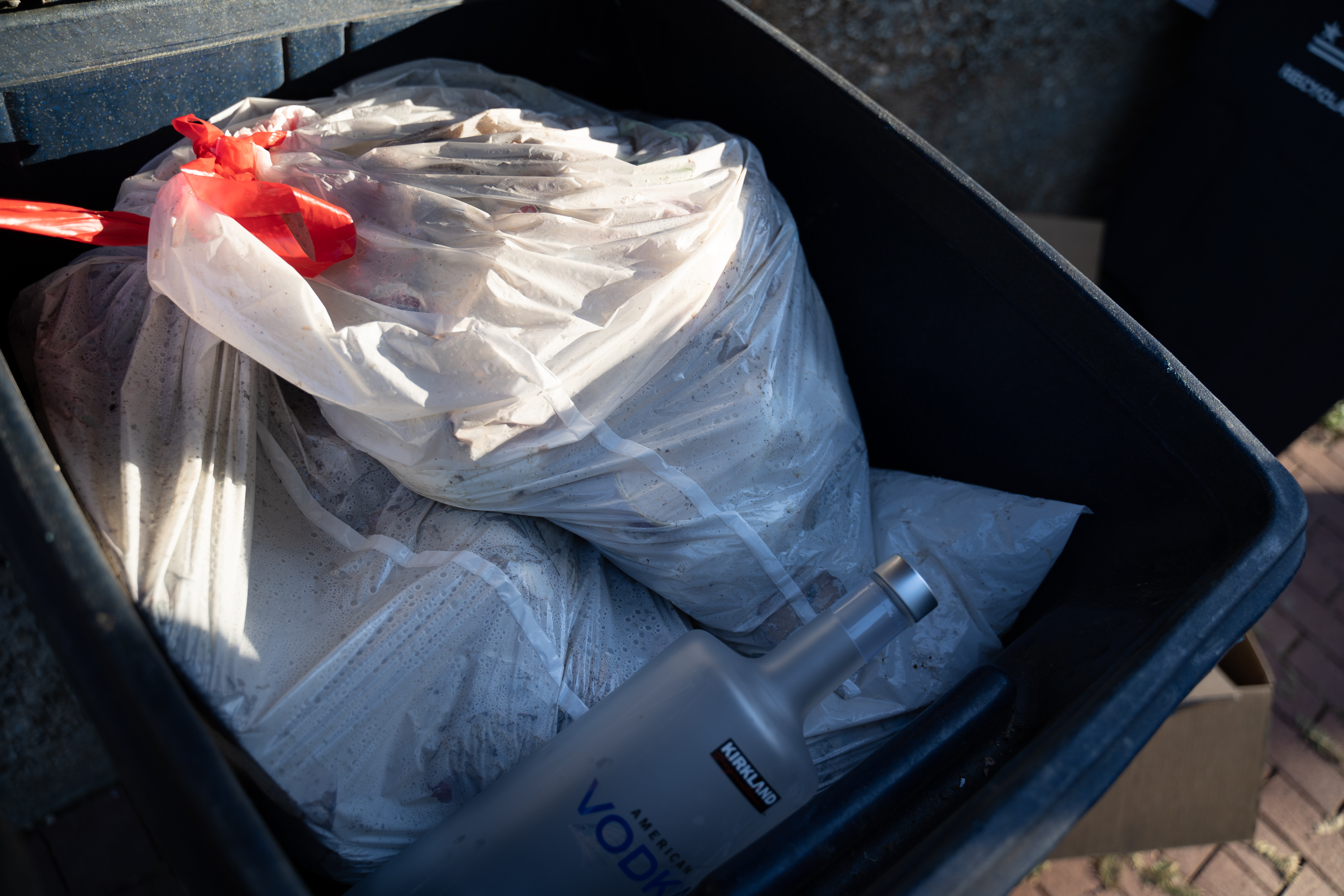
Oops! Recycling should not be inside plastic bags. Recyclables should be loose or in paper bags.
Other jurisdictions in the D.C. region are also trying out curbside recycling inspections, including Montgomery County and the City of Alexandria.
“It’s a one-on-one, direct line of communication,” says Helen Lee, environmental program manager for Alexandria’s resource recovery division. The city has already designed its own “Oops” tags, and plans to start using them early next year.
“A lot of municipalities, when they do recycling education and outreach, they might send out a mailer, or a guide to service or put out messages on social media,” says Lee.
These efforts can be easy to ignore for residents—just one more piece of mail to drop in the recycling bin, or a tweet to scroll past. But a tag on your recycling bin is personalized and you get the message at the moment you need it—when you’re taking out the recycling.
Do Oops Tags Really Change Behavior?
In Montgomery County, recycling officials started a pilot program this fall in parts of Gaithersburg, Montgomery Village, and Germantown. As in D.C., inspectors check out bins before the recycling trucks arrive. They put stickers on bins that contain non-recyclables. Residents have to remove those items before collectors will take the bin.
In order to track improvement, the county is checking loads of recycling from the routes where tagging is in effect, measuring the rate of contamination.
“Are we effective by using and applying these strategies, and how effective are we?” asks Eileen Kao, chief of waste reduction for the county.
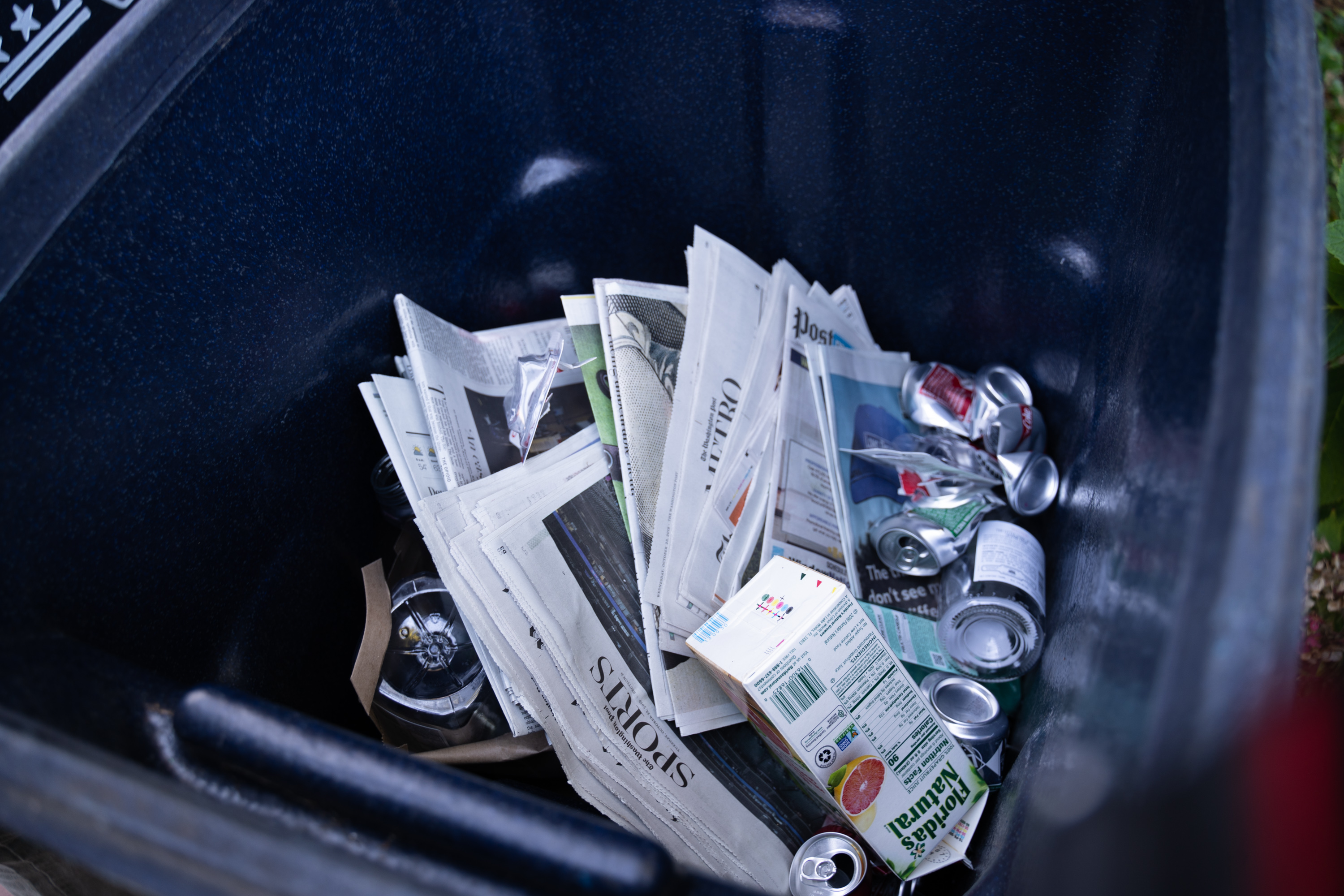
Perfect! These items are all recyclable, and there are no plastic bags.
In D.C., officials are also tracking the effectiveness of the tagging program, and so far it is working.
“We’re seeing about a 30 percent reduction, when we go back to the alleyways that we’ve already gone through, in the materials that we don’t want in the cans,” says Chris Geldart, director of the Department of Public Works.
The tag includes a warning: Failure to separate trash and recycling can result in a $75 fine.
“We can go to tickets, if it’s egregious,” says Geldart. But he says typically, the city does not actually follow through with that threat, and rarely issues fines for recycling.
Back in the alley in Mt. Pleasant, inspector Howard Lee finds some evidence of improvement.
“This has a tag from last week,” he says, pointing to a bin. “They left it on.”
The previous week, he tagged the bin because there were plastic bags in it — these aren’t allowed because they can tangle in the recycling sorting equipment. This week—success! The bags are gone.
This story originally appeared on WAMU.