The poster beckoning audiences just beyond the Now Showing sign features a gun-slinging cowboy at a saloon, a masked steed, and an ornery bull. The Bull-Dogger promises an adventure filled with “death defying feats of courage and skill.” The 1922 silent Western also features a black cast.
Long before Quentin Tarantino’s 2012 blockbuster Django Unchained, the black Western was well-trod territory in the first century of filmmaking with movies like The Bull-Dogger and the 1937 musical western Harlem on the Prairie.
Those are just a few of the previously uncovered gems that shine in National Museum of African American History and Culture’s new exhibit Now Showing, which opened Nov. 22. The exhibit showcases more than 40 posters and lobby cards from the museum’s collection celebrating black films, filmmakers, and actors in a dark, intimate setting trimmed with gold molding and art deco sconces that transport visitors to a classic movie house. The show also maintains a decidedly 21st-century feel with an interactive app that brings up film clips and interviews with the curators.

Rhea Combs, curator and head of the Amanda Stafford Center for African American Media Arts gallery, where the exhibit is housed, developed Now Showing precisely to show off pieces like The Bull-Dogger that aren’t widely known.
“It appears to me that there is this longstanding history of African American filmmaking and image-making,” she says.”But like so many other topics in American history, it’s pretty much been underrecognized.”
The exhibit draws from the Larry Richards Collection, a cache of more than 700 posters acquired by the museum in 2013. While the museum has already featured some of those posters in its permanent exhibit Taking the Stage, this new show gave Combs a chance to explore the striking art that accompanied African American films.
“It was really digging through the archives and recognizing the large swath of material and noticing within our Taking the Stage exhibition, we’re only able to use a smattering of his collection,” she says. “I thought it was a really wonderful way to address this undertold story.”
You won’t find posters from some of the highest grossing films in recent years, such as Black Panther or Girls Trip, or even the classic buddy comedies featuring Richard Pryor or Eddie Murphy. Combs chose to focus on the first 70 years of film, a period that emphasized visually arresting graphics that straddled the fine line between art and commerce.
“The ways in which poster art changed in the ‘80s, you ended up getting less of this idea of artistic direction and input by visual artists,” Combs says. “There was an overreliance on a single actor and they were primarily highly stylized photos with the title attached.”
Visitors might discover through Now Showing that the success that movies like Black Panther are having now isn’t far off from other moments in film history. That interest in African American cinema often goes in 20-year cycles, Combs says. She cites black directors like John Singleton and Julie Dash who achieved prominence in the 90s, as well as the era of Blaxploitation in the 1970s.
“I think we’re in that moment again,” Combs says, adding that movies have to compete for more diverse audiences in a global market. “It would only make sense to expand the palette in terms of whose stories we tell and who gets to tell those stories.”
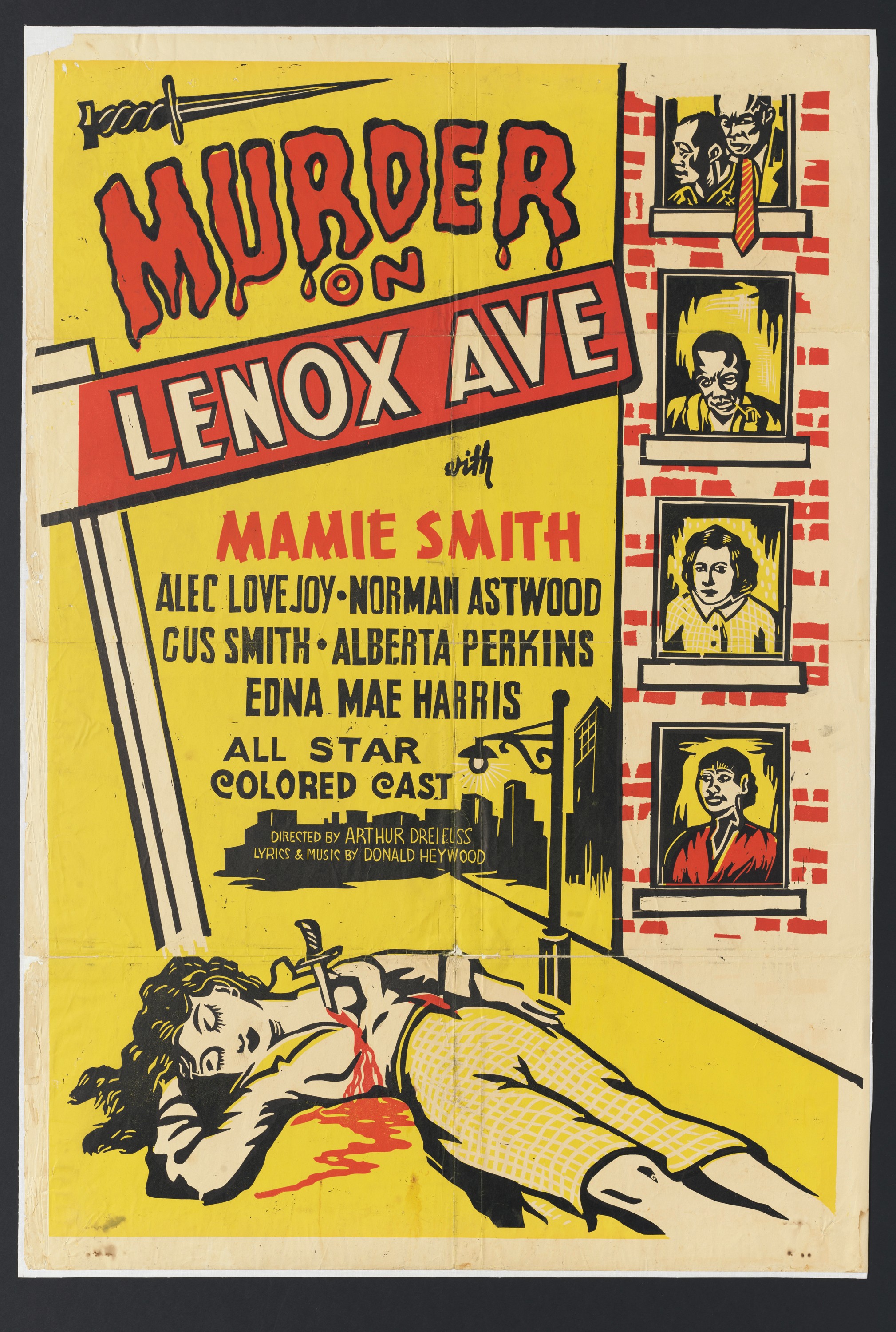
Without the movies as vehicles, the posters stand as works of art on their own. The 1941 black gangster film Murder on Lenox Ave., for example, looks like a gruesome, tri-color woodcut of yellow, black, and crimson. Considered a modern day Othello, the movie was one of many “race films” marketed specifically to black audiences between 1916 and 1956. That aggressive marketing comes across in the title itself, which refers to a major thoroughfare in Harlem.
“We were living in a very segregated time and so they were geared toward primarily African American audiences,” she says.
Not all of the posters in the exhibit were meant to draw just a black audience. Otto Preminger’s 1954 musical Carmen Jones starring Dorothy Dandridge and Harry Belafonte proved a hit with black and white audiences alike, while Diahann Carroll garnered an Academy Award nomination for her role in the romantic-comedy Claudine. That need to draw in mixed audiences often changed both the advertising scheme and artistic direction of the posters. For example, originally released as The Duke is Tops, the 1938 musical was later renamed The Bronze Venus to emphasize the role of its black starlet, Lena Horne.
“There was really shrewd marketing taking place. It was part of an industry and the keen awareness of trying to appeal to various audiences was eye-opening for me,” Combs says. “Yes there’s an artistic merit, but this is a for-profit industry, she is this rising star, she has crossover appeal, if we put her in top billing then we can expand the audience.”
Now Showing is on display at the National Museum of African American History and Culture’s Center for African American Media Arts through November 2020. FREE
This post has been updated to correct the title of the exhibit.
There’s No Paywall Here
DCist is supported by a community of members … readers just like you. So if you love the local news and stories you find here, don’t let it disappear!