 Gabe Bullard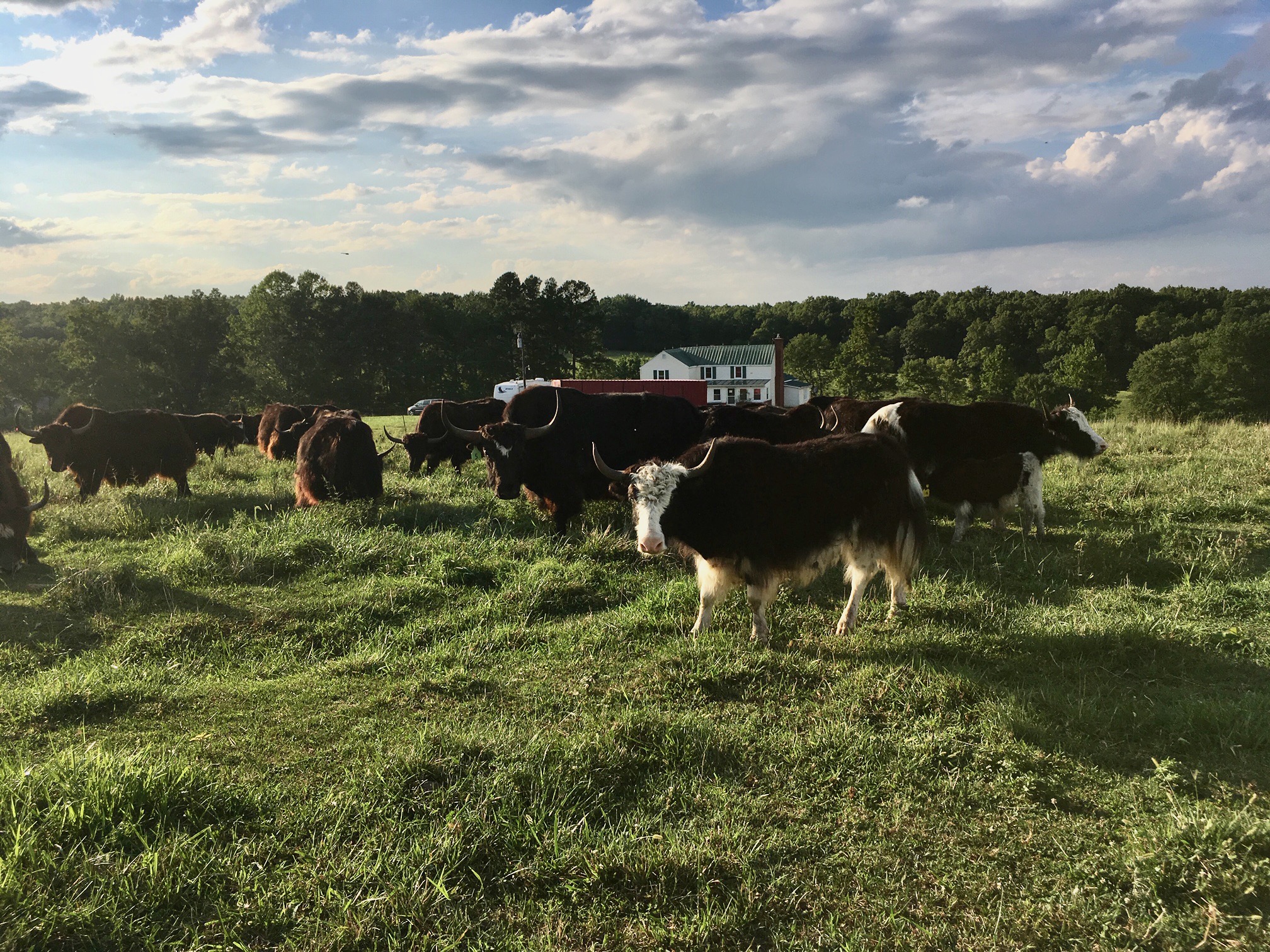
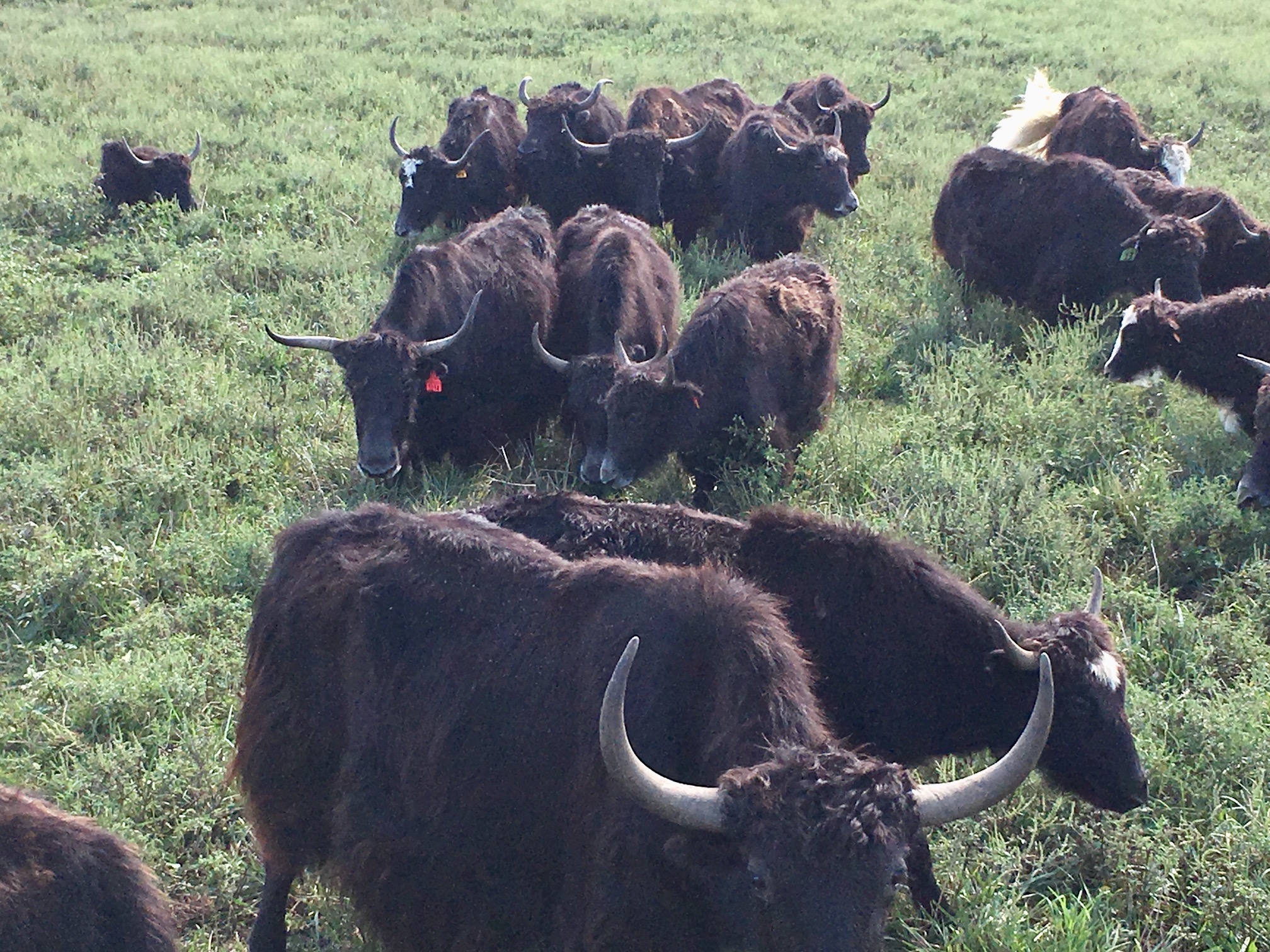
On Sept. 13, the Associated Press ran a story out of Lovingston, Va.: “Yak on ride to butcher shop escapes to Virginia mountains.” The words didn’t fit together. A bovid native to an area 7,500 miles away was 35 miles southwest of Charlottesville? And it was on its way to be turned into meat? Two weeks later, the yak—named Meteor—was found dead, struck by a vehicle. Hit and run.
“The State Police said that’s not unusual,” says Robert Cissell, the farmer who owned Meteor. “They also said there’s a decent chance [the driver] thought they hit a bear.”
It’s a safe assumption: Bears are more common than yaks in Virginia. But the yak is gaining … slowly. There are 27 on Cissell’s farm, and he plans to expand his herd.
“I can’t keep up with demand,” he says. “We’ve got a lot of people who have either tried it at restaurants, or they’ve read about it, or someone told them about it and they’re curious.”
Long eaten in parts of Nepal and Tibet, the yak is one of a handful of animals now turning up in local restaurants, feeding a desire for something beyond the standard pigs, chickens and cows. Some eaters are looking for new flavors or a fresh adventure. Some have concerns about their health, the way animals are treated, or the effects of meat production on the environment. They’ve turned to game and other meats that aren’t often served in the U.S. as both a solution and an escape.
“It’s a more sustainable and a more delicious way to live,” says Marcos Carvalho, a Washingtonian who seeks out nontraditional meat on restaurant menus.
It would take massive shifts in public habit, law, and agricultural practices for truly wild animals to overtake beef, pork, and poultry. But there’s a growing market for animals like Meteor, which offer an easily farmed departure from the norm.
Game Time
Biting into a hunk of deer or picking at the rib bones of a boar might feel like going back to cave-dwelling days (unless you grew up hunting), but it’s a much shorter trip through time. Over the last century, the amount of meat Americans eat has grown, while the variety of animals we eat has shrunk. Game declined as the country urbanized and agriculture industrialized. America’s big three meat animals rose to prominence because, at one point, they were the most convenient to farm, move, slaughter, and sell on a mass scale.
Chefs have developed nearly endless techniques to make these animals appealing, but some restaurateurs have discovered that a new type of meat on the menu can be just as much of a draw as a really great chicken dish.
“You can pretty much go anywhere and get a steak, go get a burger anywhere. The fact that you get to try something different is interesting to most people,” says Antonio Hurley, manager of Cedar restaurant, which offers elk and rabbit sliders, in addition to other game dishes.
“Palates are changing,” says Javier Arze, founder and owner of Huntsman Game, a company that sources hard-to-find meat for area restaurants. Arze says he works with the Dabney, Minibar, Pineapple and Pearls, Fiola, Kinship, Bresca, and A Rake’s Progress, among others. “Any meaningful restaurant will probably be our customer,” he says.
A restaurant doesn’t have to be haute to dabble in game, either. Bison burgers are a common accompaniment to craft beer (bison is also available at Whole Foods). Even Arby’s has experimented with venison, elk, and duck.
And there’s more than throwback novelty or international adventure driving this demand. The efficiency that led to cows, pigs, and chickens being commonplace also led to Americans eating more meat per capita than most of the world. This has had dire effects on both our health and the planet’s.
Though meat consumption in the U.S. continues to reach record highs, the warnings haven’t been entirely ignored. There’s a growing business around meat-like non-meat made by the companies Beyond and Impossible. Other eaters look for meat that might sidestep some of the pitfalls of the production process.
“Factory farming is bad for the environment: It pumps animals full of chemicals and hormones and they feed the cows corn, which is completely unnatural,” Carvalho says. If he buys beef to cook at home, he says he opts for grass-fed, for reasons of taste and for his and the animal’s health.
Arze has noticed the change, too, and he traces it to customers’ modern mindset.
“Eat less meat, eat better meat,” he says.
Where Does It Come From?
For those who want wild meat, it’s not easy to get animals out of nature and into a restaurant. Not legally, anyway.
“You cannot serve, you cannot sell, you cannot trade wild game in the United States,” Arze says.
Federal food safety requirements make the sale of hunted meat either impossible or impossibly expensive. Many “game” animals, including some of the birds Arze sources, are raised on ranches. A few are imported; venison, for example, often comes from New Zealand. This food isn’t wild, but it’s not factory farmed, either. And it can still be scarce, depending on the source or the season.
Every year, Rocklands BBQ, which has four locations in the area, offers a week of game specials called Grills Gone Wild. They’ve served yak burgers, kangaroo burgers, and ostrich fajitas. Gomez says the week is a hit with customers, but the game can be hard to find and expensive to source. They lose money on it, she says. To offer game regularly would mean boosting the price a few dollars and dealing with new sourcing logistics.
“If it was easier to come by, and if it wasn’t quite as pricey, we’d certainly love to be able to do it more often,” says Rebecca Gomez, restaurant’s head of operations.
The ideal animal, then, to meet diner demand and restaurant logistics, would be one that could be farmed at a scale smaller than the factory system and be unusual enough to attract customers, but not so unusual that no one wants to try it.
Return Of The Yak
Every few years, yak aficionados say this is the year yak goes mainstream. They say farmers will recognize that yaks are easier to raise than bison or cows, and eaters will find the meat to be lean and tasty.
In 2003, The New York Times wrote about“a yak attack on beef and bison” and counted about 2,000 yaks on American farms. In 2014, Modern Farmer counted 7,500 and declared yak “your new favorite exotic meat.” Nicole Porter, who chairs the genome committee of the International Yak Association (IYAK) estimates there are now about 10,000 yaks on American farms, roughly 3,000 of which are registered with IYAK. The organization tracks the breeds and heritage of yaks, tracing them back to a group of 10 the Toronto Zoo relinquished 50 years ago.
Maybe 2020 will finally be yak’s year to join bison as a standard alternative to beef. It sits in the middle of the Venn diagram of attainability and exoticism. The fact that its meat and milk are enjoyed internationally appeals to adventurers, while the heritage breeding pleases discerning meat lovers. The way it’s farmed can be less destructive to the environment than raising cattle, and can result in meat that’s not as fatty. A guilt-prone eater might chew on a yak skewer a little more comfortably than they do on a bacon cheeseburger.
Farmers who have taken to yak have found value beyond meat, though the meat is valuable—Meteor was worth between $1,000 and $2,000. Yak milk and the yarn made from yak hair can sell for more than their cow- or sheep-derived equivalents.
“They’re very, very efficient,” says Porter, who raises yaks herself (though not for meat). “They eat less—I don’t want to say that to encourage folks to feed them less, but they do require less as long as they’re getting their proper nutrition.” Cissell agrees, estimating that beef cattle eat two or three times as much as his yaks.
Cissell has more yaks than cows now. As he considers adding to his herd, he’s also looking to expand distribution of his product, which is branded Appalachian Yak. Right now, he sells to a few restaurants in Virginia, some wholesalers, and directly to customers at farmers markets.
It doesn’t take a road trip to find yak around the region, though.
Eating Local Yak
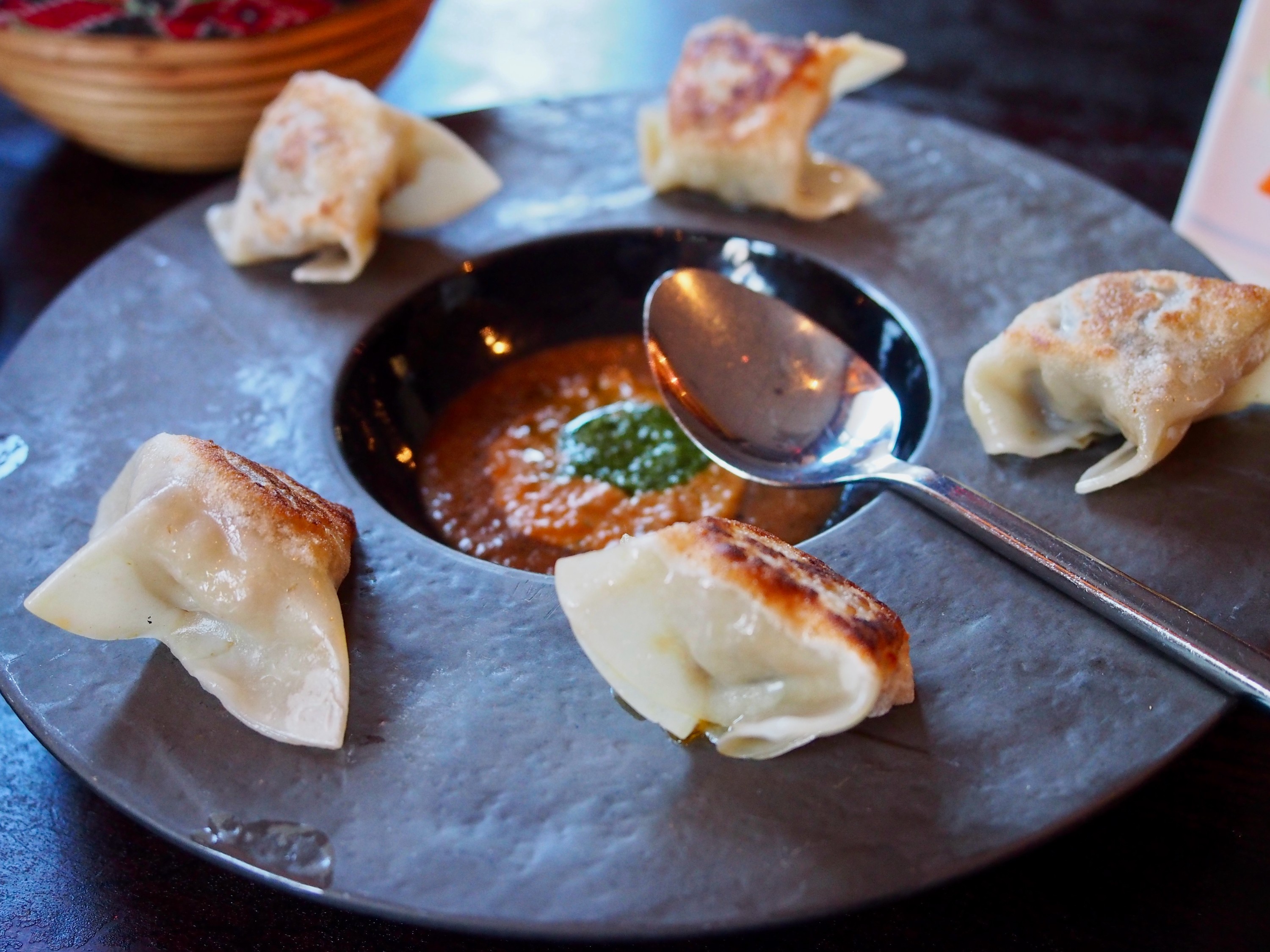
At Royal Nepal in Alexandria, a photo of a yak herd in the Himalayas hangs above the entrance to a hallway next to the bar. On a recent Thursday evening, a group of friends noticed yak on the menu, available in momos (a kind of dumpling), in a curry, or with chili sauce.
“What does it taste like?” one asked.
“Yak!” her companion answered.
One table away, Tuk Gurung, the owner and founder of Royal Nepal, slid me a laminated paper headlined with “Once you try yak, you’ll never go back.”
The page featured more photos of yaks and a chart claiming that yak had less cholesterol than standard red meat. It compared the taste to lean beef, or to game without a gamey flavor. (Arze questions whether “gamey” is really even a flavor, rather than a catch-all term for the way different meats taste. “I think what people associate with the word ‘gamey’ is unfamiliar taste,” he says.)
“We give it to the guests. They read about it, they like it,” Gurung says of the yak fact sheet. Royal Nepal has been open for about two years, and they’ve served yak from the beginning. At first, Gurung got the meat from Colorado, but now he sources his yak from a farm in Pennsylvania. He’ll move 10-20 orders of yak momos a night, and 10-15 each of the curry and chili.
“Definitely it’s getting more popular,” he says.
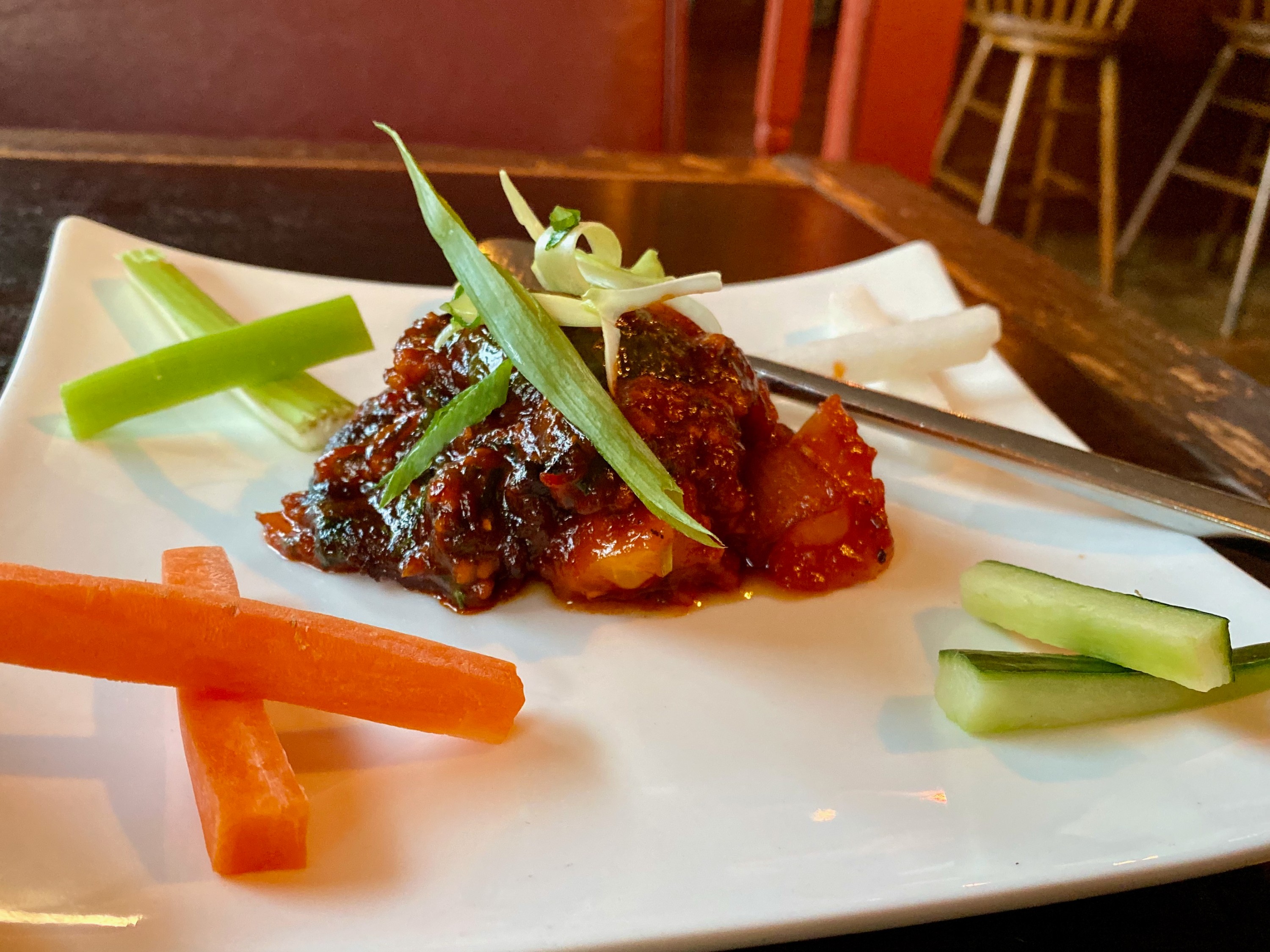
After we talked, Gurung and one of his waiters brought out a dish of yak momos and a plate of the chili-coated yak. The ground yak inside the momo tasted lighter than beef, but any flavor inherent to the meat was concealed by a pleasant blend of spices. The chili dish consisted of thin strips of crispy yak coated in a spicy but slightly sweet sauce. As with the momos, the lightness and leanness gave way to the seasoning on top. In the case of the chili, the slightly chewier strips of yak lasted long enough for the full heat of the sauce to kick in. I ordered another plate of it to go, as well as a yak curry, which I ate as soon as I got home. As advertised, the meat was lean and tender. As an alternative to beef, the advantage is clear—yak tastes lighter,cleaner, and new.
“It does have that adventure aspect to it,” Carvalho says of his habit of looking for nontraditional meats on local menus. Carvalho has cooked yak at home, and he describes the taste as sweeter than beef. He hasn’t tried it at Royal Nepal yet, but he plans to soon. He often goes with friends to try new types of meat at local restaurants.
“They’re like, ‘Oh, I get to tell my friends I had, you know, turtle or elk or something,’” he says. “But then they go, and they’re like, ‘This is great. Maybe I should seek this out in my life.’”
Welcoming The Almost-Wild Into The Kitchen
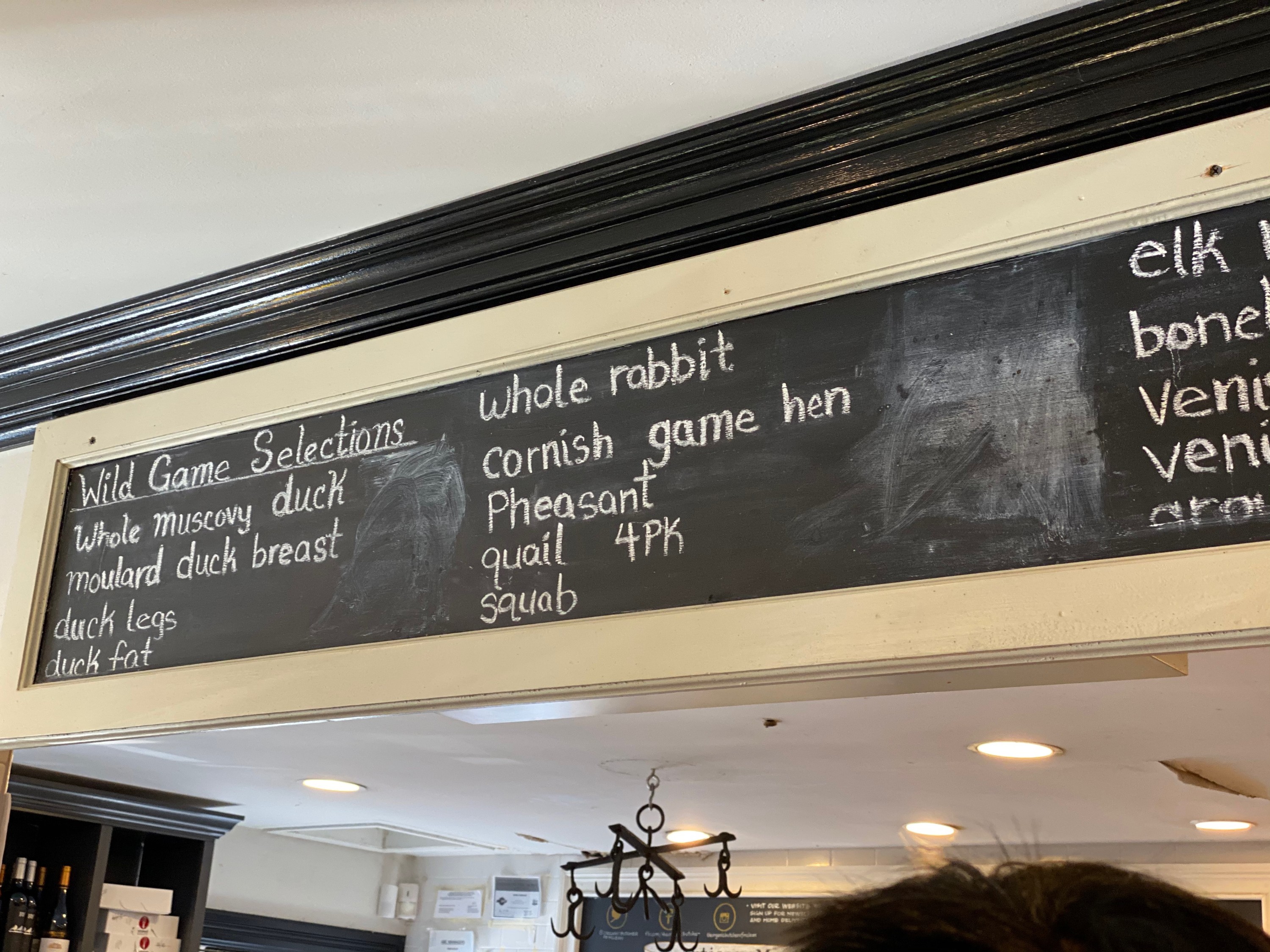
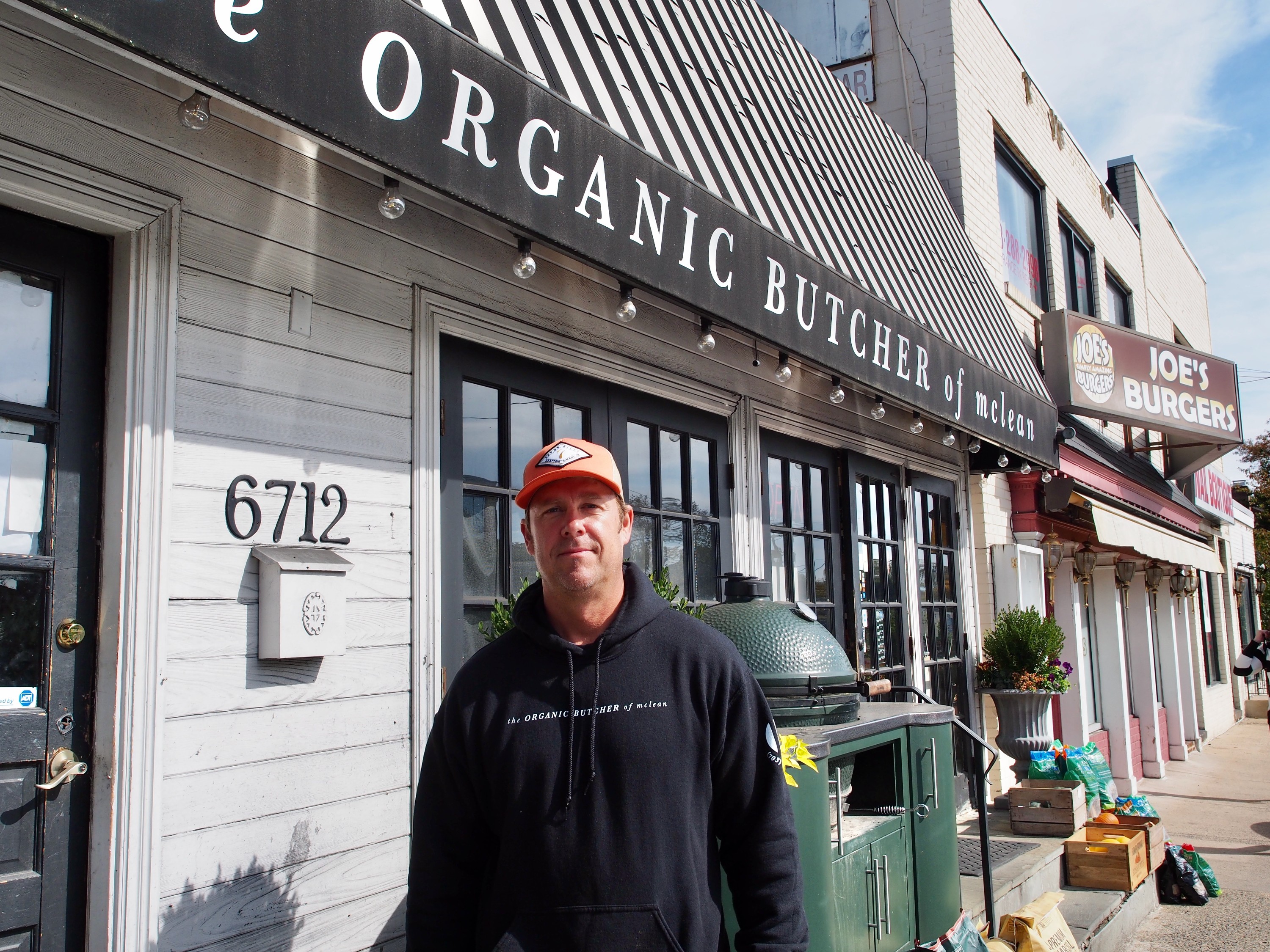
At the Organic Butcher of McLean on a recent Saturday, a block party drew passersby to the parking lot, while the line inside the small shop curved around a freezer full of ground boar and elk, as well as some of Cissell’s Appalachian Yak. A chalkboard over the counter advertised a variety of other game meats, from pheasant to antelope.
“I’m seeing a slight increase each year in providers of different products,” says Dan Roden, the founder and owner of the shop. He opened 15 years ago, when a shop full of game and organic meat might not have been able to draw a crowd like this. “It just happened to be a time in my life where I wanted to start eating healthier and thinking more about the types of food I was choosing, where it was coming from,” Roden says. “It was a little early, but definitely has continued to pick up every year.”
Roden says people who come in asking about game tend to know what they want. Store manager Elyse Smith says a handful of people who ask for game reference podcasting star Joe Rogan and his affinity for elk meat (he hunts it himself). Others mention a local nutritionist’s “wildatarian diet.” It’s about health and sustainability. All of them, Smith says, are ready for something different.
“Being so close to D.C. I feel like it allows us to have this adventurous customer base that has all these incredible restaurants and they’re going out and they’re trying new things,” she says. “They’re more excited because it’s a new product, new concept and especially when it’s raised in Virginia.”
On my way out, Roden gave me a pound of ground Appalachian Yak meat. Back home, it cooked quickly. I added vegetables until I had a stew. It was good—light, a little sweet. It was my third yak-based meal in four days, and by now, it didn’t feel much like an event. It had become routine. I was ready for this to be the yak’s year.
There’s No Paywall Here
DCist is supported by a community of members … readers just like you. So if you love the local news and stories you find here, don’t let it disappear!