 Rachel Sadon
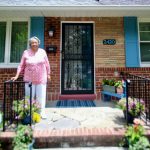
Travel to Hillcrest in Southeast D.C. and you’ll be met with rolling hills, manicured lawns, and red brick houses. The quiet neighborhood east of the Anacostia River is home to about 9,000 D.C. residents, and the local community association boasts that it is “Washington D.C.’s best-kept secret.” That said, here are ten facts you may not know about Hillcrest.
1. Several of D.C.’s most high-profile politicians have called Hillcrest home
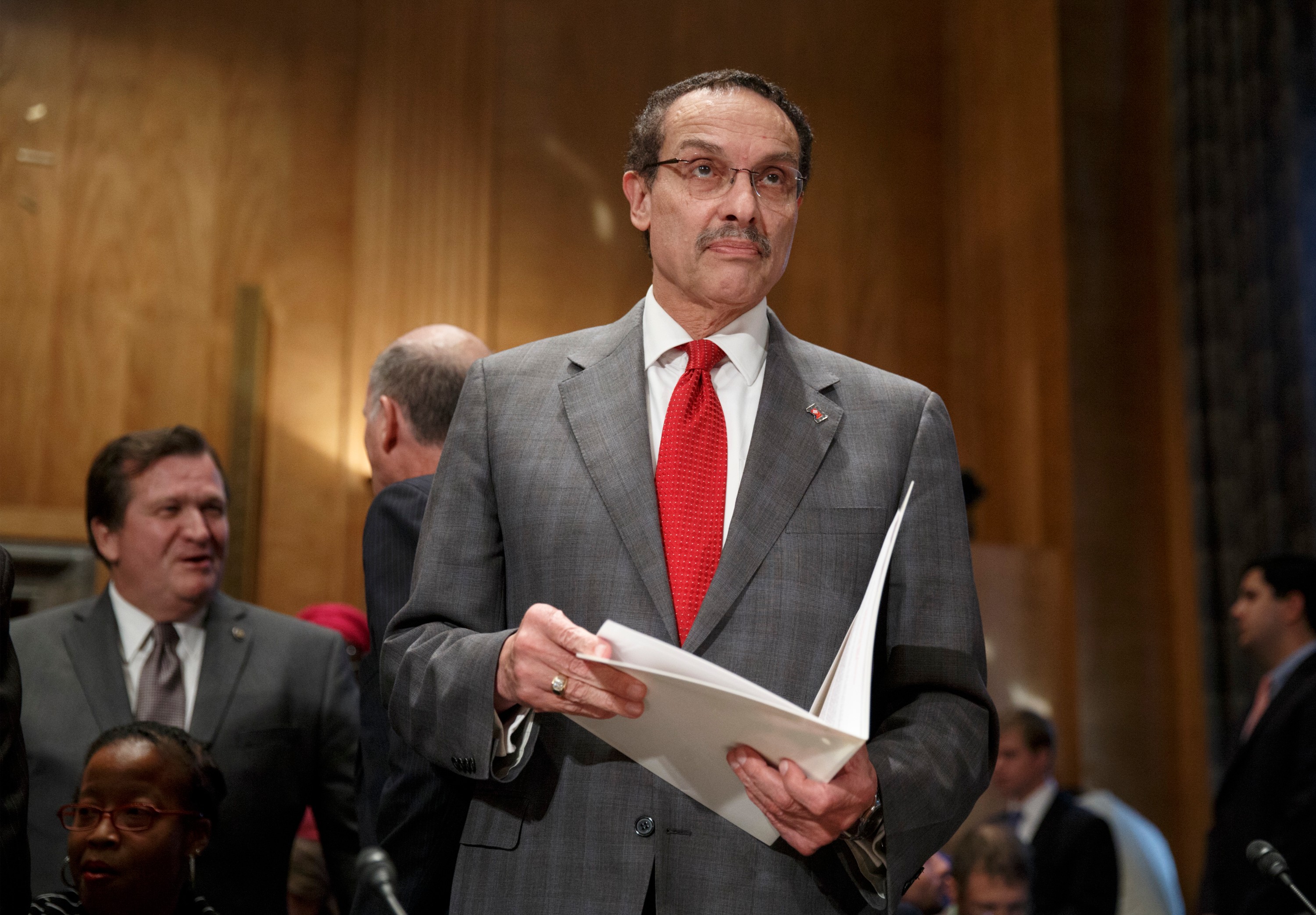
Hillcrest counts at least two ex-mayors and one D.C. Council chairman among it’s current or former residents, prompting Washingtonian to ask in 2010 if it was the new power neighborhood.
Former Mayor Vincent Gray, who currently represents Ward 7 on the D.C. Council, has lived in the Southeast neighborhood for more than a quarter century. Gray’s home was built in 1949, and he and his first wife purchased it from its original owners, according to Capital Community News. He was once fined by the city for building a fence without a permit.
Marion Barry bought a home on Suitland Road NW in 1979 and lived there for during his first three terms as mayor. It played a role in an early controversy for Barry, after the public learned that he got a discounted mortgage from a bank that counted his wife among its board of directors, according to the Washington Post. Barry went on to live there for 14 years, only selling it in 1993 when he divorced Effi Barry. The home sold again in in 2013 when it was valued at $469,000 that year
Meanwhile, former D.C. Council Chairman Kwame R. Brown also resides in Hillcrest, having bought a four-bedroom home in the neighborhood in 2002. When he first took office in 2005 as an at-large councilmember, he was the first politician who lived across the Anacostia River to win a citywide council seat, according to the Post. Brown resigned in 2012 after admitting to lying on a bank application.

2. Lawns are large, and residents take pride in them
Articles about Hillcrest inevitably mention the lawns. “The green spreads of this east-of-the-river neighborhood will never be confused with the Astroturf front porches found elsewhere; nor are they the overly tended lawns that you might find in, say, Wesley Heights; they are pristine and real, reflecting the handiwork of good and old and regular citizens,” the Washington City Paper wrote in 2008.
When DCist reported a story about Hillcrest last year, one neighbor pointed to two households, and described one as not-so-good because “they don’t keep up with the lawn the way they should.”
And it’s not just grass. Many neighbors take pride in flower gardens that were showcased in an annual garden tour for two decades.
3. Its nickname is the “Silver Coast”
It was hard for African Americans to integrate into many upscale American neighborhoods in the middle of the 20th century, with a couple of exceptions. One of those was a group of neighborhoods around 16th Street in Northwest D.C.—Crestwood, Shepherd Park, Colonial Village—that formed an enclave of black elites, earning it the nicknamed the “Gold Coast” (Mayor Muriel Bowser is a current resident).
Meanwhile, the suburban neighborhood of Hillcrest grew, attracting members of Washington’s black middle class, starting in the mid-1960s. The “Silver Coast” is said to have the same charm of the “Gold Coast” but without the quite as high price tags.
The nickname appears to have been popularized, by former Ward 7 Councilmember Willie Hardy, who was known to call it “my little Silver Coast.”

4. Walmart was supposed to open a store at Skyland. But after the city paid millions of dollars to clear the way, the company threw a corporate hissy fit, got its way, and then still decided not to set up shop after all.
The beleaguered Skyland Town Center project (located at the intersection of Good Hope Road, Naylor Road, and Alabama Avenue) has been in the works for nearly 15 years now, and it was supposed to be anchored by a Walmart.
The city used eminent domain to seize the land for the project in 2005, paying millions of dollars in settlements and spending years in court fending off legal challenges. The last case was settled in 2012, appearing to pave the way for the project to finally move forward and bring a major mixed-use development to the 18-acre site.
But te following year, the D.C. Council passed legislation that would raise the minimum wage from the then-rate of $8.25 an hour to $12.50 for big box retailers, and Walmart announced that it would pull out of Skyland as a result. Then-mayor Vince Gray vetoed the legislation, and Walmart said it was back in.
By 2014, a groundbreaking for the project was held and Walmart signed a lease a few months later, but the saga wasn’t over.
Years earlier, Safeway had struck a deal with the city to prevent another grocery store from opening close to its Alabama Avenue location. The issue loomed over the project for years, threatening to derail it until Mayor Muriel Bowser’s administration agreed in 2015 to pay Safeway $3.6 million to remove the restriction.
After all that, Walmart pulled out of the project in 2016.
Now, a Lidl grocery store is set to open on the site.
5. D.C.’s elite would ride coaches into the neighborhood to visit the eminent Overlook Inn
A group of wealthy industrialists set out to build an upscale development for Washington’s elite off of Pennsylvania Avenue and Branch Avenue in the late 1800s. And in the middle of what is now Hillcrest, they built an illustrious hotel and resort known as the Overlook Inn, community historian Jim Byers explained in a video by DC Place, an online video magazine.
It wound up being wildly popular. Coaching parties would pick people up from fancy downtown hotels downtown and whisk them across the newly built Pennsylvania Bridge to visit. Byers described it as the “sensation of Washington’s power elite for several years.”

6. Hillcrest was founded by the same real estate developer who built Congress Heights and several other Southeast neighborhoods
Col. Arthur E. Randle—a descendant of the earl of Chester, according to his New York Times obituary—was a prominent business leader in D.C. Randle founded and invested in local streetcar companies, and used his fortune to buy and develop land near what was then called the Pennsylvania Avenue Bridge. That became Randle Highlands. He expanded his development efforts, building up Congress Heights, Dupont Park, Penn Branch, and eventually Hillcrest.
Randle himself lived in what he called the “Southeast White House,” located in what is now called Randle Highlands, and he encouraged other Washingtonians to build large, luxury homes along Pennsylvania Avenue SE.
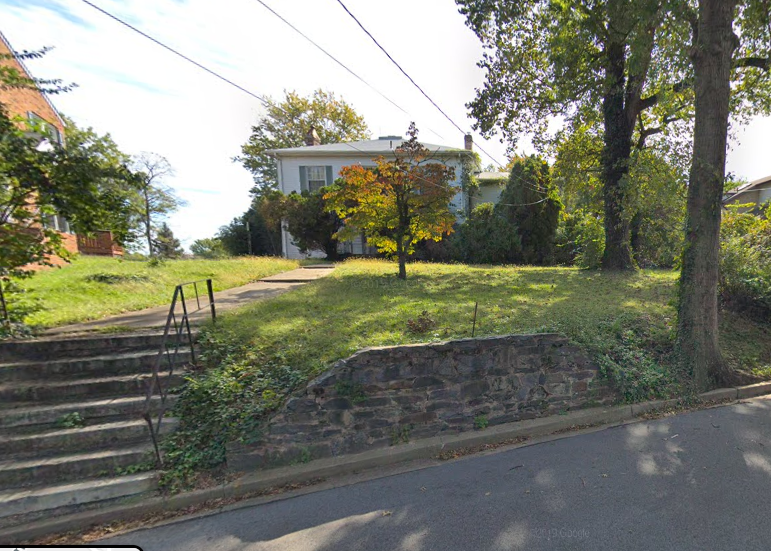
7. A home from one of D.C.’s biggest slave plantations is still standing in the heart of the neighborhood
The land that Hillcrest sits on was once home to the Nacotchtank tribe, with their largest fortified town in the area. Later the land was owned by George Washington Young, the largest slaveholder in the District at the time.
He inherited the “Nonesuch” mansion and its estate in 1826 and later bought the 624-acre Giesborough tract (currently home to Joint Base Bolling-Anacostia). Enslaved people grew tobacco on both sites, which were the largest pre-Civil War plantations in D.C.
Young appears to have built a house on the Nonesuch property for his daughter, Mary, when she married a Colonel Denman around 1860, according to a survey of the city’s historic farms and estates conducted by the D.C. Historic Preservation Office.
The property was subdivided by 1939 into a development called Summit Park. But the Denman house remained intact on 3703 Bangor Street SE, where it is still standing today. A black couple bought it in 1988 and set about completing a major restoration of the property; they still own it today.
8. You could say Hillcrest is the “Top of the Town”
With an average elevation of 150 feet, it’s safe to say D.C. is on the lower side of the country. But Hillcrest is one of the high points.
Most of the neighborhood has an altitude of about 300 feet above sea level, which is pretty steep considering the title-holder for highest point in D.C. goes to the Reno Reservoir in Tenleytown (about 410 feet above sea level.) Hillcrest’s elevation gives it good views of the Capitol and the Washington Monument in some spots.
In the early 20th century, when the neighborhood was converting from rural farmland to a suburban enclave, brochures used the altitude as a selling point, boasting that Hillcrest was the city’s highest plateau in D.C. and claiming particularly pure air, with temperatures five to ten degrees cooler than the rest of the city.
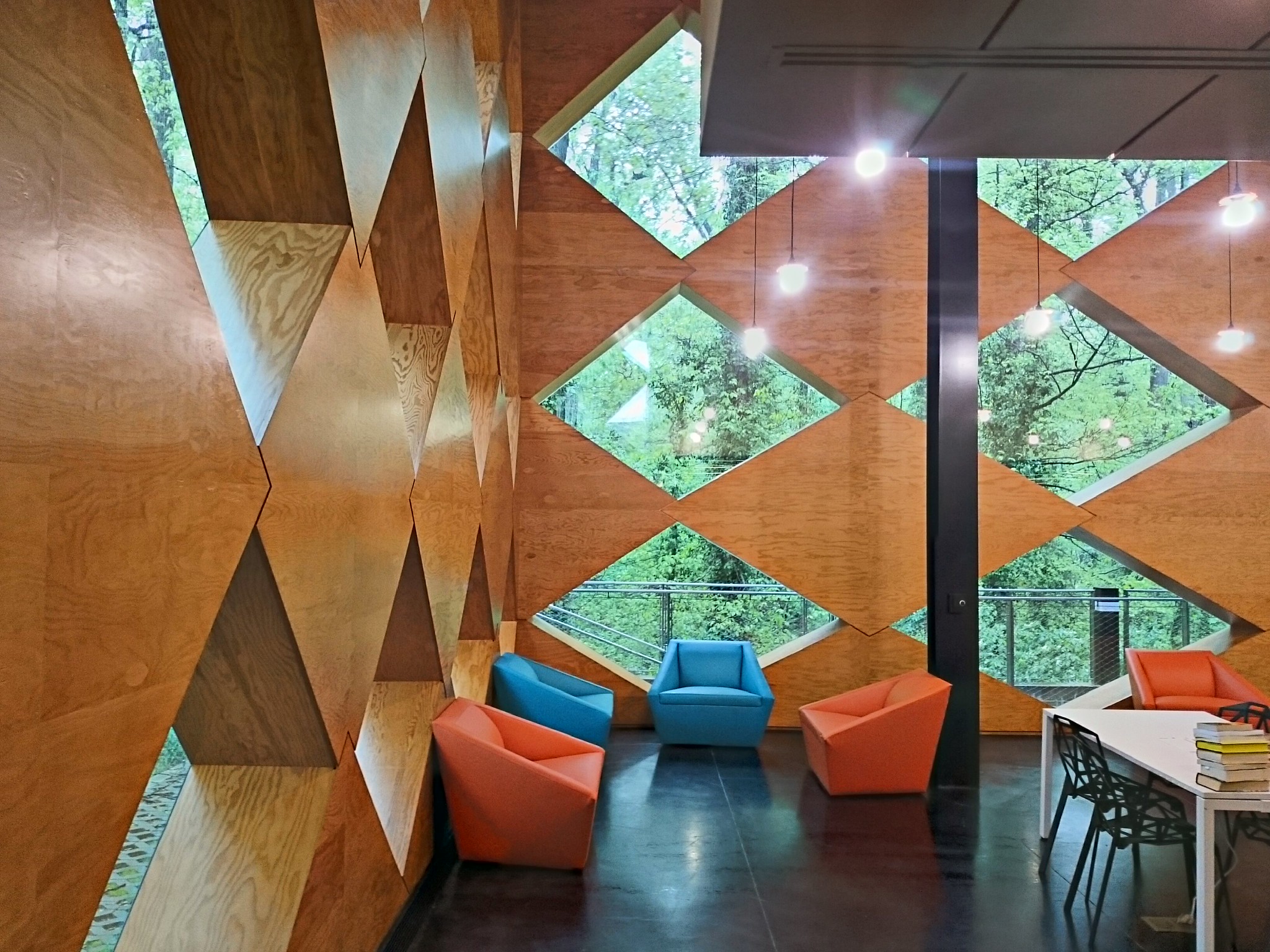
9. The Francis A. Gregory Library was designed by the same architect as the African American History Museum
When the Francis A. Gregory Library reopened in 2012, it drew praise for its sophisticated, yet playful design—dispatching the tropes of the standard brick library in favor of geometric shapes, glass, and steel.
It’s not by coincidence that the library is among some of the city’s strongest architecture—it was designed by none other than the starchitect David Adjaye, who was also the lead designer for the African American History and Culture Museum. One of the hallmarks of that museum—the corona of ironwork that surrounds the glass building—is echoed, almost in an inverse, by patterned windows that surround the interior of the Francis A. Gregory library.
Adjaye also designed the Bellevue Library in Ward 8. Meanwhile, the architect of the African American History Museum, Phil Freelon, was behind the Tenley-Friendship and Anacostia branches.
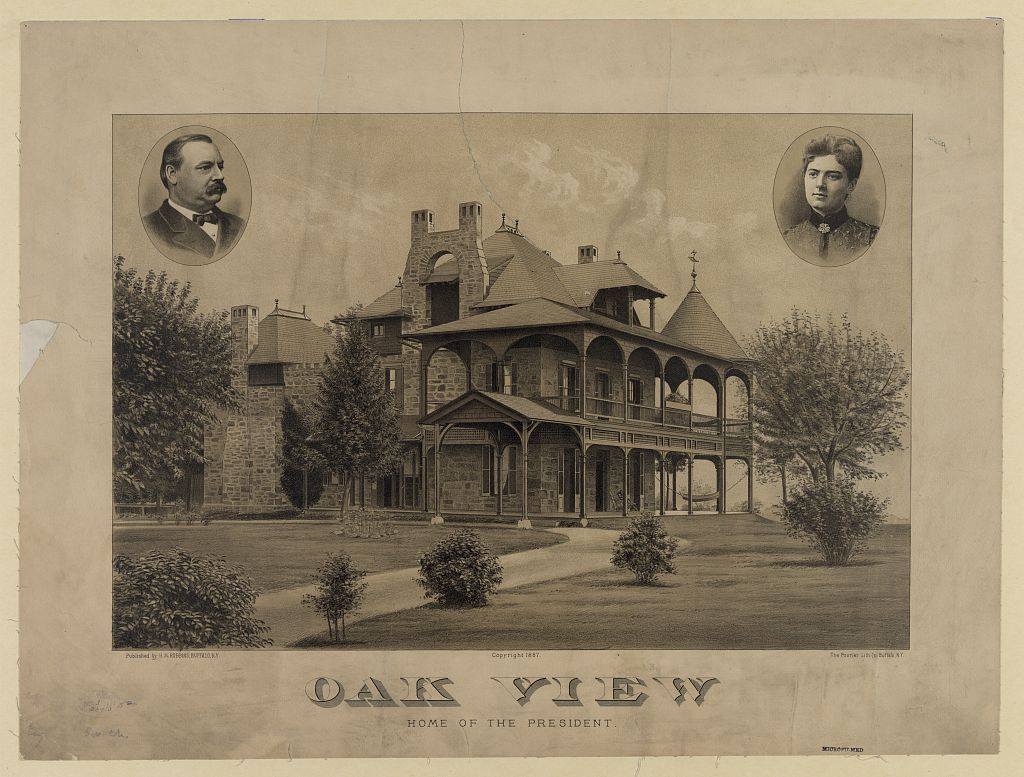
10. Hillcrest might have literally been Cleveland Park
Real estate agents have compared Hillcrest to Cleveland Park, saying the neighborhoods share houses of similar architectural styles. But according to an anecdote in a 1928 bulletin, it could have been Cleveland Park, at least in name.
Grover Cleveland (who lends his name to the Northwest neighborhood) once tried to buy a home in what is now Hillcrest. “Grover Cleveland did come down here to look at some property to build a summer house,” local neighborhood historian Jim Byers told the Washington Times. “But when the farmer who owned the land found out who he was, he quadrupled the price.”
Instead, Cleveland bought a stone farmhouse in what is now Cleveland Park in 1886.
Previously:
10 Facts You May Not Know About Friendship Heights
10 Facts You May Not Know About Takoma
10 Facts You May Not Know About Columbia Heights
10 Facts You May Not Know About Petworth
10 Facts You May Not Know About Chinatown
10 Facts You May Not Know About Spring Valley
10 Facts You May Not Know About Navy Yard
10 Facts You May Not Know About Brookland
10 Facts You May Not Know About Anacostia
10 Facts You May Not Know About Dupont Circle
Nine Facts You May Not Know About The Southwest Waterfront
There’s No Paywall Here
DCist is supported by a community of members … readers just like you. So if you love the local news and stories you find here, don’t let it disappear!