I know the stats as well as the next person: America throws away up to 40 percent of its food, much of it destined for landfills where it slowly decays in stinking, methane-releasing heaps of trash. Vegetable peels, kale stems, apple cores, and the like can be given a second life in homemade stocks or infusions, but I still create some amount of food scraps in my weekly cooking routine. Composting is a very good way to reduce the impact of those scraps, while also creating nutrient-rich soil additive that comes with a slew of environmental benefits. I knew of all of this but it took me an embarrassingly long time to look into my options.
If you live in the District and have no outdoor space nor wherewithal to set up your own composting, you are still able to compost, for free. In addition to the Department of Public Works food waste drop-offs (offered in every ward, albeit not year-round) where you can leave your scraps for someone else to process, the D.C. Parks and Recreation’s Community Compost Cooperative Network maintains nearly 50 composting sites across the city with a capacity for 5000 people to do the composting themselves. Volunteers can compost their own food scraps, along with garden waste from DPR gardens. Right now an estimated 1000 to 1500 people are actively composting in these co-ops, in which members use the compost bins for free in exchange for helping to process the compost about one hour per month. Once the compost is finished, most of it is given to the DPR garden that is hosting the compost bins; some sites may also send finished compost home with co-op members who have their own gardens.
I didn’t hear back from the first site I contacted (there’s a handy live map to locate co-ops), but the compost managers at the Emery Community Garden in Brightwood responded to my inquiry on the same day. The training took less than an hour: I learned that this particular compost heap needs more food scraps and less carbon, that no meat or grains are to be added to the pile, and the lock combination to access the three bins. There are two times during the week when we’re supposed to add any scraps we may have; the group maintains a Google spreadsheet where everyone can sign up to be in charge of turning the pile. (Members of my co-op often coordinate specific turning times via our Google group.) I signed up for my shifts of compost turning, and then, on a chilly Saturday, I set off to give composting a go.
11:21 a.m. I head out the door with my compost pail and an old mixing bowl that I’ve repurposed to contain overflow food scraps. It’s all a little heavy, but the bins are only a 10 minute walk away.
11:30 a.m. Oh look, a stray chunk of someone’s Halloween pumpkin is lying on the sidewalk. We can compost that!
11:32 a.m. I arrive, enter the combination in the left bin and hoist up the lid. The bins are slightly shorter than a dumpster, with removable side panels for easier access. (The co-ops use a three-bin system designed by Urban Farm Plans.) I remove a few panels to check the situation: The pile goes nearly to the top and appears to be mostly dry plant debris, with a few food scraps peeking through. It looks a little dry, but it smells very earthy in a pleasant, wet dirt sort of way.
11:33 a.m. Regretting my lack of garden gloves, I grab the bin’s pitchfork and start turning the pile. As I dig to the bottom, I notice clumps of dirt-like texture (a good thing!). Once I reach the bottom of the bin, I can add my food scraps. (I later learn that we more or less follow what’s called the “lasagna method” of composting. Adorable.)
11:37 a.m. Someone was really into eggs this week—I spy several shells. After a few minutes of turning, I am warm despite the 43 degree temperature and wind. Some strength is needed to do this (humble brag), but I’m using the sides of the bin to provide leverage.

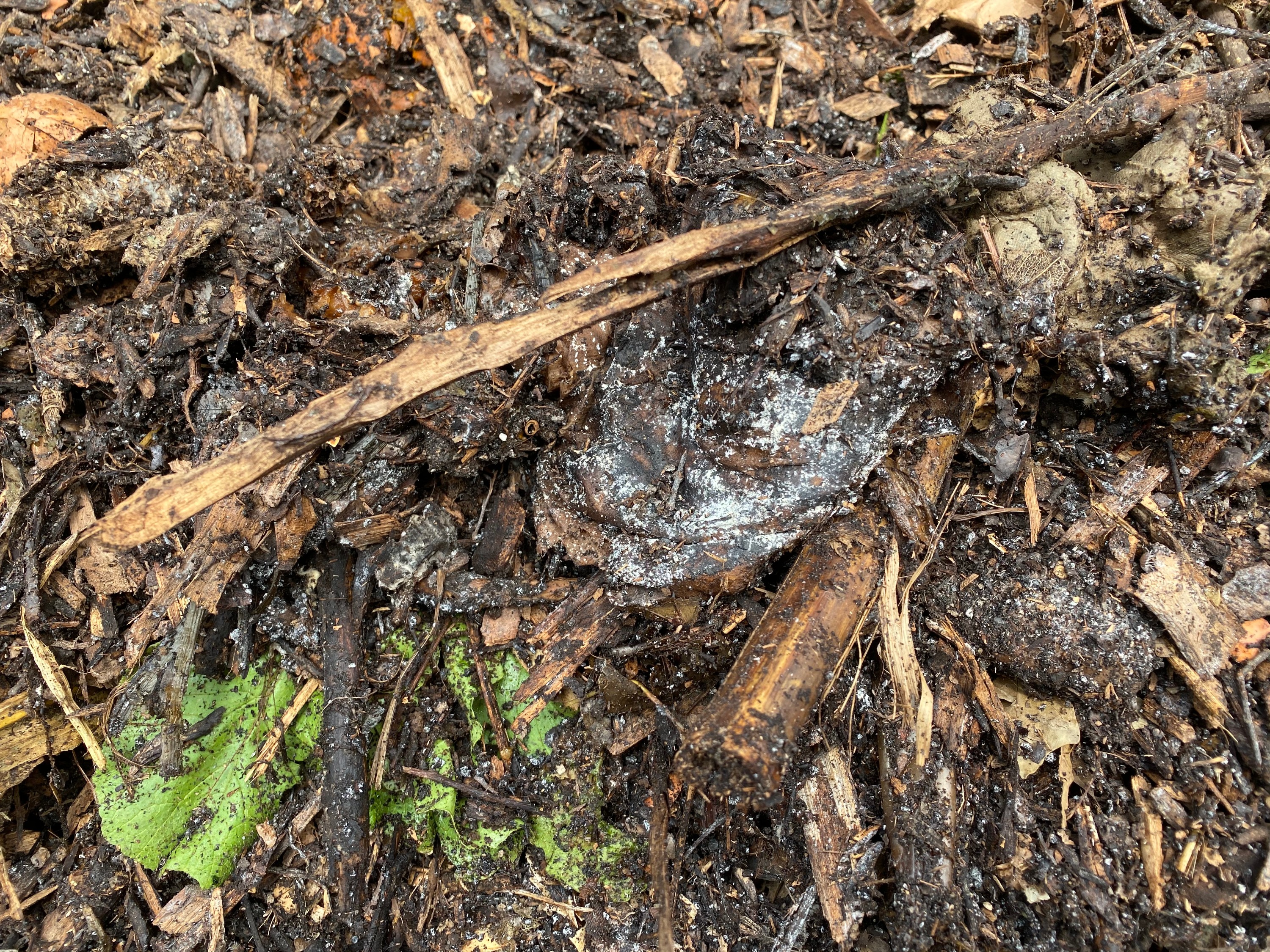
11:39 a.m. As I stick my hand in to asses the heap’s warmth (a balmy temperature indicates things are going well), I am relieved to not see signs of the mice who apparently live in bin number three. It’s nature, we live in a city, I get it, but what can I say? I’m kind of squeamish.
11:40 a.m. Smells like radishes!!!
11:42 a.m. I reach the bottom; it’s time to add my contribution. I made quince jam and vegetable stock earlier this week which means I have lots of scraps and they are extremely juicy. I text a fellow community composter to let her know I’m ready for her food scraps.
11:45 a.m. In training we learned we might have to moisten the pile using the nearby garden hose (in addition to necessary moisture, water adds oxygen, another crucial ingredient for successful compost). Unfortunately I have to hop a fence to get to the hose. Just as I am pondering my own flexibility …
11:46 a.m. …I am joined by the fellow co-op member, who assures me that I’m doing it correctly and lends me her garden gloves. Neighbors! Community! So lovely. She adds some scraps of her own—emphasizing that they must be chopped up, so that the compost can do its thing quickly.
11:47 a.m. I cover the new scraps completely with plenty of leaves and other carbon-rich materials already in the bin. A mouse scurries up out of the corner. I remain remarkably calm.
11:48 a.m. The other member is coming back later to add more scraps, and she’ll bring some water with her too. (The garden hose is turned off in the winter, so members have to bring a bucket of water with them when adding their food scraps.)
11:51 a.m. I stash the pitchfork back in the bin, return the side panels, and lock it up. I walk back with both a sense of accomplishment and also shame, for it was me who added a few unchopped scraps to the pile, but I was too chicken to admit it. Better to ask forgiveness and do it right next time?
More dispatches:
From A Running Class
From A D.C. Fashion Show
From A Dog (!) Casting Call At Arena Stage
There’s No Paywall Here
DCist is supported by a community of members … readers just like you. So if you love the local news and stories you find here, don’t let it disappear!