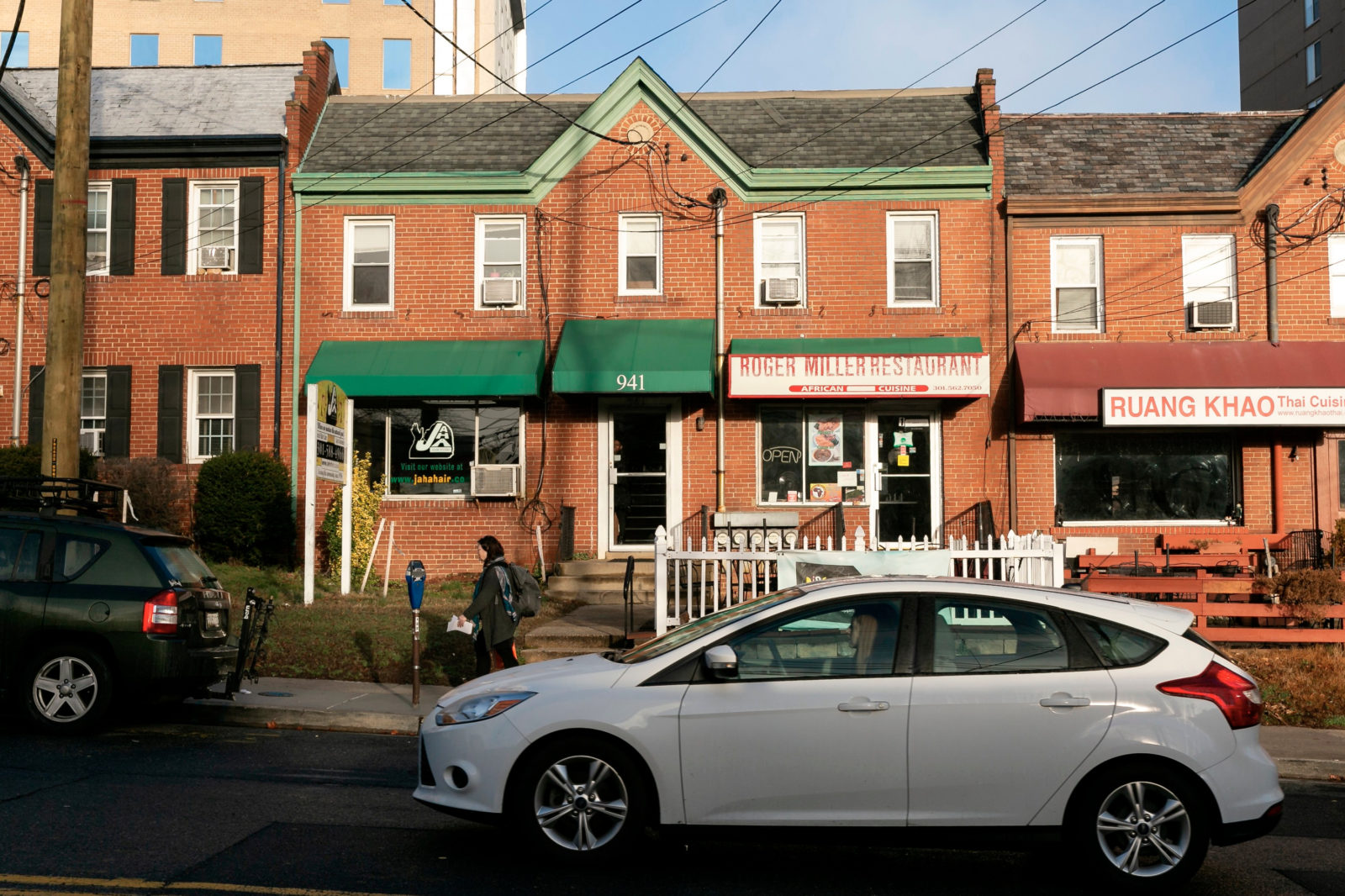
Long-time business owners along the path of the Purple Line see the pending light rail project as a potential source of new customers and new income. But they’re also concerned their shops won’t be around to reap those benefits.
Even the construction of the line, they say, poses a threat of gentrification.
“There’s a general anxiety that this will be the project that forces them to shut down,” says Javier Rivas, manager of the Resilient Commercial Corridors program at the Latino Economic Development Center.
The 16-mile stretch of rail from New Carrollton to Bethesda in the Maryland suburbs is slated to open in 2023. Until then, there will be street closures, parking issues, and other road work. The mostly immigrant entrepreneurs in the project’s path are looking for ways to keep business flowing during construction.
“There’s a general fear that landlords or developers might buy their property and put up a condo where their business is,” Rivas says. “I think it ranges from that to not even knowing details about the construction itself.”

Jaha Hair Studio owner Susan Peterkin has owned the salon for over 20 years. She has transitioned to a co-op style booth rental model for the business, but is concerned the construction of the Purple Line light rail project will affect both her and those who work for her.
Rivas and his team meet regularly with business owners, arming them with tools to stay open for the next three years. LEDC primarily gives Latinos and other underserved groups in Montgomery and Prince George’s Counties help with getting access to loans, business advice, and credit building. But for businesses along the Purple Line corridor, the group is pulling out all the stops.
“We can say, ‘Okay, let’s work on a very specific marketing project for you,’” Rivas says. “We can design business cards, postcards, flyers … even a website.”
Hair Today, Gone Tomorrow?
Promotions on Facebook and Instagram have kept Jaha Hair Studio in Silver Spring on the minds of its customers.
The salon, which caters to a mostly African American clientele with natural hair, has sat on Bonifant Street for 22 years. Bonifant is like a Main Street for the surrounding community and low-rise apartments. Its eclectic businesses include multiple hair salons, restaurants and a thrift store. The Purple Line’s path goes right down the middle of the street.
Construction has already taken away some of the street parking Jaha shares with about 20 other businesses on the block.
“When the Purple Line actually comes we’re going to go from like 30-something parking spaces to like five,” says owner Susan Peterkin. “We’re not gonna be able to cross the road, there’s going to be no parking … what’s going to happen?”

Peterkin’s future on Bonifant is uncertain. She doesn’t have a current lease and is renting month-to-month for $1,900. She also wonders if the influx of new developments will drive up her rent, or inspire her landlord to sell the property and force Peterkin out.
“Property owners are going to be like, ‘Hey, this is happening so let’s raise the rent,’” says Peterkin. “And the majority of us can’t afford if they’re going to triple the rent.”
Peterkin has become a leader of sorts among her fellow shopkeepers on Bonifant. She prefers to call them ‘mom and pop’ shops rather than small businesses, highlighting the severity of what could happen if they failed. Peterkin has been attending community meetings, some hosted by Purple Line officials, since word of the project began to spread years ago. Peterkin was also instrumental in the formation of Discover Bonifant, a group of local merchants organizing to appeal to politicians and fight for their rights as the Purple Line construction continues.
“They would have meetings with us to hear what we want, hear our fears, tell us what we could expect and what they can do for us to keep Bonifant Street viable,” says Peterkin.
Purple Line Preparedness
Some Maryland lawmakers have tried to get financial help for small businesses along the Purple Line corridor, to no avail. They sought after grants and tax credits to help with losses.
Rivas of LEDC says small businesses along the Purple Line corridor are disadvantaged compared to the ones affected by the Wheaton Revitalization Project, for instance. Some business owners qualified for grants through Montgomery County to withstand the loss of hundreds of parking spaces and other potential impacts due to the construction of that mixed-use development. No such funding is available for the Purple Line businesses.

Susan Peterkin stands inside her salon, Jaha Hair Studio in Sliver Spring, Md.
But a $5 million grant from Chase Bank last fall is helping organizations including LEDC ramp up their outreach efforts along the light rail corridor. With their cut, Rivas says, LEDC has hired staff to assist with the small business coaching and liaison work. The group also recently expanded its efforts to small businesses on the Prince George’s County side of the line.
Carla Julian works with Purple Line Transit Constructors, the company building the line. She says it’s part of the contract to keep business owners and their customers notified of upcoming construction impacts.
“We also provide open during construction signage for businesses, and we always have to maintain access for pedestrians and deliveries as we work through construction,” Julian says.
But owners like Peterkin don’t think signs are going to be enough.
While Julian acknowledges the inconvenience of construction and the fears of the local merchants, she says there isn’t much more that can be done to mitigate the impact. Despite some delays and spending over budget, Julian says the project is operating on schedule with the first phase of the line expected to open in Prince George’s County in 2022.
And the timeline, she says, calls for Bonifant Street to narrow to one lane by March 2020. That construction will last nearly two years.
‘We Are Well-Informed, But It’s Still Superficial’
A little over a mile away from Jaha Hair Studio sits El Gavilan, a Salvadoran restaurant with a Tex-Mex flair on Flower Avenue in Silver Spring. The family-owned business has become a staple in the community for 30 years and has been passed down to Ana Rivera. A vibrant atmosphere and karaoke setup keep customers coming back.

Joy McAddley styles client Jon Gregg’s locs at the Jaha Hair Salon in Silver Spring, Md. McAddley has worked at the salon for 15 years and hopes the Purple Line construction doesn’t affect business.
Rivera wonders whether the restaurant will eventually be bought out by developers. And though El Gavilan benefits from a parking lot it shares with other merchants at a nearby plaza, Rivera isn’t sure if it will be torn down during the Purple Line construction.
“People are going to try to look around the way to detour and not come down the area anymore. It’s crazy,” Rivera says.
Rivera is largely optimistic, however, and looking forward to the walking traffic and new customers the transit line could bring. But she’s aware she isn’t serving the type of fare you typically find at a fast-casual restaurant near downtown transit stops.
“How am I going to get these people to be interested in our food and our flavor, or have them come in and want to be curious to come and taste it?” says Rivera.
Both Peterkin and Rivera agree: The Purple Line will be good for the area, better connecting the suburbs to the city. But, they say, what good is the multi-million dollar project if long-time businesses like theirs can’t stick around to reap the benefits?
“We’re blessed that we’ve been here this long, but if the day does come and we can’t stay then we will have to really think about it,” Rivera says. “Then it will hit us, hit our hearts and we’re going to have to make a tough decision.”
This story originally appeared on WAMU.