 Dominique Maria Bonessi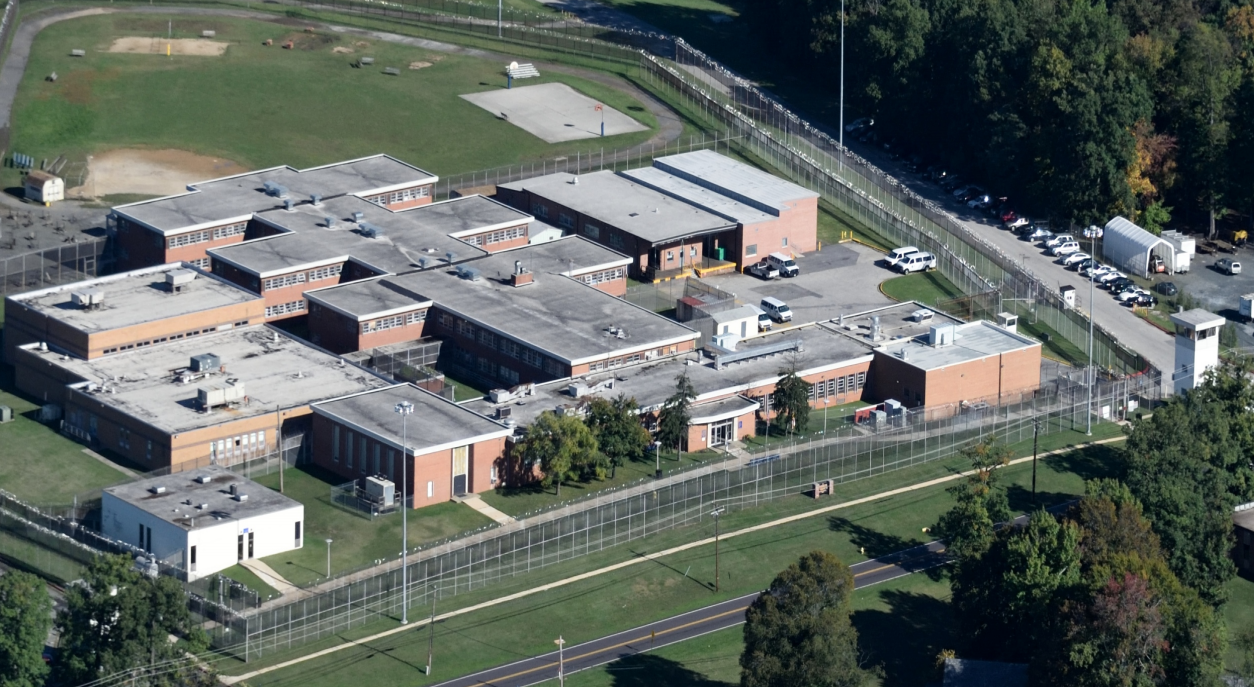
Advocates in Maryland are pushing for a set of bills to be introduced in Annapolis to provide incarcerated women with a women-only pre-release facility before they’re released from state prisons.
Nine out of the state’s 24 prison facilities are used for pre-release. They help incarcerated people transition back to society, find jobs, access community resources and assist with re-entry planning. Most of these facilities are either co-ed or just for men. Advocates are pushing back against the state’s Department of Public Safety and Correctional Services for creating another co-ed facility last January in Jessup.
“On its face, it’s discrimination,” said Monica Cooper, an advocate with Maryland Justice Project. “There is no logistical, logical, fiscal reason why you should not invest in the same re-entry services for women that you do men.”
Inmates with pre-release status are classified as minimum security, with good behavior and who present the least risk of violence or escape. Those individuals are allowed to participate in work-release and other community programs.
This is the third year the legislation is being proposed. In previous years it has come with an $80 million fiscal policy note from the Department of Legislative Services, but advocates say that number was overblown.
Qiana Johnson, an organizer with the Prince George’s County-based group, Life After Release, said she’s angry that this has yet to pass in the legislature.
“I’m angry that yet again I have to stand here,” Johnson said. “This is an end to our problems that we have. Making sure that women are safe.”
The set of three bills will be co-sponsored by Senator Mary Washington and Delegate Charlotte Crutchfield. They would require the state to open a women’s only pre-release center in an area that would provide them job opportunities, family visits and other services to facilitate their transition back to society. Washington and Crutchfield say the operating cost would be around $4.1 million. More than 50 delegates in the House have co-sponsored the legislation.
“Because they see this inequity here in the state of Maryland that we cannot continue to allow happen,” Crutchfield said. “So I stand here with these women.”
Current facilities for some women are in the same areas as those for women and men incarcerated with medium and maximum security, according to an annual report by the DPSCS.
Theresa Stone returned to society last year and said that was her reality while she was on work release from prison.
“It was not only a hostile environment, but it was an environment where we had to pay rent and have the same rules and regulations as someone living with a much higher security,” Stone said.
Other formerly incarcerated women like Caitlyn Raiford say the facilities lacked proper resources to help women find jobs and guide their transitions back to society.
“Once I made parole there were no resources,” Raiford said. “There was a lack of consideration for my mental health, for my drug addiction, for my success. You gave me parole, but you didn’t give me a way to get a job or a home. I was lost, and I’m not the only person that felt that way.”
Advocates point to Montgomery County’s pre-release facility in North Bethesda as a model for what a transitional facility should look like. While that facility is still co-ed, advocates say, it provides opportunities for the formerly incarcerated to seek employment at one of the multiple businesses in the area and is within walking distance to the metro. Inmates receive keys for their own bedrooms and counselors to help with their job searches.
Last year, DPSCS Secretary Robert Green along with Gov. Larry Hogan announced the opening of another co-ed pre-release facility in Howard County.
“Brockbridge Correctional Facility presents incredible existing programming space as well as other opportunities to create a facility fully-dedicated to reentry programming, continued workforce development, education, work release, family mediation, and other essential programming,” Green said in a press release.
That facility costs almost $25 million to operate and includes minimum-security inmates. Advocates say that the facility has few businesses around it for pre-release inmates to find work and lacks public transit. Pre-release inmates would need to get private transportation to leave the area located next to the Baltimore-Washington Parkway.
This story first appeared on WAMU.