Rachel Kurzius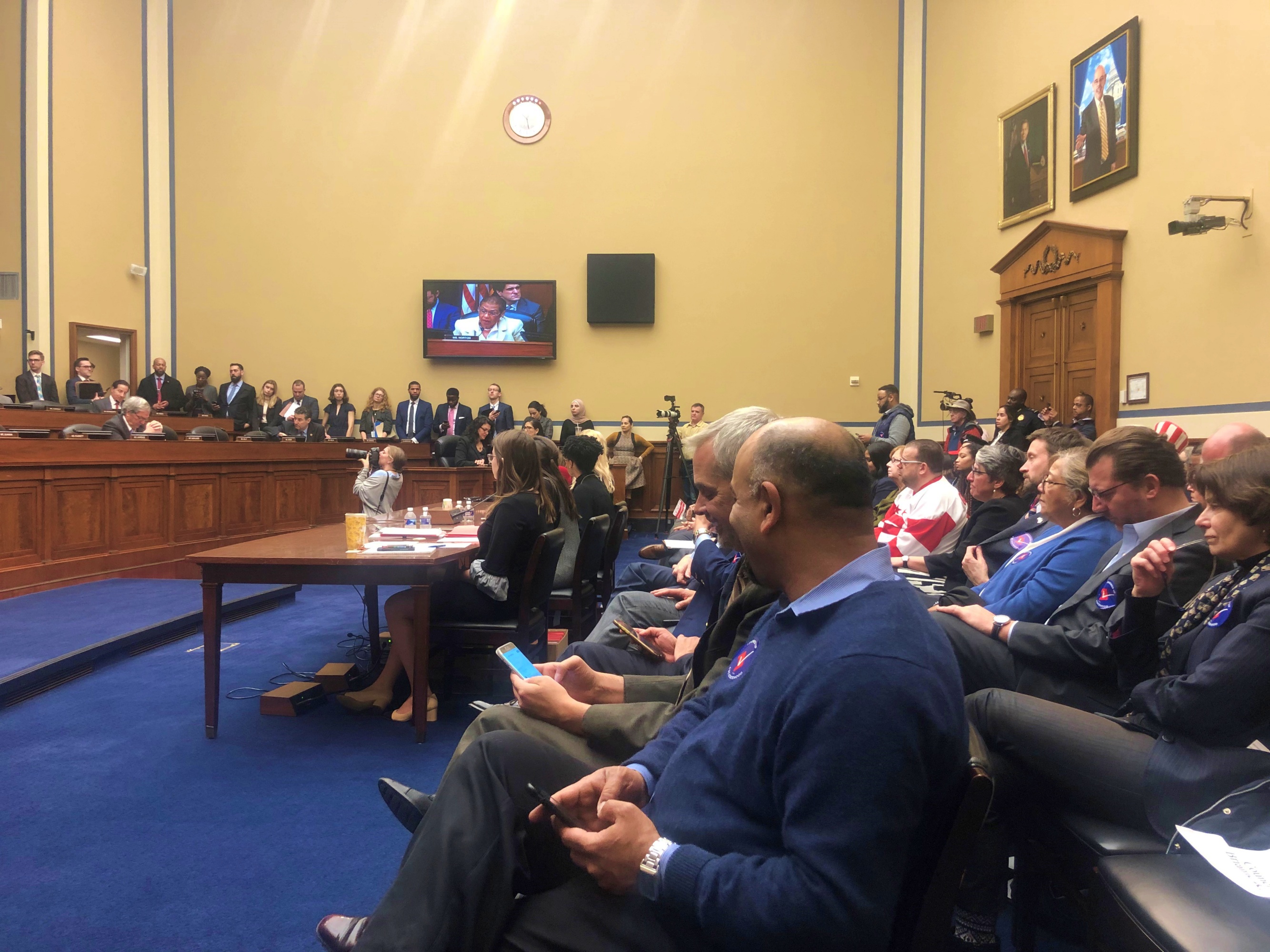
The House of Representative’s Committee on Oversight and Reform approved a bill that would make D.C. a state, marking the first time in nearly three decades that federal lawmakers have voted on statehood legislation.
House leadership has already pledged that the measure will see a vote this year before the full body, where it also has the support to pass. This would be another historic first, because neither chamber of Congress has ever passed a statehood bill before. Still, it’s unlikely that the Senate would even take up the measure from there.
The Democratic-led Oversight Committee’s ultimate passage of the statehood bill today was never really in question, but Republicans did their best to draw out the process. This was no surprise to D.C. Delegate Eleanor Holmes Norton, who warned that Republicans would put up as many obstacles as possible during the measure’s markup and eventual vote. “It’s not how you would expect a hearing about broadening democracy to go,” she said before the markup began.
And indeed, Republicans introduced a series of amendments to the bill, largely about hot-button topics like abortions, firearms, sanctuary city policies, and the Trump International Hotel. None of them passed, and each vote was along party lines.
Maryland Representative Jamie Raskin, a Democrat, noted that the process resembled policy riders—amendments tucked into must-pass legislation that restrict D.C. policy when it comes to abortion, marijuana legalization, and more—and hoped it would provide “a tutorial for the country” about why the District is seeking statehood in the first place.
Democrats accused their colleagues across the aisle of delay tactics, noting that, even if the amendments passed, the GOP still wouldn’t vote in favor of the legislation. But as ranking member Jim Jordan, a Republican from Ohio, explained it, the members in the minority were just trying to make the bill a little less objectionable before it passed.
Norton, who has long championed this legislation, wasn’t having it. “The new state is going to decide its own laws,” she said.
D.C.’s population of more than 702,000 people—larger than both Wyoming and Vermont—does not have full representation on Capitol Hill, despite paying federal taxes and serving in the armed forces. The bill would change that by turning D.C.’s eight wards into a state called Douglass Commonwealth (sites like the Capitol and National Mall would remain under federal control), represented by two senators and a representative. D.C.’s mayor would become the governor and the D.C. Council would transform into a state legislature.
As the hearing kicked off around 10 a.m., the room was filled to the brim with statehood activists bedecked in bright blue stickers that read “I showed up for D.C. statehood,” and many of D.C.’s elected officials, including Mayor Muriel Bowser, were sitting in the front row. But as the proceedings continued on for hours, the room began to empty out. The final vote happened shortly after 5:30 p.m., with a few recesses during the hearing so lawmakers could get to other votes.
But even though the statehood bill advanced, it faces a serious hurdle: an utter lack of Republican support. Today, members of the GOP cited the Constitution, claiming that D.C. needed to go through the constitutional amendment process to become a state. Democrats pointed out that the 37 other territories that became states did not have to do that. But Republicans were not convinced. Indeed, New Jersey Representative Jeff Van Drew, who was a co-sponsor of the legislation when he was a Democrat, withdrew his support when he switched parties.
While a version of the statehood legislation has been introduced in the Senate, it’s unlikely to see a vote there this term. Senate Majority Leader Mitch McConnell, who referred to D.C. statehood as “full-bore socialism” in June, pledged it wouldn’t advance in his chamber as long as he remains in charge. It’s common wisdom among Republicans that the deep-blue District would elect Democrats.
Still, the statehood movement has seen increased momentum in the past few years: Norton has introduced a version of the D.C. statehood bill every term since she has taken office, and this one has a record number of co-sponsors in both the House and the Senate. The House voted last March to endorse the idea of D.C. statehood. And Democratic presidential front runners are all united in their support.
In a statement she released after the committee advanced the legislation, Norton said, “We have only one last hill to climb in the House—onward to the House floor!”