Elliot C. Williams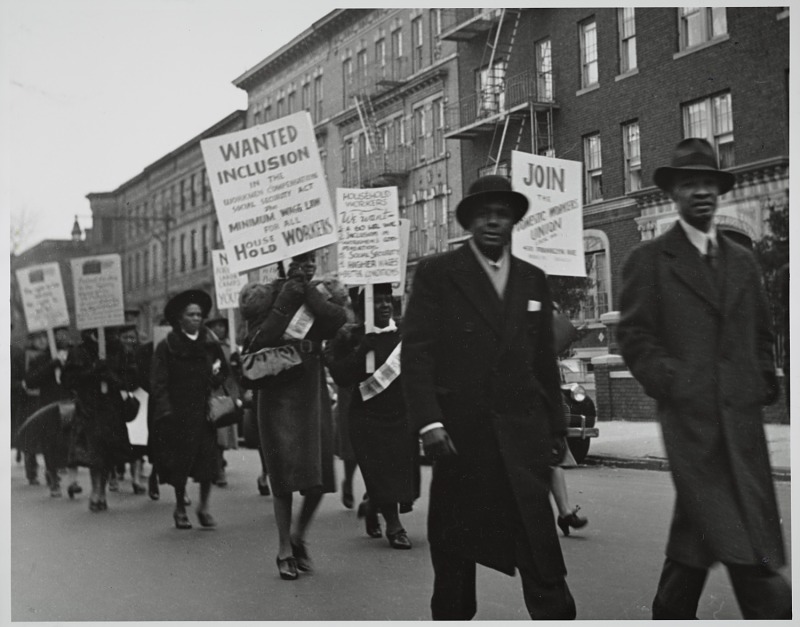
Sure, Black History Month is more than half over, but it’s not too late to get involved in an ongoing history project that honors the culture, struggles, and resiliency of the African American community during the Great Depression.
Led by the Smithsonian’s Transcription Center—which launched in 2014—volunteers have helped transcribe more than 1,500 pages from collections at the National Museum of African American History and Culture and the Anacostia Community Museum. The collection has been recently digitized and added to the transcription project list. It includes fragile newspapers, political pamphlets, and ads for black entertainers from the 1930s.
Among the treasured collection are copies of the New Negro Opinion, a D.C.-based weekly paper started by the New Negro Alliance in protest of discriminatory employment practices.
The New Negro Alliance established its committee in the summer of 1933 when the manager of the Hamburger Grill on U Street fired his black staffers and replaced them with white workers. Despite pushback, even from within the black community, the group picketed the grill and got the black workers re-hired with better conditions.
The Alliance’s actions started the “Don’t Buy Where You Can’t Work” campaign, and led to similar protests aimed at local businesses and national chains, including: Sanitary Grocery Company (now Safeway), High Ice Cream Company, and Peoples Drug Store. The picketing against Sanitary Grocery led the group to the Supreme Court.
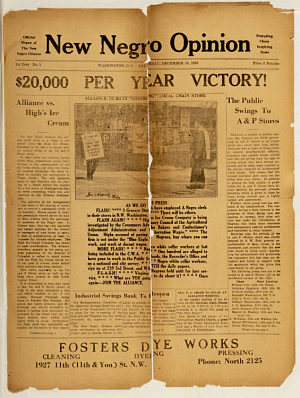
All of it was documented in the New Negro Opinion, which published from 1933 to 1937. Volunteers can transcribe the papers, creating text-searchable records that are accessible to people with screen readers.
Past transcription projects have included scientific field books, letters between famous 19th century artists, and an oral history that documented the experiences of black oyster workers in the Chesapeake Bay called Behind the Apron.
Caitlin Haynes, coordinator of the Transcription Center, says the project is the only federal crowdsourcing project to include audio transcription. Some volunteers have even found their own family members named in the records. “We like to say that we’re inviting the public to unlock the treasures of the Smithsonian,” Haynes says.
The African American History Museum has for years transcribed its Freedmen’s Bureau records from the years following the Civil War to help black Americans discover their ancestors. Even Smithsonian Secretary Lonnie Bunch has decided to “squint at historic documents” and contribute to the transcription project in his spare time. (Bunch discovered mentions of his own North Carolina ancestors in the records during the process.)
So far this month, 148 new volunteers have joined me to squint at historic documents about African American history and type the words on our screens. Together, we've made 1,541 pages accessible to the world and revealed historic moments big and small. pic.twitter.com/a6p5bTkpG5
— Lonnie G. Bunch III (@SmithsonianSec) February 20, 2020
Without the help of volunteers, transcribing the millions of historic documents would take the Smithsonian decades. So far, at least 14,000 digital “volunpeers” have added more than 500,000 pages of filed notes, diaries, photo albums, biodiversity specimens, and audio files to the records.
There’s no requirement for how much someone transcribes, so a volunteer can go in and transcribe one word, save it, and another person can pick up where they left off. As Hayes says, “Every little bit helps.”