Debbie Truong
Update Feb. 26: After sharp public criticism, D.C. officials said they will extend the shuttle service to the end of the academic year. Read the latest story here.
Original:
The shuttle idles in front of the Days Inn on a busy stretch of New York Avenue on weekday mornings. Parents board the bus, bleary-eyed children in tow. More passengers are collected from a nearby Quality Inn, before the families are transported to two Metro stations about ten minutes away.
Since the middle of January, D.C. officials have offered the shuttle twice in the morning and in the afternoon on school days. The trips are part of a pilot program the city started to help get children who live in the motels, which are used as homeless shelters, to school.
Parents and advocates say the transportation is badly needed in a part of the city largely cut off from transit, creating challenges for families who must navigate lengthy commutes to reach campuses across the city.
But the service is scheduled to end March 13, prompting calls for the city to keep the shuttle and renewing demands for more reliable transportation for students who are experiencing homelessness.
Advocates say the transportation is needed to ensure some of the city’s most vulnerable students arrive at school on time, or at all. A 2018 report found that students in D.C. whose families are experiencing homelessness are nearly twice as likely to be chronically absent from school.
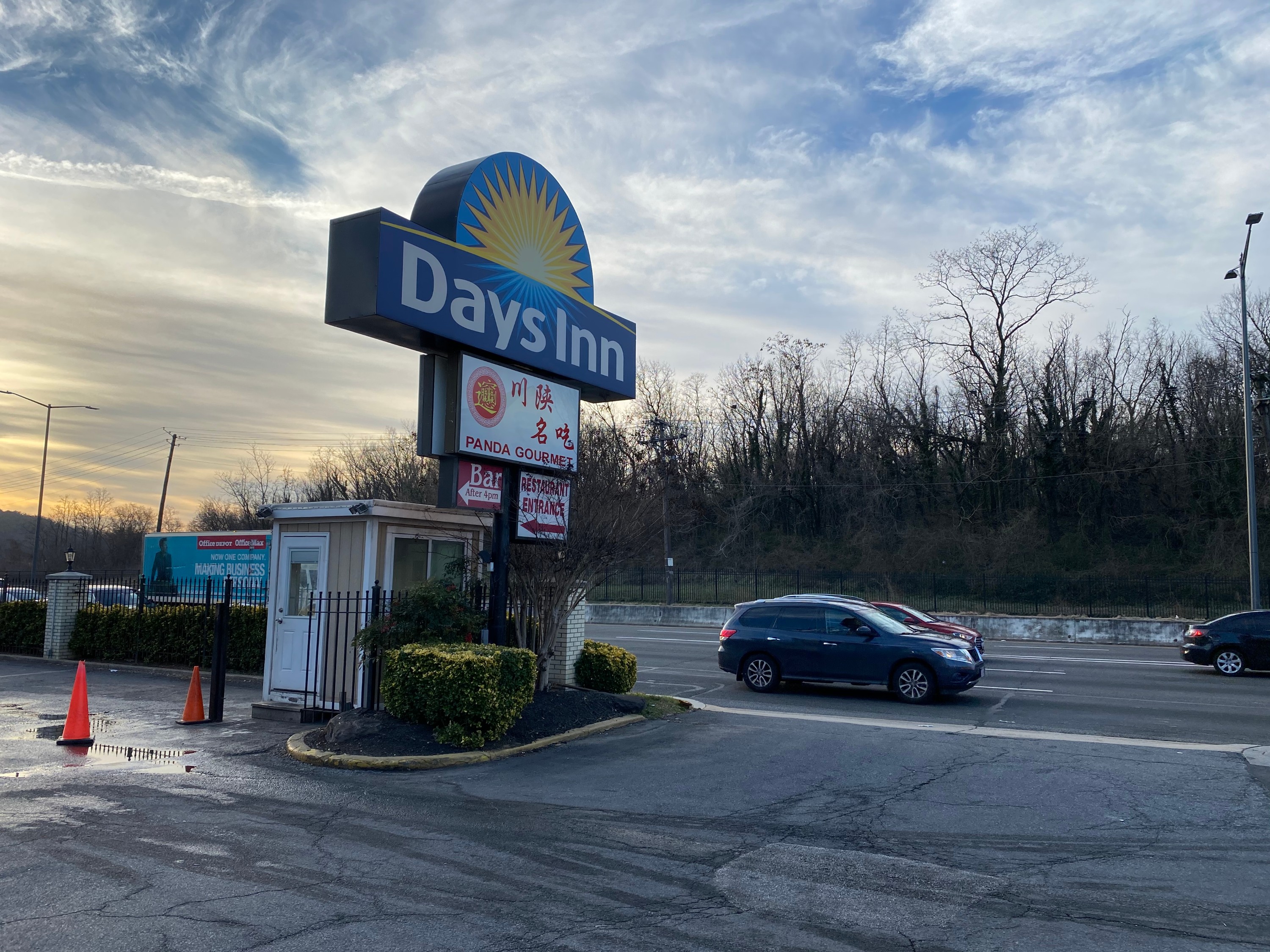
Jamila Larson, executive director of the Playtime Project, an organization that runs activities for young children at the Days Inn, says families staying at the motels are relegated to a “transportation desert.”
“We made a decision, as a city, to put most students who are homeless in that corridor,” Larson says. “Yet we haven’t taken the responsibility to remove those barriers to transportation.”
The shuttle was scheduled to end on Friday but service was extended two weeks. Deputy Mayor for Education Paul Kihn says the program, which cost $89,000, was only slated to last two months.
“That’s what we had the budget for,” Kihn says. “We are very concerned with ensuring that all families have access to the transportation that they need to get to and from school.”
Nearly 90 students in D.C. Public Schools and 12 students in the city’s charter schools are housed at the Days Inn or Quality Inn on New York Avenue, according to the city. About 50 people ride the shuttle each week.
Nearly 7,730 D.C. students lacked stable housing at some point in the 2018-2019 school year, according to the Office of the State Superintendent of Education.
All public schoolchildren in D.C. can ride public transit in the city for free under a program that issues SmarTrip cards to students.
The city has explored additional transportation for families living in shelters, including a $120,000 pilot program that provides some families with Metro and bus passes for two weeks. Vouchers for ride-sharing apps are also provided.
City officials will evaluate if the additional transportation options improve classroom attendance.
Families at the Days Inn in Northeast told the Playtime Project that transporting their children to school was taking a toll.
One mother told the organization she spent $400 a month on Uber to get her children to school and herself to work. Parents said in a survey they spent up to three hours each day getting their children to and from school.
Larson says she feels the city is falling short of its obligations under the McKinney-Vento Act, the federal law that enumerates rights for students who are experiencing homelessness. Under the law, school systems must provide students transportation to the school they attended before becoming homeless.
“If they can argue that they’re following the letter of the law, they’re certainly not following the spirit of the law,” Larson says.
Kihn rejected that claim, asserting the city “is living up to our obligations under the law.”
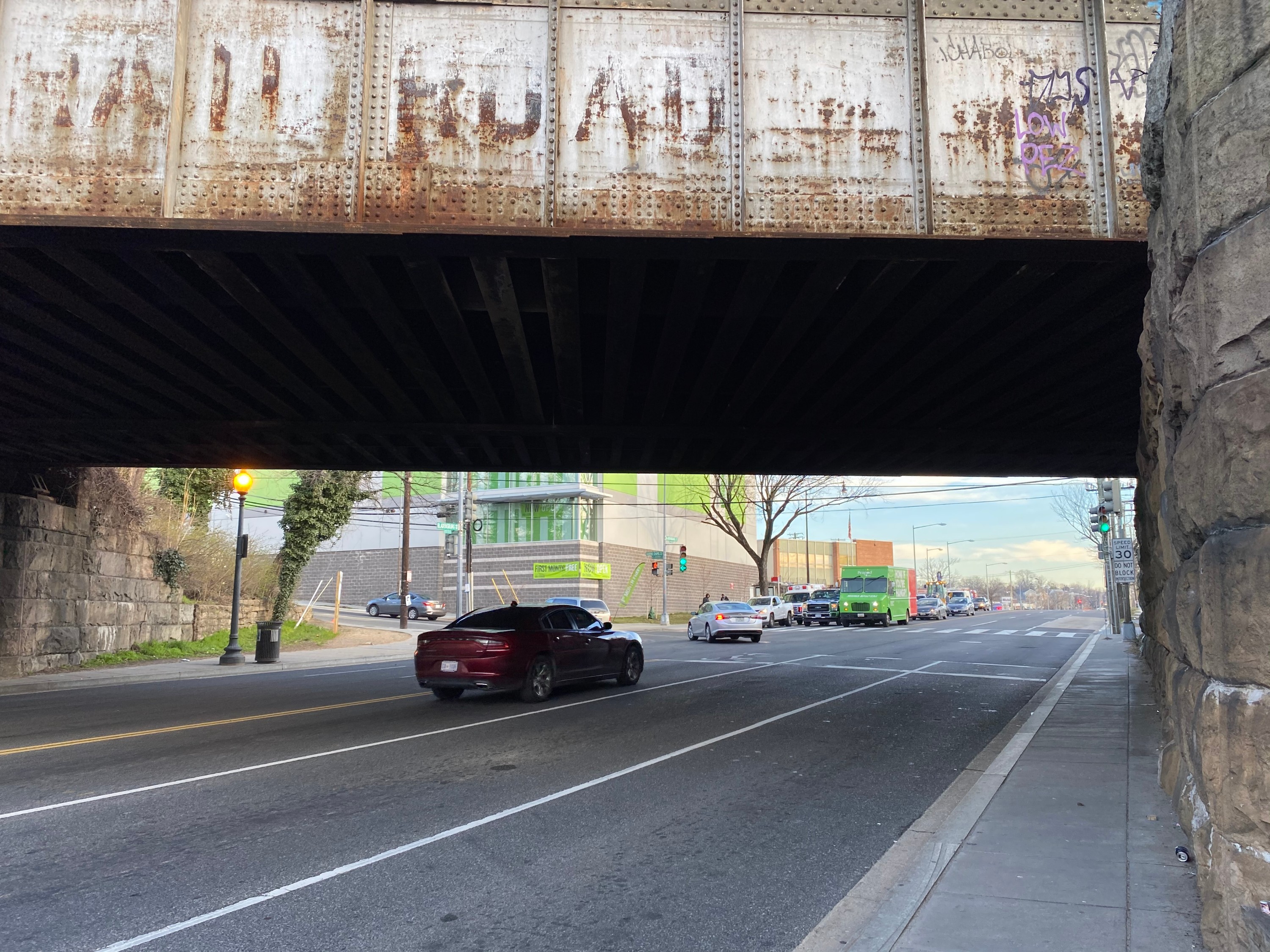
Parent Christina Gaddis says the daily shuttle has streamlined her commute from the Days Inn to Smothers Elementary School with her four-year-old son, Kenneth. She says the boy arrives on time each day for preschool, early enough to eat breakfast.
The Ward 7 campus is less than five miles from the motel, where Gaddis stays with her son, Kenneth. Without the shuttle, Gaddis says the commute would often stretch more than an hour, making Kenneth late for class.
Before the shuttle, Gaddis says she walked with Kenneth under an overpass, along a narrow sidewalk to reach a bus stop. The walk to the bus stop made Gaddis uneasy. Large cement trucks and dump trucks whiz by, she says.
The bus crawled through weekday traffic before stopping at the Stadium Armory Metro station, where Gaddis and her son grab a train to Smothers.
“Sounds from the traffic would make me hold him closer,” she says.
On Monday, D.C. Council member Mary Cheh urged Mayor Muriel Bowser to extend shuttle service until the end of the school year in June. Cheh, who represents Ward 3, says doing so would cost $200,000.
“Ensuring that our most vulnerable families can easily get to school and work dovetails with our broader efforts to reduce homelessness and housing insecurity,” Cheh said in a letter, adding that the city should include money in next year’s budget to pay for the shuttle.
D.C. has used the motels along New York Avenue as emergency shelters for families when the city’s shelter space is overloaded. D.C. officials have said they plan to end the practice by the end of this year, as the city prepares to open new shelters.
This story originally appeared on WAMU.