Elliot C. Williams
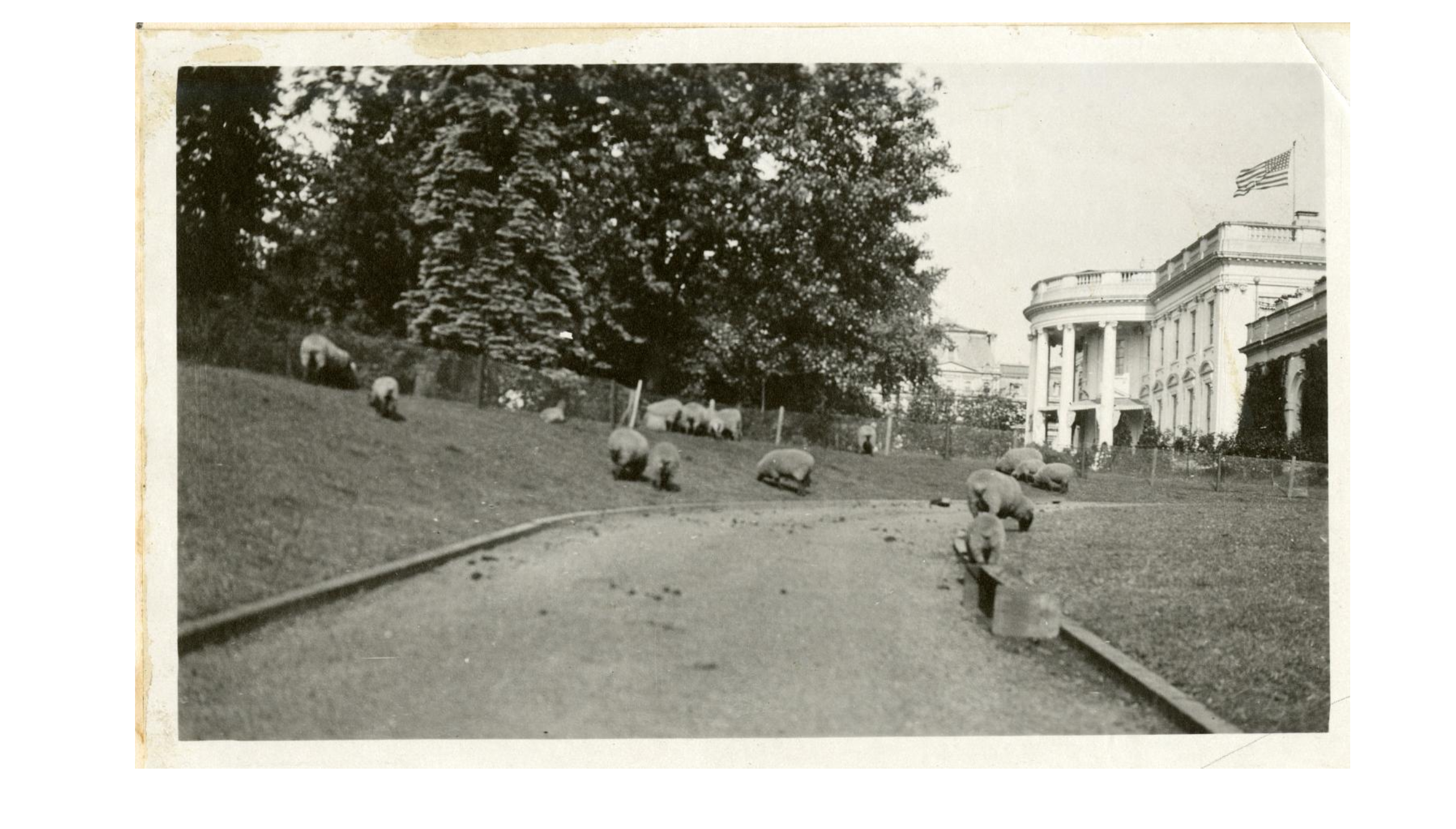
The White House lawn has been host to a number of oddities over the centuries: Egg Rolls, a White House cow named Pauline Wayne, a drunkenly flown drone, a stolen helicopter, and a stolen plane. But nothing tops the sheep that President Woodrow Wilson invited to help drum up patriotism during World War I.
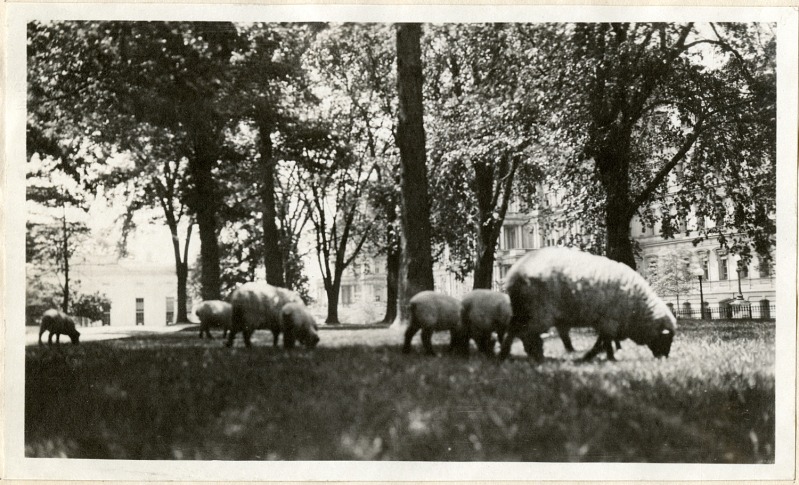
How did DCist stumble upon these sheep? Well, the Smithsonian just unleashed a treasure-trove of nearly 3 million images into the public domain so that anyone can use them for research, craft stories, or whatever else they like (design T-shirts with them?) Within this collection, there are grainy black-and-white photos of sheep grazing peacefully on the South Lawn in 1919.
What seems like a mere agricultural preference of the Executive Branch, was actually a political move. In 1918, President Woodrow Wilson enlisted this flock to keep the grass trimmed, and by auctioning their wool, raised more than $50,000 for the Red Cross war fund.
Dr. Cary T. Grayson, a close acquaintance, purchased the flock on behalf of Wilson from a farm in Bowie—12 sheep and four lambs in all. Over three summers, that number would grow to 48.
The patriotic sheep helped the president save manpower and contributed to the first family’s image as a rationing American family, according to the White House Historical Association. (The Wilsons also stopped hosting receptions, organized war bond rallies, occasionally rode in a carriage to save fuel, and participated in “wheatless Mondays” and “meatless Tuesdays.”)
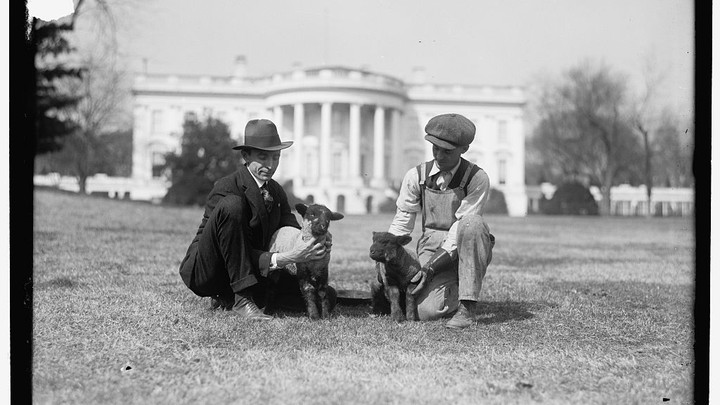

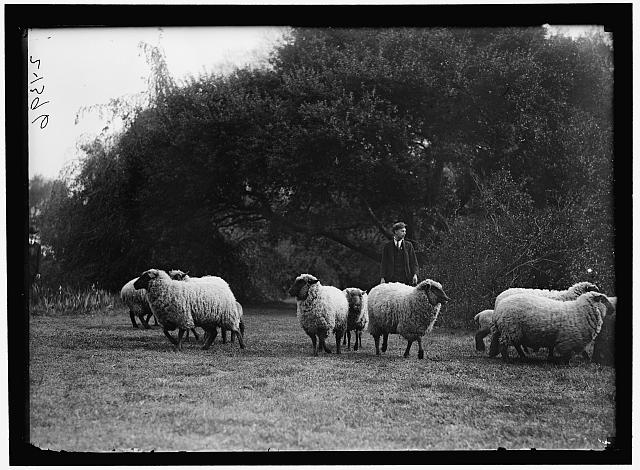

“So far as attendants at the White House can recall, there never have been any animals around the White House, with the exception of dogs, cats, and squirrels,” reads a 1918 Washington Post article. (Untrue, however: Remember President William Taft’s cow, mentioned above?) The Atlantic first discovered these records.
The sheep project was a great success, at first. A Post clip announced that Wilson would be delivering 90 pounds of wool from the flock across the country to be auctioned by each state’s governor. A 1918 letter from Dr. Grayson to William Woodward, the Bowie farmer, expressed the Wilson’s joy at raising the flock:
“They have been admired by hundreds of people and they certainly make a beautiful picture on the White House lawn … I cannot tell you how much I appreciate all your kindness in letting the President have these sheep, which is deeply appreciated by both President and Mrs. Wilson.”
But the addition of sheep wasn’t all good news. “President Wilson is having no end of trouble with the flock of sheep he purchased recently to graze on the White House lawn,” reads a Washington Post article from May 12, 1918. Not long after the sheep had been purchased did they start falling ill, catching pneumonia and the “dips”—the growing presence of automobiles in the capital were scaring them senseless, the Post reported. The sheep tore up much of the back lawn and were moved to the front, where delicate flowers and trees were fenced in to spare them from the sheep’s wrath.
Sadly, by August 1920, after three summers of grazing and raising $52,000 in war funds, the sheep were sold.
Over a century later, however, the sheep are again serving a presidential purpose. In 2018, the daughter of one of the people who bid on the wool donated her stash to the Woodrow Wilson Presidential Library & Museum. The family had preserved the wool in a safe for 100 years. The sheep’s legacy lives on.