As more and more people are being encouraged to self-quarantine amid the spread of the new coronavirus, what is it actually like to go through the process? This is one person’s experience learning about potential exposure to COVID-19, the disease caused by coronavirus, and trying to determine what to do next.
Saturday March 7, 5:58 p.m.: I’m cleaning my apartment and gathering cheese for a charcuterie board I’m putting together. I’m throwing a game night. This has been in the works for about three weeks, and I’m excited to get all my friends together. I see a headline on my phone: “Person With Coronavirus Attended CPAC Conference in Maryland.” I too attended the Conservative Political Action Convention in late February while producing for WAMU’s show 1A. This year marks my third covering CPAC for 1A, and coverage went off without a hitch … until now.
6:02 p.m.: After reading the article (one choice line: “the state’s governor says anyone who attended may be at risk”) I check my email. In my inbox, conference organizers are confirming the report.
6:04 p.m.: I start making phone calls to the people I’ve invited over, many of whom are already on their way. I need to figure out what to do. I don’t want to get anyone sick, but I have an inordinate amount of salami in my refrigerator. One of the first calls I make is to a pal of mine who is a doctor to discuss the ethics. I settled on some language and shoot a text to everyone:
“I covered CPAC last month and was just informed that someone attending the conference tested positive for COVID-19. I’m not showing any symptoms and game night is still on, but I want to let you know so that you can make a decision re: coming.”
7:45 p.m.: Guests begin to arrive. Most people still come, though some decide to bail. I get texts about the incubation period (between 1 and 14 days, according to the World Health Organization), and my doctor friend skipped out just in case so she wouldn’t put any of her patients in danger.
8:30 p.m.: Lots of wine. Lots of spades. Good times.
Sunday, March 8, 12:30 a.m.: Everyone heads out. I clean up and decide to take action re: coronavirus in the morning.
8 a.m.: I’m up like I would usually be on a Sunday. Church is typically my Sunday morning destination, but many of the congregants at my home church are part of vulnerable populations, so I stay in. (In light of D.C.’s first confirmed case of COVID-19 being a rector at Christ Church Georgetown, I think this ended up being a good call.)
8:15 a.m.: I have no symptoms and no clue if I interacted with the person diagnosed with COVID-19, who remains anonymous. The idea of actually being exposed seems foreign to me—as I read coronavirus-related headlines over the past few weeks, I never thought I would have to worry about it in relation to myself. Most of the information I’ve been able to find are instructions for people running fevers and experiencing dry coughs. I have neither. One thing I hear over and over again is to call ahead before going to the doctor. I call my primary care doctor’s office (which also serves as an urgent care) and the person who answered the phone tells me to call an emergency room.
8:20 a.m.: I call Sibley Memorial Hospital, and they tell me to call my primary care physician. I call my doctor’s office back, and they tell me that my doctor won’t be in until the following Saturday, but I can call back Monday when another doctor will be in.
8:30 a.m.: I text one of the members at church that I planned to meet with that day to let them know I won’t be attending. They work in academia and the university has formed a game plan, so I am able to get a little more information. Georgetown, George Washington, and Howard University hospitals all apparently have coronavirus testing kits. Time to make more calls.
8:42 a.m.: I start calling the hospitals with test kits. All the conversations boil down to the same thing: I can come in and get tested if I’d like, but if I have no symptoms there’s no need. Basically, it’s a waiting game so long as I have no symptoms.
10 a.m.: I’m beginning to feel uneasy, because as long as I don’t feel sick, there’s very little I can do. I spend the rest of the staying in—mostly meal prep and watching 90 Day Fiance.
Monday, March 9, 7:30 a.m.: My bosses tell me to work from home as a precaution. I learn I’m far from the only person self-quarantining after the conference. I have company in several Republican legislators including Sen. Ted Cruz, Rep. Matt Gaetz, and soon-to-be White House Chief of Staff Mark Meadows. Journalists from Politico, The Daily Beast, and The Washington Post who were also at CPAC are staying home, too.
8:15 a.m.: I call the D.C. Health Department the minute it opens and am connected to the specific line for COVID-19. I don’t get an answer but leave a message.
9:30 a.m. – 5:30 p.m.: I check in on some FOIA requests, send emails, reschedule interviews, and write some scripts—aka, I’m working from home. I also rearrange some personal appointments (no OrangeTheory for me this week!). In between I read and watch every coronavirus-related piece of news I can get my hands on. Now a small inkling of panic and worry begins to set in and grow. I’m young, relatively healthy, and fortunate enough to have good insurance. I’ve survived colds, flus, and bouts of pneumonia, but I also start thinking of all the places I’d been before anyone knew about the CPAC exposure: the Metro, grocery stores, restaurants, friends’ apartments. The pandemic feels very, very real.
Tuesday, March 10, 9:07 a.m.: I receive a call from the D.C. Health Department, returning my message. The woman I speak to asks me what days I attended the conference, if I have symptoms, and if I got my flu shot this year (“Yes.” “GOOD.”) She’s kind and asks for my name, how long I’m going to be out of the office and my email for follow up. She also plugs D.C.’s new coronavirus site. It’s only a 6 minute phone call, but it does give me something that women often want out of healthcare: someone to listen. And, if only for 6 minutes, it’s calming.
12 p.m.: I make some phone calls for work then hop on a conference line for an edit. While we’re getting work done my editor and I both get an email from American University (AU owns WAMU). The university is extending spring break and classes will be online after that. Students are asked to return home, but residence halls are still open for those that can’t do so. Wow.
Tuesday, 2:01 p.m.: I get a text from a friend who works in public media in New York, who is being encouraged to work from home. It is worrisome, but I’m also heartened by all the precautions folks are taking. I might rent Contagion when the work day is over.
5:44 p.m.: I get on the phone with a source about a story I’m working on, and finish up in time to see the daily presser from the White House’s coronavirus task force. There are lots of updates on insurance. Dr. Anthony Fauci of the National Institute of Allergy and Infectious Diseases says, “As a nation we can’t be doing the kinds of things we were doing a few months ago.” I check my temperature. I’ve been doing that twice a day since Sunday. It’s normal.
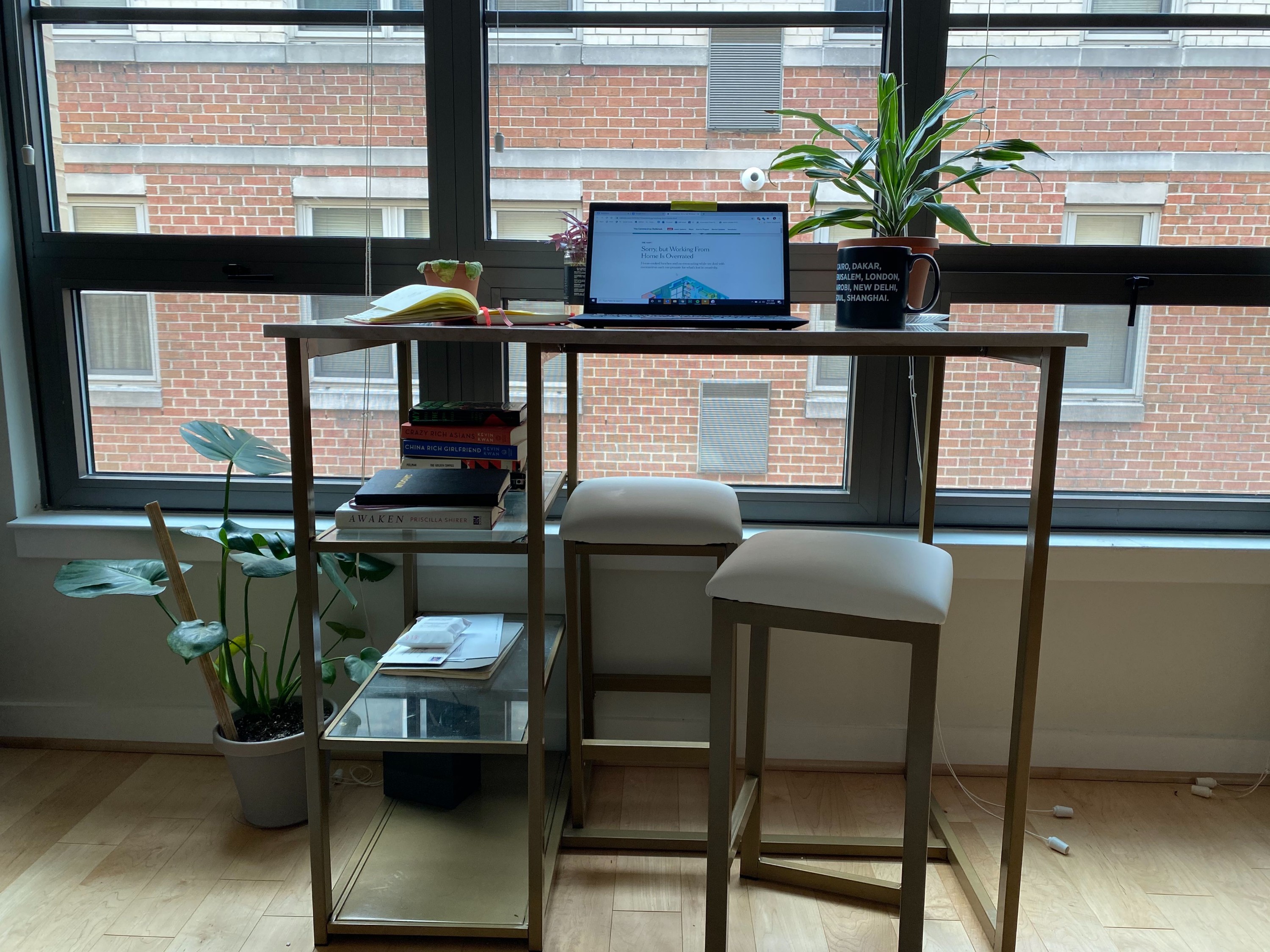
Wednesday, March 11, 9:15 a.m.: Time to get to work. I check messages in my office/kitchen/living room/dining room. An attendee at a conference for investigative journalists held last week has tested positive for COVID-19. Some of my colleagues attended, including the editor of the dispatch you’re reading right now. Meta.
9:30 a.m.: I’m catching up on my emails and have a new one from CPAC: “The individual who tested positive for coronavirus did not go to the main ballroom, was not an interviewer, or an interviewee on Broadcast Row.” That makes me feel a little better. But for now, the self-quarantine continues.