Colleen Grablick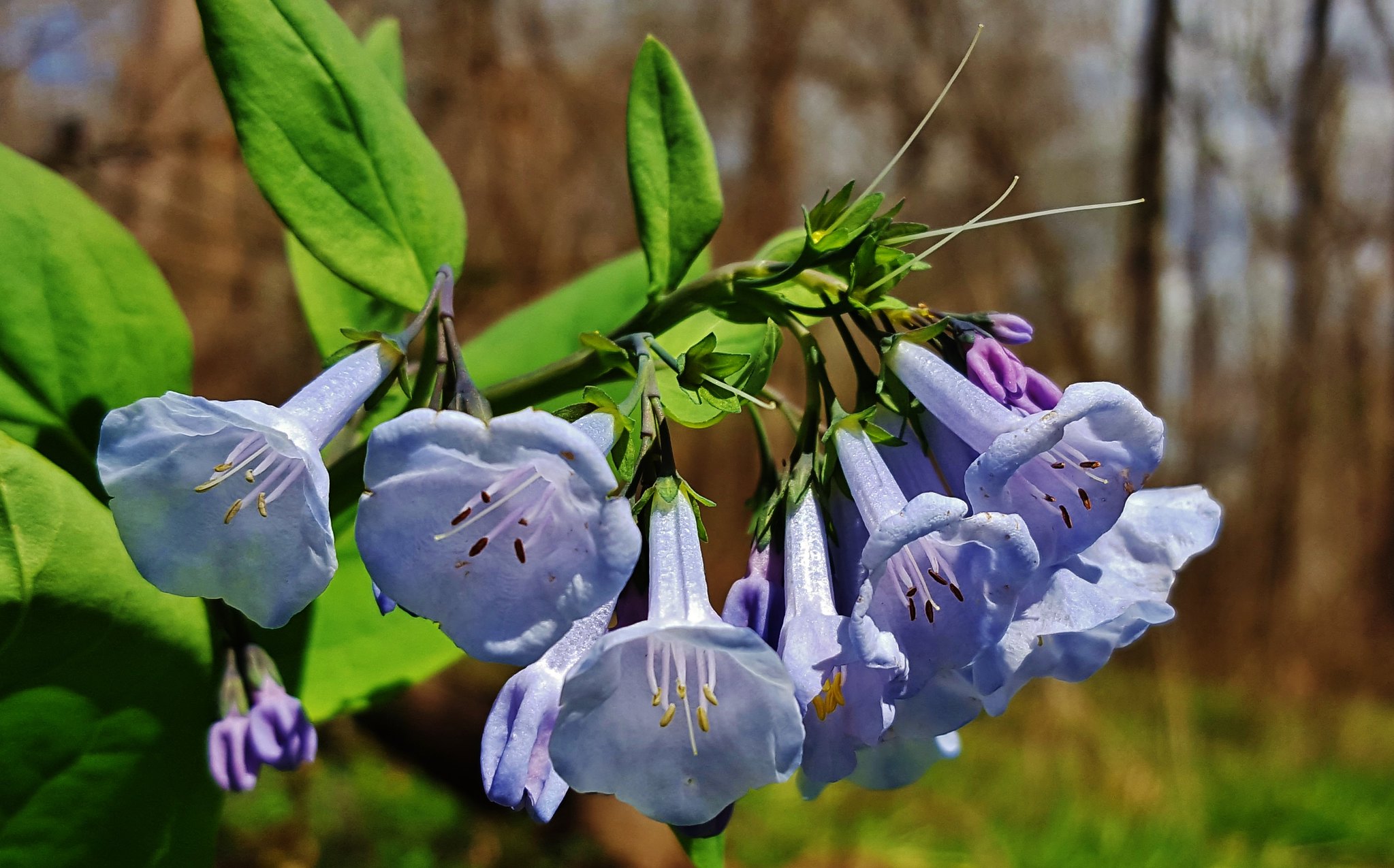
Every spring, D.C. fixes its eyes on the Yoshino tree, anxiously awaiting the period of peak bloom when pink and white petals coat the sidewalks around the Tidal Basin. But parks in Northern Virginia have a #BloomWatch of their own, for the equally beautiful but perhaps less popular bluebell flower.
The bluebell, a native species to the Chesapeake Watershed, typically blooms between the last week of March and first two weeks of April, lining the trails of the Bull Run Regional Park in Virginia with tiny trumpet-shaped blossoms. Bull Run Park staffers have been documenting this year’s bluebell progress on the park’s Facebook page, keeping eager trail-goers up-to-date on the plant’s suspected bloom date amid hundreds of inquiries.
“I think our first phone call came in in late January this year, asking about the bluebells,” says Megan Schuster, assistant manager at Bull Run Regional Park. “We get a ton of phone calls, so when they call we can say hey, look at our Facebook page, we have picture updates. They can physically see what’s happening.”
According to Bull Run’s latest Facebook post, peak bloom is still a few weeks away, making it right on time, despite the region’s fairly mild winter. But unexpected weather can also delay the bloom, or close the park during a peak week.
“Blue bells are so tricky. You just have to play it by ear, there’s so many factors that play into [blooming],” Schuster says. “We’re also in a flood plain, so we’ve had years when, [during] the week of peak bloom, the trails floods and we have to close for a day.”
During peak bloom, the park typically sees at least 100 visitors per day, per Schuster.
Schuster says that the park is maintaining normal operations while increasing cleaning procedures amid the spread of coronavirus, which has shut down several other public spaces throughout the region, including several cherry blossom festivities. Any decision to close would come from the state and Northern Virginia Regional Park Authority.
The blooming process begins when winter’s snow and ice melt away, and small greenish-grey foliage appears in areas with rich, moist soil. Stems grow from one to two feet long, with little pink buds waiting in anticipation. Once in bloom, the flowers blossom into their signature bell-shape, darkening from the bud’s pink color to a deeper blue hue. Some mature bluebells hold onto their pinkish undertones, while others blossom into a bright white color, stitching a multi-tonal blanket for some of Virginia’s wooded areas.
During peak bloom, the 1.5 mile Bluebell Trail at Bull Run Regional Park winds through fields carpeted in the bluebell’s periwinkle petals. Other ephemeral species dot the park’s landscape, with the trout lily’s bright yellow petals poking through the beds of blue.
Bluebells can also be spotted in other Virginia parks, like Manassas National Battlefield Park or Riverbend Park in Great Falls.