
 Colleen Grablick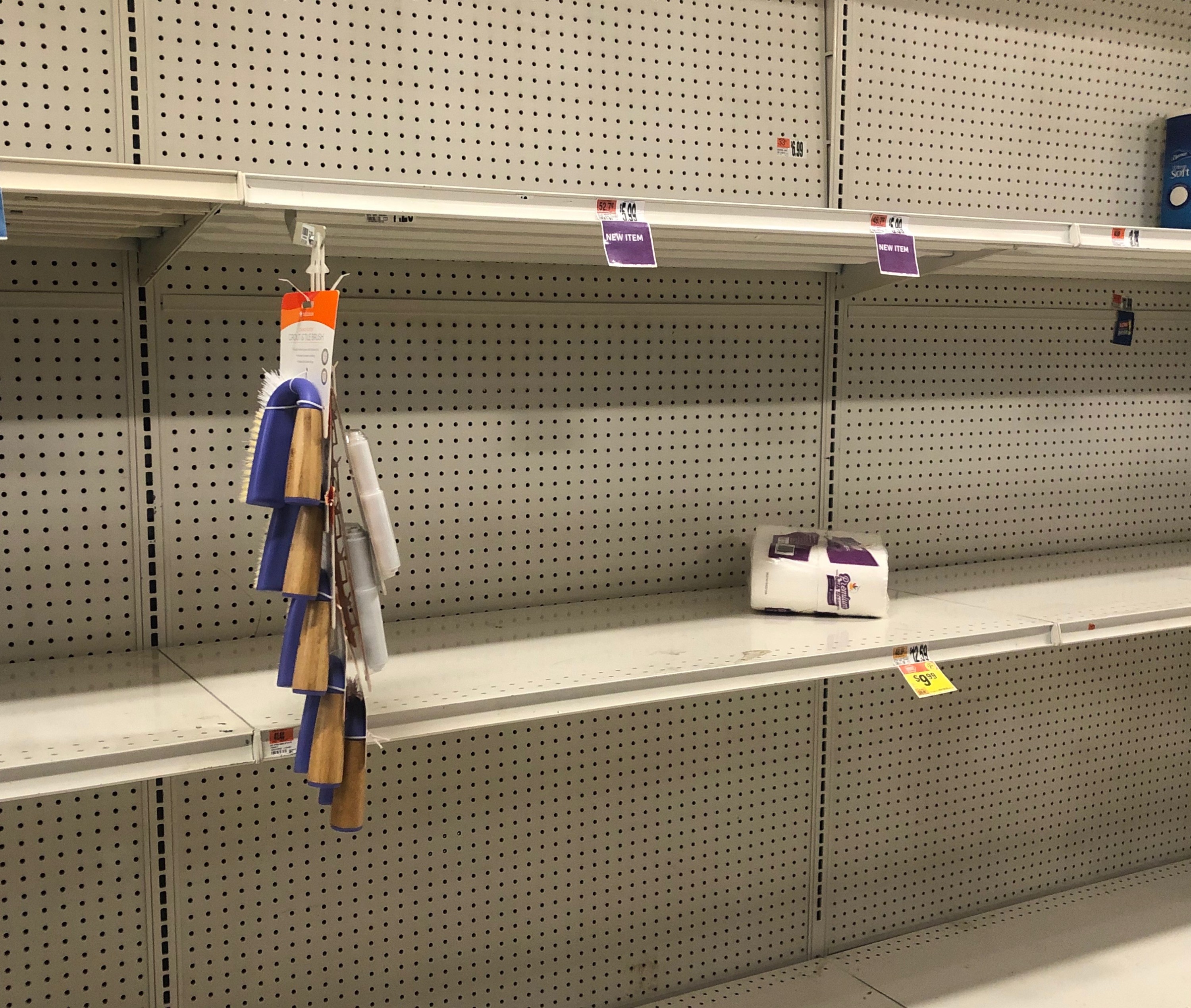

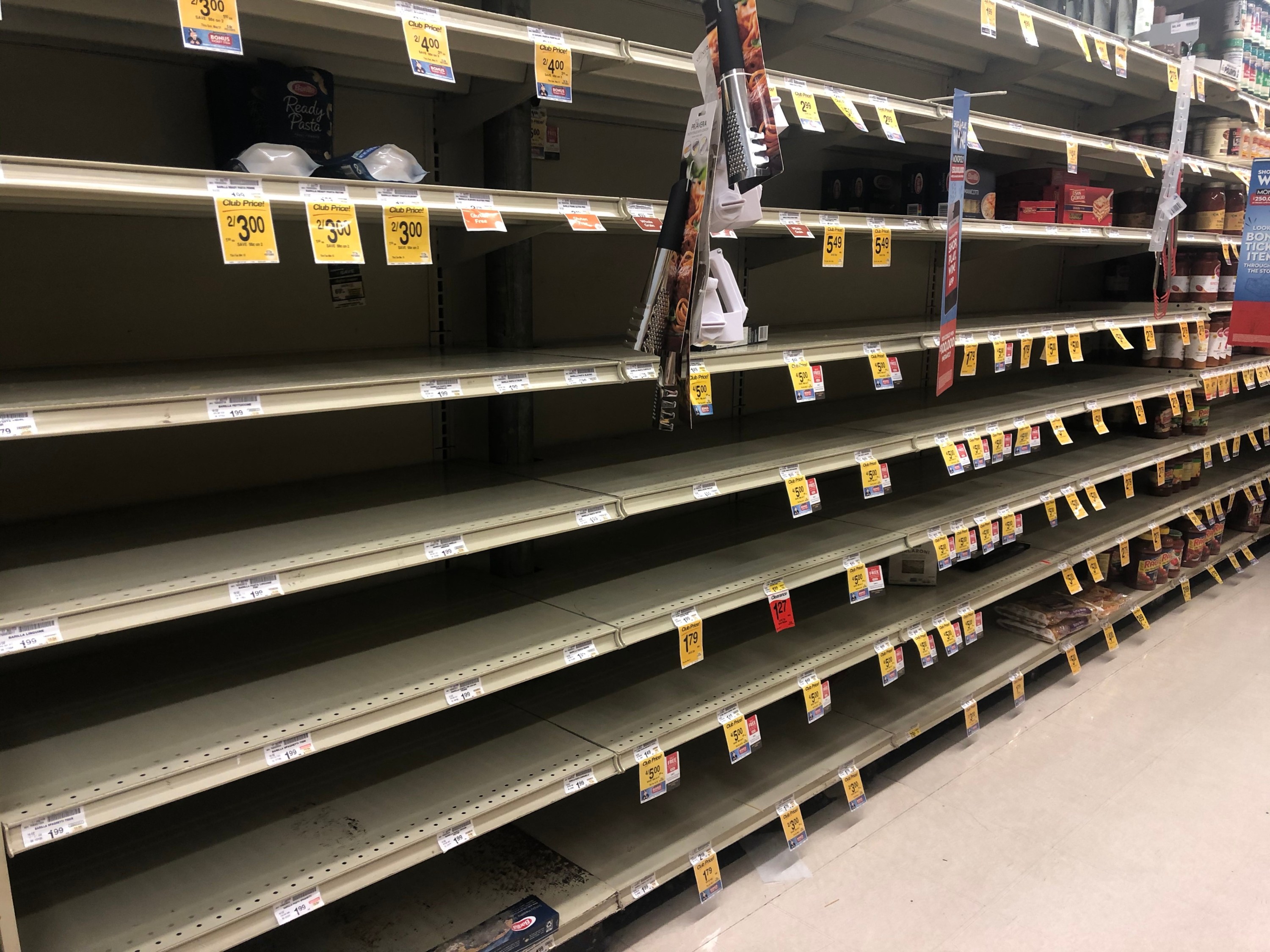
As shoppers flock to paper goods and dry food aisles before bunkering down amid the spread of coronavirus, D.C. grocery stores are struggling to keep the shelves stocked with high-demand emergency items.
“There was a general atmosphere of panic that was hard to avoid,” says Chloe Yelena Miller, a Glover Park resident who visited the Safeway on Wisconsin Ave. in Georgetown this morning.
https://twitter.com/ChloeYMiller/status/1238470424968794113
Miller had already shopped earlier in the week in preparation for possible impacts of the coronavirus, but needed to grab some weekly vegetables and a few more canned items. While the food supply remained decent, she says workers were quickly restocking the barren paper product aisle.
“They were taking [toilet paper] out of boxes and everyone was grabbing it as it landed on the shelf,” Miller says. “I got some, too, admittedly out of panic. We have a reasonable supply at home.”
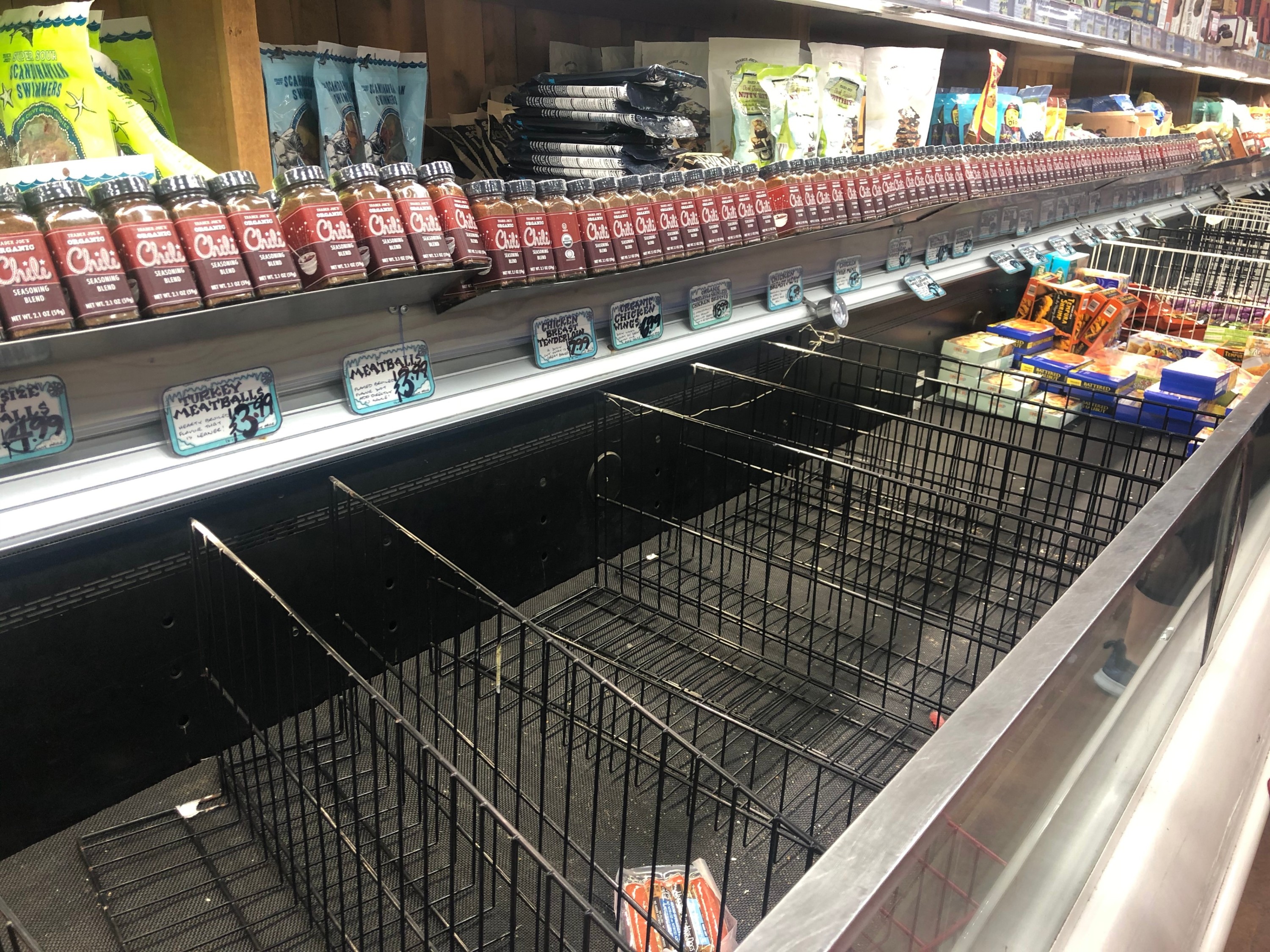
Shoppers and employees around the D.C. area reported similar scenes of low-quantities of items like toilet paper and canned food and massive lines. Customers at stores including Safeway, Giant, Trader Joe’s, and Harris Teeter have run into low or nonexistent quantities of essentials like toilet paper and nonperishable food.
Harris Teeter placed a three-item limits on toilet paper, water, canned meat, pasta, cleaning supplies, and cold, flu, and allergy medicine, according to a statement the company released today. Safeway is encouraging customers to “respect quantity limits of select, high-demand items to help ensure more customers will also be able to purchase the products that they need,” per a statement.
https://twitter.com/jwalker0X/status/1238265808800940032
According to a department leader at the Giant on Connecticut Ave. in Northwest, employees worked overtime through the night last night to restock a new shipment of toilet paper. By the time the worker’s shift began at 10 a.m., the shelves already been wiped clean.
“It’s just crazy,” says the department leader, who asked for anonymity because workers didn’t have permission to speak to media. “It’s definitely that kind of feeling like it’s the end of the world.”
Despite the barren shelves from a morning rush, some crowd sizes around mid-day at the Van Ness Giant were fairly manageable. D.C. resident Luanna Falco and her partner live only a few blocks from the store, and, with a new work-from-home schedule, decided to shop during what they predicted would be an off-peak hour.
“We knew it was going to be crazy after 5 p.m., so we’re trying to just get doubles of everything right now,” Falco says, adding she isn’t too concerned about her stock of toilet paper. “We have enough for the next few days, and when we run out, I’ll just come back and get more.”
But in Northeast D.C., crowd sizes seemed to pose a problem even in the middle of the day. Mount Pleasant resident Kate Tully tried to shop at Costco in Northeast, after researching what foods are best to stockpile. After spending 30 minutes waiting in traffic to get into the parking lot, she tried the Trader Joe’s near Union Market in Northeast, where she struck out again.
“It was nuts. There was very few nonperishables, one or two boxes of oatmeal left, no potatoes, no onions, and in the whole frozen food section, there was nothing there besides multi-colored cauliflower,” Tully says. “The line was just this gigantic snake around the entire store, so I just abandoned my cart and we left.”
A Ward 7 Advisory Neighborhood Commissioner, VJ Johnson, visited the Southeast Safeway in Good Hope Marketplace yesterday. He says that, while the store was fairly crowded, the crowd size didn’t look much different than it does before other emergency-scares like snowstorms, or on the first of the month.
As one of only three grocery stores in Wards 7 and 8 combined, Johnson says the store frequently sees long lines and high volumes of customers.
“I don’t know if it impacted [that Safeway] any different than I’ve experienced any other time,” Johnson says. “Long lines are always there, so I can’t say that the corona-scare has negatively impacted that Safeway. It was business as usual to me.”
Other shoppers have reported somewhat non-essential groceries disappearing from stores as well. Earlier this week, Petworth resident Natalie Fertig stopped at the Georgia Ave. Safeway to buy a few weeks worth of groceries around 11:30 p.m., and found the ice cream freezers completely bare.
https://twitter.com/natsfert/status/1237942772327383042
“I think I was sort of taking mental note of the things that were gone,” says Fertig, who later returned the following day to buy a bottle of wine that she couldn’t manage to carry home the night before. “The Brussel sprouts were low, and there were literally no bell peppers, and then I saw there was no ice cream.”
Amid the chaos, shoppers have encouraged kindness, patience, and gratitude for the employees who are staffing these stores. Despite the toilet paper pandemonium at the Wisconsin Ave. Safeway, Miller says the crowd was generally friendly, allowing carts to pass by when needed and thanking the employees for their hard work.
“Folks were super respectful and kind, allowing people to pass [because] we were waiting in line in the aisles,” Miller says. “And the employees were working really hard to stock the shelves and keep all of the lines moving.”
https://twitter.com/jribas/status/1238305234197319681
Jeff Reid, an employee at a Giant in Silver Spring, says it’s important for customers to remember that the staff members at the stores have no control over when a new delivery will come to a store, and when something runs out, it’s a matter of time until another shipment can come in.
“The customers want to know why you’re out of stuff, they’re like ‘why are you out of this, what can we do to get this?’ and we can only say we’re just waiting on a trailer,” Reid says. “We’re waiting on delivery, waiting on delivery. ”
The United Food and Commercial Workers Local 400 Union, which represents workers like Reid from area Safeways and Giants, asked employers to provide no less than 14 days of paid sick leave for its workers in the midst of the coronavirus scare. According to Reid, employers have asked workers to stay home if they’re feeling sick, but some workers don’t have the ability to forego a day’s worth of pay to protect against possible infection.
“These people are humans, and they have to feed their families as well,” Reid says.