Natalie Delgadillo
 Jenny Gathright
As confirmed cases of COVID-19 in the D.C. area have begun an exponential rise, local hospitals are bracing for the grueling weeks and months ahead.
These facilities will have to shift resources to handle coronavirus cases as the numbers continue to climb, handling everything from diagnostic testing to intensive ICU care for the people who develop severe illness. Normal hospital operations, from surgeries to emergency response, will have to continue apace.
All this as health centers around the country are facing a shortage of gloves, masks, and other protective gear for staff on the front lines of fighting the virus.
Sara Keller, an infectious disease doctor with Johns Hopkins Medicine, says she and her colleagues are still managing right now, but might be in a much more difficult spot in the coming weeks and months. Johns Hopkins Medicine runs five hospitals in D.C. and Maryland, and several other health care and surgery centers.
“We do of course worry, especially if we don’t do a lot of social distancing right now, that the number [of new patients] in the next couple of weeks is going to go up, and up, and up,” says Keller. “It’s kind of like, you’re on the Titanic, you can see the iceberg hitting, it’s kind of hit the first boiler room, it’s starting to spread to the next boiler room. That’s kind of what we feel like right now.”
So hospitals have been preparing for the worst: a ballooning number of patients that will stretch their current bed capacity and their stocks of essential supplies like ventilators, masks, and gloves. Several hospitals in the area, including those in the Johns Hopkins and Kaiser Permanente systems, have postponed or rescheduled elective and non-urgent surgeries. The American College of Surgeons and the U.S. surgeon general are recommending that other hospitals do the same.
Keller says pausing elective surgeries will free up essential protective equipment for the patients who are sickest with COVID-19. Plus, she says people who can stay out of hospitals right now should, because any person could be an asymptomatic shedder of the virus.
Hospitals have also begun trying to get their hands on more personal protective gear for staff, like gloves, masks, gowns, and face shields. Anticipating a shortage of supply, George Washington University Hospital has begun rationing the use of masks, directing staff to use their respirator masks five times before throwing them away, according to the New York Times. The hospital is also keeping its masks locked away, per the outlet.
“We’ve experienced outright theft, with the general public walking into our building and walking right out,” Bruno Petinaux, GW’s chief medical officer, told the Times.
GW Hospital did not respond to repeated requests for comment from WAMU and DCist regarding their medical supplies and their preparations for a potential influx of COVID-19 patients.
United Medical Center, the District’s only public hospital and the only full service hospital east of the Anacostia River, is also grappling with the possibility that it won’t be able to order enough personal protective gear for staff.
“At this time we have an adequate number of supplies. But if there’s a surge, there’s no way to tell what will be needed in the future,” says UMC spokesperson Toya Carmichael. “I think it’s known by all media and every individual in the world that there is a shortage of supply … We are doing our best to order more supplies.”
Since the local outbreak began, UMC has already seen an uptick in visits to the emergency room, but as of Thursday the hospital hadn’t recorded any positive tests for COVID-19, per Carmichael.
While many hospitals in the area have set up tents outside their buildings to screen and test potential COVID-19 patients, UMC has not yet been able to procure a tent because of supply issues, Carmichael says. The hospital has a tent on back order, she says.
Supply problems aside, staffing up the hospital has also been more difficult during the outbreak, per Carmichael. Reduced Metro service has made it harder for some staff members to get to work, she says, and the hospital predicts it could become an even bigger problem if service is reduced further.
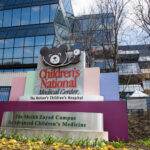
School closures have also created problems for hospitals, making it more difficult for hospital workers with school-age children to make it in to work. Children’s National Hospital has created a volunteer form for people interested in helping staff members with childcare.
A spokesperson for Children’s did not directly answer questions about whether the hospital was facing a current lack of protective equipment or other supplies, but said over email that “we have a team meeting multiple times a day looking at our available supplies, communicating frequently with vendors and public health authorities.”
The spokesperson also said that Children’s has the ability to expand its current number of isolation beds, which use negative-pressure isolation to prevent the transmission of infectious diseases.
Doctors at UMC and Children’s National have already tested positive for the virus.
City government has also been involved in trying to find solutions for the increased pressure on the local healthcare system. When the outbreak first started, authorities proposed reopening Providence Hospital to deal with the coming spike in patients with COVID-19. But an official with the Providence Health System said the building can no longer manage inpatient care, according to the Washington Post.
At a press conference on Thursday, Director of the D.C. Department of Health LaQuandra Nesbitt said that the city “will be in a position to be prepared for that increased demand for health care resources.”
Currently, the city has 404 available respirators, with 147 currently in use. There are 351 ICU beds in the city, but only 69 currently available, Nesbitt says. That is, however, an increase from two days ago, when 40 beds were available. Nesbitt says it’s also important to note that hospitals can increase the number of ICU beds if necessary.
“The number of ventilators exceeds the number of ICU beds, which tells us that our hospital leadership are thinking very creatively about how to use the space in their health care facilities in different and new ways to respond to COVID-19,” Nesbitt said at the conference.
Virginia health officials said on Wednesday that there are 2,000 ICU beds across the state, each one equipped with a ventilator and respiratory support equipment.
D.C., Maryland, and Virginia have also made requests for medical equipment from the country’s Strategic National Stockpile, a supply of medical equipment hosted in strategically-located warehouses across the country—many other states have made similar requests.