Rachel Kurzius
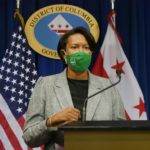
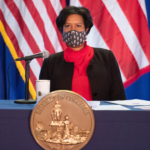
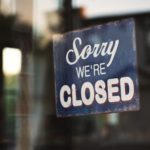
Mayor Muriel Bowser announced on Tuesday that D.C. would order the closure of all nonessential businesses as the city tries to keep people inside their homes and inhibit the spread of the coronavirus. Additionally, gatherings of more than 10 people have been prohibited in the District.
Last week, Bowser ordered the closure of restaurants, bars, movie theaters, gyms, spas, night clubs, meeting halls, libraries and senior centers. (Restaurants are still permitted to offer takeout and delivery services.) Now, other businesses are being added to the list, including personal services like nail and tanning salons, tattoo parlors, and barbershops, as well as additional retail stores, like clothing stores. Also considered nonessential? Tour guides and door-to-door solicitation.
“We have virtually shut down economic activity in our city,” Bowser said during Tuesday’s press conference, continuing to urge people to stay home.
On Tuesday evening, Bowser’s office released the order, which goes into effect on March 25 at 10 p.m. and lasts through April 24. It still encourages essential businesses to stay open, including healthcare-related operations (hospitals, clinics, dentists, pharmacies, veterinarians, medical marijuana dispensaries, etc.), food and household retailers (grocery stores, convenience stores, liquor stores, and hardware stores), childcare facilities, and financial institutions like banks and credit unions. Restaurants are still allowed to offer takeout and delivery, but barred from in-house service. Delivery businesses and rideshare companies can still operate, and bicycle sales and repair shops can, too.
[Read the latest updates about coronavirus in our region here.]
The move mirrors what Maryland put into place on Monday, when Governor Larry Hogan announced that all nonessential businesses would have to shutter by 5 p.m. Among the businesses permitted to remain open in Maryland: grocery stores, hospitals, banks, pharmacies, liquor stores, and medical marijuana dispensaries.
“We are telling you unless you have an essential reason to leave your house, then you should stay in your homes,” said Hogan.
Just like in Maryland, D.C. ultimately determined bicycle shops were considered essential after first appearing not to. During a virtual town hall in the afternoon, Bowser included bicycle shops among the businesses she deemed non-essential retailers, but by the evening, that had changed. Now, bicycle shops are considered among the businesses encouraged to stay open.
So far, D.C. and its neighboring jurisdictions have not gone so far as to enact shelter-in-place orders, which have been put into effect in New York and California. Some local politicians have encouraged Bowser to do so.
As Bowser explained yesterday, she has not instituted a shelter-in-place order because “we want to make clear we want people to go out for essential activity.”
This story has been updated with information from Mayor Bowser’s virtual town hall and the emergency order.