Elliot C. Williams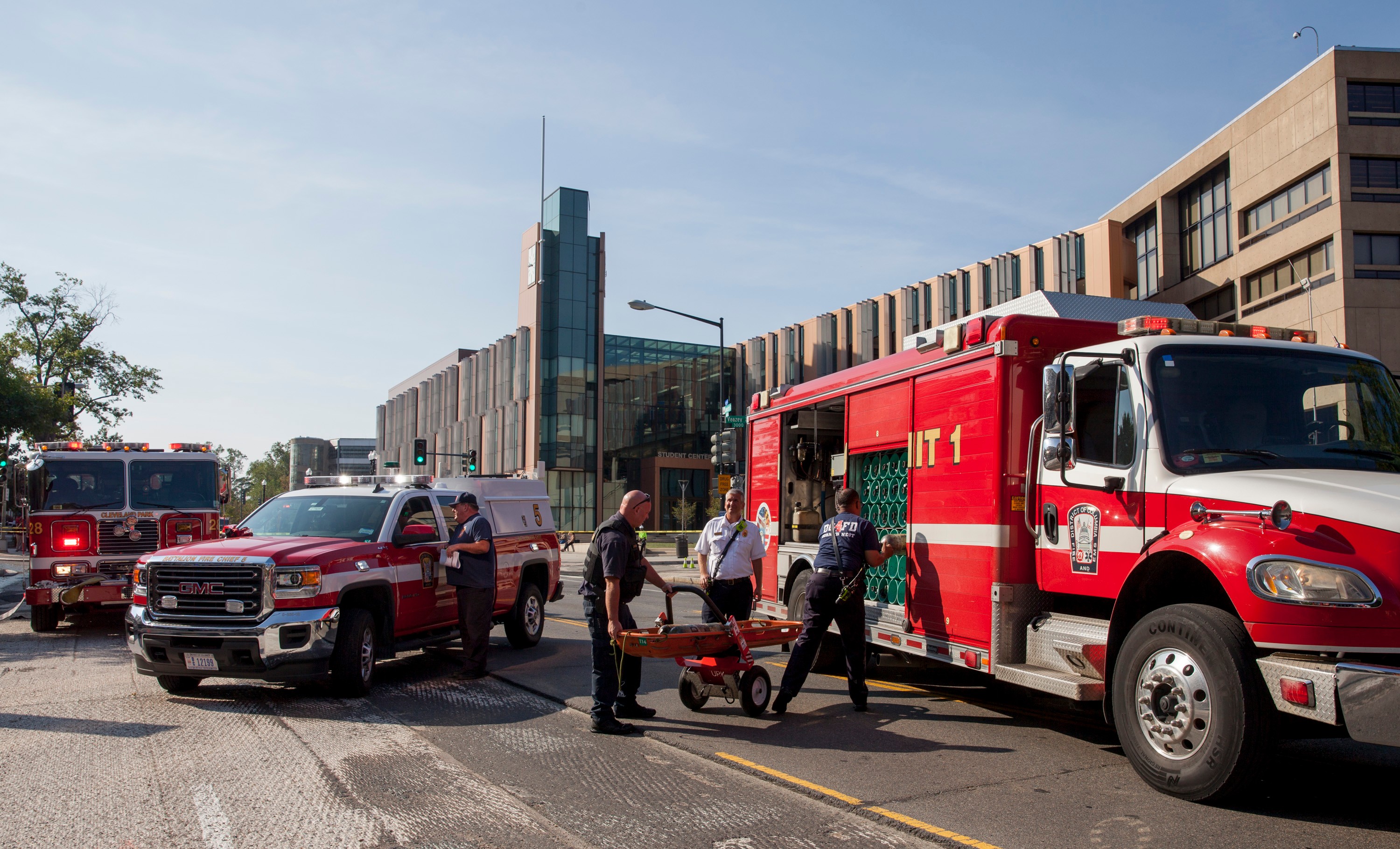
The number of D.C. firefighters who have confirmed cases of COVID-19 reached 12 on Thursday, and, as of Friday morning, 108 additional firefighters are in quarantine to prevent the spread of coronavirus.
Does that hamstring the ability of D.C. Fire and EMS to respond to emergencies?
“That’s the question everybody asks—’Are you prepared?'” says Dabney Hudson, president of the IAFF Local 36, the D.C. Firefighters Association that represents more than 2,000 active and retired first responders. “I’m like, ‘No, nobody in the entire world’s prepared.’ They’re locking the entire world down. I mean, when have you ever seen this? But we have policies. We have procedures.”
Hudson says that the agency has “infectious control plans, we have ways to handle known exposures and things like that. These are things that we train for, these are things that we prepare for; obviously not on this scale.”
By “this scale,” Hudson is referring to the coronavirus pandemic that has led the D.C. government to shut down all nonessential businesses, and infected more than 1,200 people in the region. This is typically the busiest time of the year for the nation’s capital, but that activity has come to a standstill.
A week ago, Mayor Muriel Bowser called on volunteers, even those with no medical background, to join the Medical Reserve Corps. For FEMS, it won’t come to that, says Hudson. The department has four platoons (or shifts) and can double up the numbers by switching to a two-platoon system if necessary. There are a little more than 2,000 people currently working as firefighters in D.C.
“120 or 130 [quarantined] might sound like a lot, but that’s literally 30 people per shift,” he says. “We have more annual leave available a day than 30 people. So right now, we’re in a position where it hasn’t created a challenge for us to respond. If it does, we have contingency plans on the books.”
Despite the slowdown of activity in the city, emergencies haven’t stopped. On Wednesday alone, the city’s FEMS department responded to 455 calls—122 of which were critical EMS dispatches, 246 were non-critical, and 87 were fire-related incidents and other emergencies. While not trying to downplay anyone’s concerns, Hudson recommends not calling 911 if you’re just feeling a little lousy.
“The hospitals are full of people. We’re worried they’re going to get overcrowded,” he says. “If you’re just not feeling well, you should consult with your primary care physician. Telemedicine’s come a long way.”
911 dispatchers now screen patients by asking if they have a fever, body aches, or a persistent cough; or have they traveled recently (a question less relevant since more travel restrictions were instituted, Hudson says). For cases where the caller presents COVID-19 symptoms, the department will send out fewer responders and institute more precautions, like asking the respondent to meet outside their home.
In terms of personal protective equipment, including N95 respirator masks that filter out harmful particles, the department is properly stocked—for now. The supply chains are stretched thin, though, Hudson says.
“Should this thing take a crazy turn where we’re running thousands of people a day that have [coronavirus], it could probably put us in a position where we’d be struggling,” he says. “But that would be with everybody else in the free world at that point, too.”
Even in the event of an extreme shortage of equipment, the District is prepared, Hudson says. After September 11, the department provided its members with higher levels of protective gear, such as Tyvek suits, and fully self-contained breathing apparatuses. However, these take longer to decontaminate and could slow response times, he says.
Over the past year, the department bolstered its peer-support network to provide mental health resources for firefighters going through PTSD. After a few members committed suicide and other “punch-in-the-gut” moments, Hudson says the association trained more than 40 firefighters to help members going through psychological distress. They’ve already been reaching out to quarantined first responders and checking in on their wellbeing. The department also has a clinical psychologist on staff.
When asked if DCist could speak to some of the quarantined firefighters, Hudson responded, “No. None that I know want to talk. They just want to get through it.”
Finally, Hudson offers the same advice that Chief Gregory Dean does in his increasingly-regular coronavirus statements: “Heed the warnings, do the social distancing. I had a buddy that texted me a picture last Friday night—200 people in Meridian Hill Park drinking wine and hanging out. Those aren’t the things that we should be doing. Wash your hands. Do everything you can to reduce the spread. That ultimately helps us.”