 Jenny Gathright
 Margaret Barthel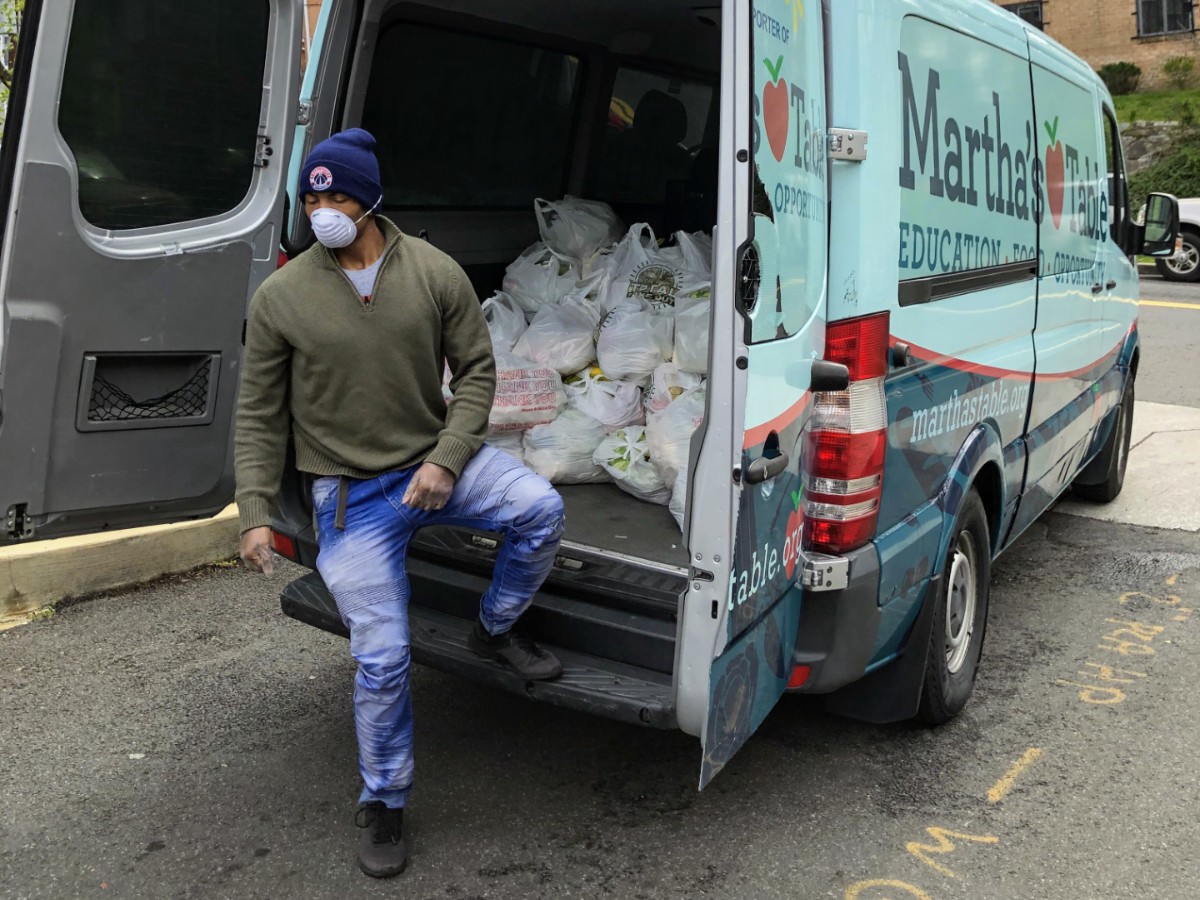
People who work to prevent violence in the District have the pandemic on their minds.
Lashonia Thompson-El, who co-leads Cure The Streets, the violence interruption program at the D.C. attorney general’s office, believes that violence, like a disease, transmits from one person to another. And during an economic downturn like the one triggered by the pandemic, when people’s basic needs for food and safety go unmet, she worries the disease of violence can spread.
“First of all, some of these are families and friends and people that we know and love, so we don’t want them to be hungry and malnourished … during a very stressful time,” says Thompson-El. “But second of all, we don’t want this need to lead to more conflict, more inability to resolve situations that could potentially lead to violence.”
Spiking layoffs, limited supplies of food, and other economic impacts of the pandemic are bearing down on people’s lives and bank accounts. Violence interrupters say they are trying to figure out how to fill those unmet needs, developing partnerships with organizations like Martha’s Table to funnel food and support to vulnerable people.
“If you don’t feel that you have anything, then you may resort to doing anything,” said Kim Ford, who leads Martha’s Table, a nonprofit that provides healthy food, education programs and clothing to local families in need. “And so, we can certainly see that there may be a connection between food and violence or people acting out.”
Meanwhile, violence interrupters are also shifting much of their work in key D.C. communities to check-ins by phone or video conference, in order to abide by stay-at-home orders and calls for social distancing.
Since March 16, when D.C. Mayor Muriel Bowser ordered restaurants and some other nonessential businesses to close, reported crimes have fallen or remain unchanged compared to the same period last year—mid-March to early April, according to data published by the Metropolitan Police Department. There were 158 violent crimes this year and 179 last year. Property crimes, too, are down, from 1,542 in 2019 to 1,011 this year. But, assaults with a dangerous weapon are up noticeably, from 58 during that time period in 2019 to 82 in the same period in 2020.
LaTrina Antoine, the editor in chief of D.C. Witness, a news organization that documents every homicide in the District, thinks it’s too early to tell if the coronavirus is slowing violence down—or speeding it up.
“We just started the stay-at-home orders, and the virus is increasing every day,” she says. “I would say you would need to check back in a month to see what’s happening.”
Jovan Davis, a program manager with Cure the Streets who oversees a team in the Washington Highlands neighborhood of Southeast, does not anticipate any downturn in violent crime because of the coronavirus and the stay-at-home order.
“The violence doesn’t stop,” Davis says, because people will always find a way to leave the house and “make their moves.”
His team of violence interrupters and outreach workers is monitoring social media sites for any indication of conflict and checking in with key neighborhood contacts multiple times a day over telephone calls, text or FaceTime. They have also replaced group outings, like a pre-pandemic trip to a bowling alley with young men from the neighborhood, with group meetings over Zoom.
Tom Brown, whose non-profit Training Grounds contracts with the city’s Office of Neighborhood Safety and Engagement to do violence prevention work in Wards 6 and 7, says his team has revived a previously dormant text line so that people can easily get in touch about neighborhood concerns. They’re also providing safe passage for people traveling to the D.C. public school sites where the city is serving food.
For Wali Johnson, a longtime violence interrupter who has also been contracted by ONSE to work in Ward 8, the pandemic put an ambitious plan on pause. Johnson says that his team helped negotiate ceasefires between four rival communities back in November, and they were planning to take a trip to a safe, neutral place to do more mediation. That trip is now on hold.
But Johnson says they are finding creative ways to engage people virtually — and using phone and video calling frequently.
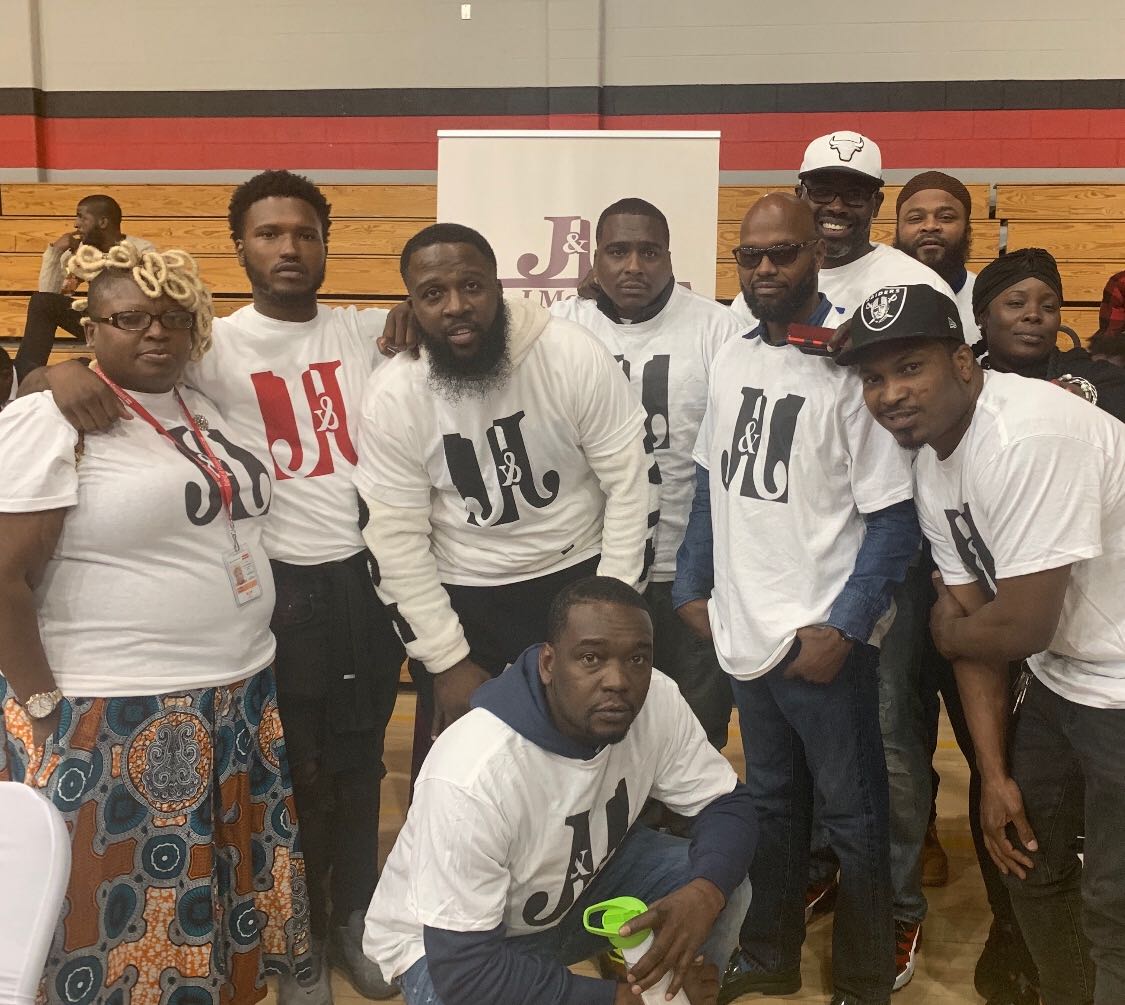
For Davis, Brown, and Johnson, connecting people with food and basic necessities has become a major part of their work during the crisis. They say their teams are checking in with people in their target neighborhoods, sometimes several times a day, asking a slew of questions: Where are you? What are you doing? Are you all right? Is your family all right? Is there food in the house?
For Davis, this outreach is a way to solidify the relationships his team is developing with people in Washington Highlands.
“Everyone is in a time of need now, so it really gets personal,” says Davis. “We become a resource. And it’s like we’re building leverage through this crisis now … so if there’s any way that we can take the weight off his household’s shoulders, or his shoulders, we become … a resource for these individuals.”
“The traumas … and the anxieties that we are hearing about in these communities seems to be growing by the day,” Brown says.
Johnson says the key right now is to prevent people from resorting to “desperate measures,” including becoming involved in crime or violence, to provide their families with food and other essentials.
Kim Ford, the president of Martha’s Table, agrees. The organization is now handing out four times its usual number of bagged groceries and healthy prepared meals.
Some of that food is being distributed with help from a number of violence interruption programs supported by the D.C. Office of the Attorney General, including Cure the Streets and Murder Free D.C. Brown and Johnson also say they are partnering with Martha’s Table to distribute thousands of meals to the communities they serve.
Collaboration with violence interruption groups isn’t new, according to Ford (for starters, D.C. Attorney General Karl Racine sits on the Martha’s Table board). But previously, the organizations had mostly referred people to each other. They hadn’t worked together on direct food distribution before the coronavirus hit the District.
“When the COVID-19 pandemic started, we talked about ways that we could expand that work,” says Ford. “And so the first thing that came to mind was, how can we directly add food to this relationship?”
One positive outcome of the great need for food and supplies, Johnson said, is that he sees young men from the neighborhood—people he keeps an eye on because he knows they have been involved with crime—offering to help out with food distribution.
“In the community, you might have been seeing them in a negative light,” said Johnson. But now, he says they’ve been “putting on their gloves and their masks and covering up their hair and stuff like that, and they start serving the community.”
And Martha’s Table needs the help, as job losses or cutbacks in hours make more families in D.C. food insecure. The uptick was especially noticeable after the first of April, when many people missed their first paycheck since the beginning of the outbreak.
“We’re seeing a lot of people who may not have been food insecure before, who are now showing up,” Ford said.
And Ford worries about what’s ahead. Even as it ramps up its food distribution operations dramatically, her organization is also facing major challenges, including a dwindling volunteer corps, fewer or more irregular deliveries from suppliers, and a tough financial picture.
“We unfortunately did not contemplate a global pandemic and therefore, we did not budget for all of this,” Ford says. “So our costs have shot up significantly.”
For now, Martha’s Table will keep going, and will keep paying and providing benefits for all of its staff, Ford said. But she knows sustaining—or exceeding—the current pace will be hard.
“We don’t know how long this is going to last. But we do know that the longer it lasts, the more that demand is going to rise,” she says. “We are making it work and we’re going to continue to make it work as long as we can.”
“It’s almost like you’re holding a line, but it’s getting tighter and tighter,” says Johnson. “And you know, we can’t touch everybody all the time. Some people fall through the cracks.”
In Johnson’s view, violence has slowed for now, perhaps in part because of those ceasefires that are still holding. But, he adds, it definitely has not stopped because of the coronavirus. And that is “heart-wrenching,” he says.
There have been 40 homicides in D.C. this year; The most recent one occurred on Tuesday, when a 21-year-old woman from Prince George’s County was fatally shot near Fort Davis Park in Southeast. On early Wednesday morning, a 15-year-old boy was shot several times and wounded while he was riding a bike near the Greenway neighborhood in Southeast D.C.
At the onset of the coronavirus, Johnson hoped for a moment that the existential threat of a pandemic would bring some perspective, and perhaps bring violence to a near-halt.
“We can’t just put that on pause for a while until we figure out what’s gonna happen to us as people?” he says. “You know, as a whole?”