Martin Austermuhle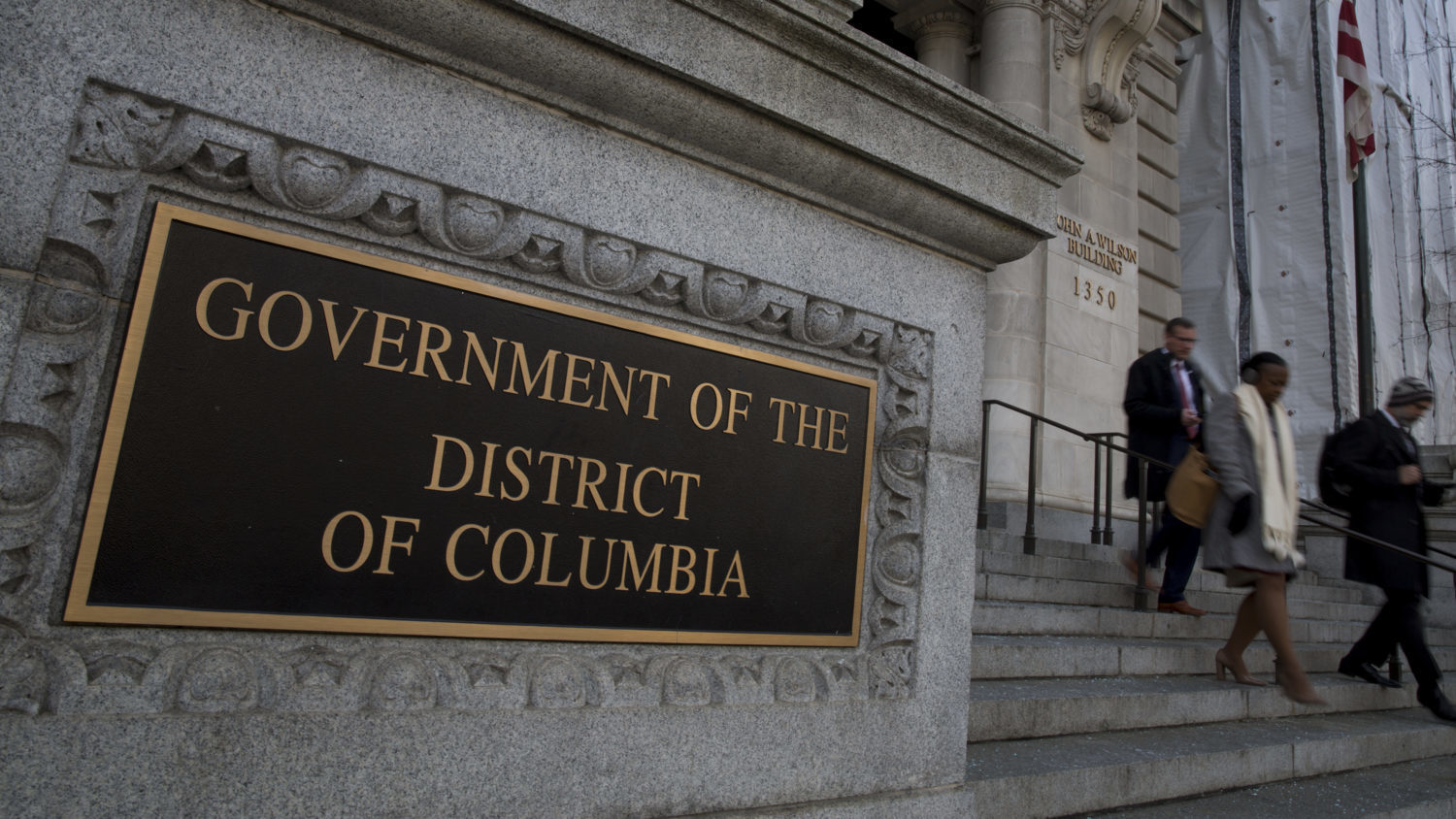
D.C. officials will be forced to immediately cut $721 million from the current year’s $9 billion budget and another $773 million from next year’s budget as the coronavirus pandemic continues to hammer the city’s economy.
The bad news was contained in a revenue estimate delivered to city leaders by D.C. Chief Financial Officer Jeffrey DeWitt on Friday, and comes in above initial estimates from earlier this month showing that city leaders would be faced with a $607 million shortfall in this year’s budget. His new estimates represent a seven percent contraction for the city’s budget, and the first time in years that Bowser and lawmakers will have to make cuts.
“This is a recession no matter how you look at it,” he said during a meeting with Mayor Muriel Bowser and members of the D.C. Council. “What’s different here is it’s faster.”
DeWitt said a large part of the hit to the D.C.’s economy was driven by the loss of sales tax revenue, which makes up 18% of the money the city takes in on an annual basis. Since the virus arrived in March, sales tax revenue has dropped by 56%, he said. And jobs in the city’s ever-important hospitality sector have dried up, and will result in an estimated 93,000 lost jobs by July.
Provided a gradual reopening of businesses starts this summer and there’s not another pandemic-related shutdown, DeWitt estimates that actual recovery will start in the fall and take up to two years. Even then, the recovery will be uneven — he estimated that half of the city’s bars and restaurants that fully closed down won’t reopen, and that hotels could take up to five years to see their occupancy rates and revenue return to normal. But he did sound one note of cautious optimism.
“The recovery will probably be better than most places,” he said. “The federal government is here, [and] don’t underestimate the resiliency of the restaurant industry and other entrepreneurs to come back. But it’s a hit.”
And it’s a hit that Bowser and the D.C. Council will now have to grapple with. In the coming weeks, Bowser is expected to submit a revised budget for the current fiscal year, which ends in September, and a budget for the next fiscal year. Beyond making immediate cuts to account for expected revenue that’s no longer coming in, officials will have to trim back spending across the board.
On Friday, neither Bowser nor Council Chairman Phil Mendelson detailed plans for dealing with the leaner fiscal reality they are facing, avoiding committing to either government furloughs or any specific cuts.
“We’re going to look very closely at all our expenses. We go into this with the set of values that we want to maintain the services that have attracted people to D.C. and made it a dynamic place to live, work and play,” Bowser said. “We are going to make every effort to make sure that the people who got us here will be here with us for the recovery.”
But the mayor did waive off the possibility of tax increases in lieu of spending cuts. “We can’t make up these deficits by raising taxes. The tax increases would be so enormous nobody would be able to afford to live here,” she said.
Mendelson, the Council’s longest serving member and one of only a handful who served during the Great Recession, called the budget shortfalls “sobering,” but also said the city benefited from having entered the year in a strong financial position, included a rainy-day fund with $1.43 billion in it. Still, city officials have approached those reserves with caution, noting they need to keep cash on hand to pay bills and to keep the city’s good credit ratings. And the city has also had to draw total of $192 million thus far from its contingency cash reserve fund to support the coronavirus response, using the funds to fund staffing and purchase supplies for medical services.
City leaders are also operating under the reality that direct federal aid so far delivered to states and D.C. — $1.25 billion per state, but only $500 million for D.C. — cannot be used to replace lost revenue. State leaders from across the country are pushing for additional federal money with fewer strings attached, but Senate Majority Leader Mitch McConnell has so far seemed dismissive.
Bowser warned that unless federal money keeps flowing, it will be difficult to help everyone in the city who’s asking for it. A new coalition of businesses and developers, for one, has asked for a year-long property tax break worth more than $300 million.
“Everybody in our city has lost revenue and is hurting, and that’s a good number of people,” she said. “What I know for sure is our local budget cannot respond to all those very significant needs.”