There’s nothing quite like the electric buzz you feel when finding a morel mushroom. The first type of edible wild mushroom to pop up during the spring in this region, the highly prized fungi have unique honeycombed conical caps that are black, blonde, or mahogany brown. Amidst the fallen leaves and the ground cover, they blend in seamlessly. Sometimes you can hike through the woods for hours before finding any (or you may go home empty handed). But then you spot one, and that little shock runs through you.
“It’s like finding a diamond,” says Drew Adams, former executive chef of Bourbon Steak, where he led foraging expeditions with guests. “It doesn’t matter how big or how small it is.”
Morels are like no other mushroom. Chefs sometimes call them American truffles because of their rarity, the reverence they inspire, and their intense umami flavor. At the start of the season, restaurants often pay foragers $20-$25 a pound for local morels.
I found my first one several years ago while out foraging for them with Patrick O’Connell, the chef-proprietor of the Inn at Little Washington. It was thrilling—and the meal that followed tasted like eating pure spring. From that moment on, I was addicted to searching for these elusive and cherished mushrooms, currently coming up all over the D.C. area. For the past couple of weeks, I’ve been taking my 7-year-old son, Zephyr, out to look for them. He gets equally excited on these forays, which he calls “our treasure hunts.”
Though there is a strong foraging community in the region, including such online groups as Virginia Mushroom Hunters on Facebook, many foragers prefer to go out alone or with just a few companions. “I like the solo aspect of it,” says Rob Rubba, executive chef of the forthcoming plant-based Oyster Oyster in Shaw and the Logan Circle pop-up takeout shop Scrappy’s Bagel Bar, who has been foraging for nearly a decade. “It’s just grounding. Your senses take over. It’s quiet and serene. You can hear every little crack and movement in the forest.”
Right now, mid spring, we are coming to the end of the morel season. In order for them to start popping, the ground temperature needs to be 50 to 55 degrees for four or five days. There are other cues in nature. “When the dogwoods are blooming, when the redbuds are blooming, and—my favorite—when an oak leaf is the size of a squirrel’s ear,” says William Needham, president of president of the Mycological Association of Washington, D.C., which under normal circumstances would be hosting morel forays at this time of year. Till has been out foraging for morels on numerous occasions in the last few weeks, often returning home with several pounds. And Rubba has been so successful in his hunts he sometimes uses morels to top the bialys he sells at his bagel pop-up.
The gold standard for learning to find morels is going out with a seasoned forager, but not all of them will be willing to take a newbie under normal circumstances, much less now that there are social distancing restrictions in force. “I have to know people pretty well before I take them out and I’ll only take people to certain spots until I get to know them,” says Jonathan Till, a veteran forager who is the founder of Heritage Foraging and the executive chef of Evening Star Café in Alexandria.
Alternately, beginners can take online classes on the subject (Till recommends those by Learn Your Land), read identification guides (Adams favors “Northeast Foraging” by Leda Meredith), or join a mycology club, such as MAW.
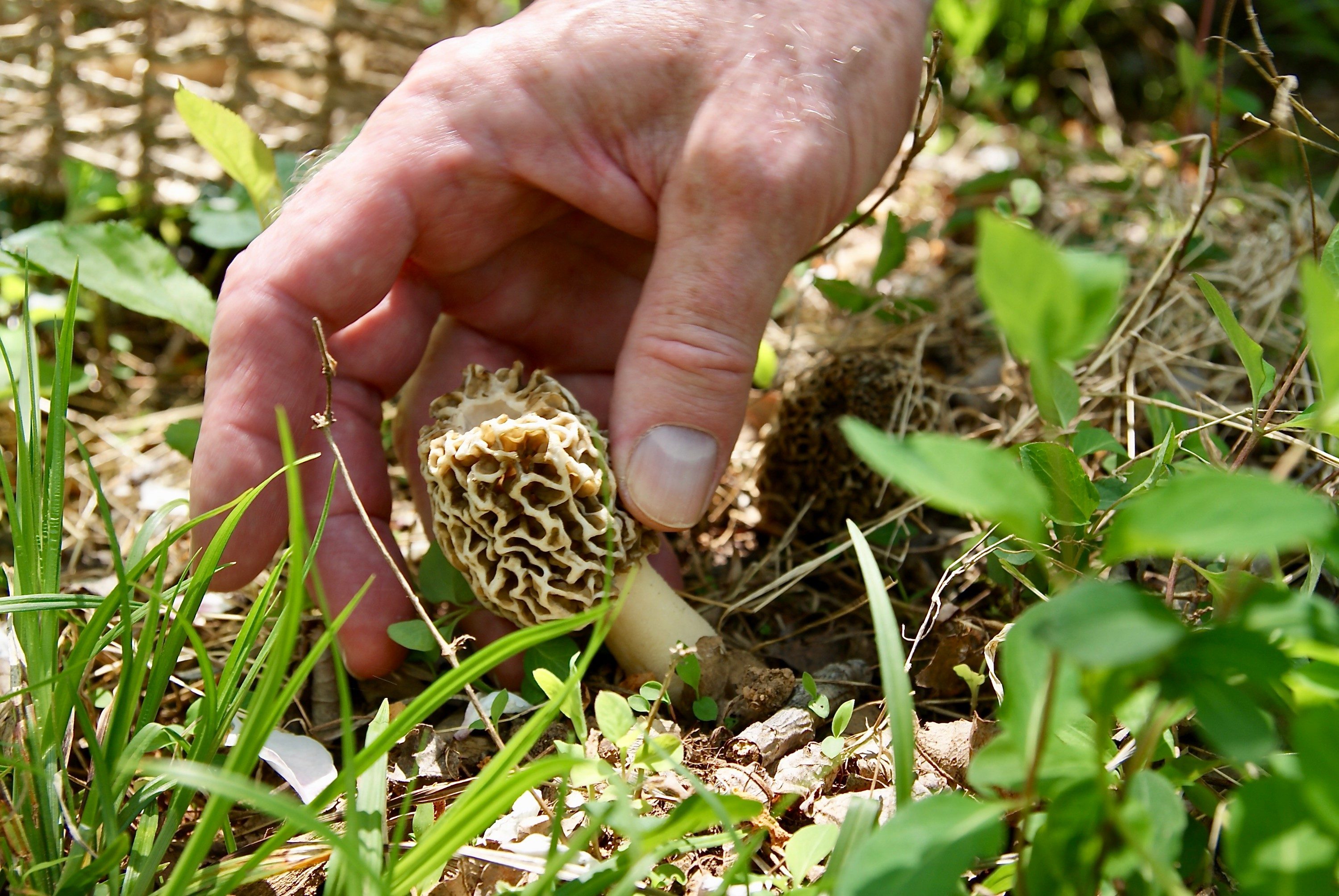
Morels favor certain environments, which can help narrow down where to look for them. In this region, they are often found around tulip poplar, elm, and ash trees, as well as fallen and dead trees. Moist soil or good access to water is key. Another good indicator is a proliferation of mayapple plants, which have umbrella-like leaves hiding small white flowers.
Before embarking on an expedition, be aware of the potential consequences for taking morels, since the rules governing foraging can vary widely depending on the park or property. Not that this stops most foragers. “In general, it’s ‘don’t ask, don’t tell,’” says Needham. “Surreptitiousness is best.”
To find them, “you have to think like a mushroom,” says Rubba. That means sometimes getting low to the ground, where they’re easier to spot because you can see them rising up from the forest floor. Morels often pop up in groups, so do a survey of the surrounding area. (MAW offers a deep-dive on the subject, entitled “Morels and How to Find Them” by Tim Geho.)
First-timers need to stay alert for poisonous false morels (sometimes called brain mushrooms). Luckily, the imposters are easy to spot: They have folds instead of crannies on their caps. “They look like a balled-up t-shirt on the top of a stem,” Till advises.
Additionally, these toxic doppelgangers have spiderweb-like strands filling their centers, whereas genuine morels are hollow. “[I]f you even have a modicum of understanding of what you’re looking for, it’s unlikely you’ll confuse those,” says Needham. “Morels are so distinctive. It’s a pretty clear identification.”
Other than that basic know-how, you don’t need much to forage for morels: an identification guide or app to double check your finds, bug spray to keep the ticks away (and don’t forget to do a thorough body check when you get home), a knife for harvesting, and a mesh bag or basket, so air can circulate around the mushrooms that you harvest to keep them as fresh as possible. Rubba brings a notebook, so he can jot down observations on where he finds them and the surrounding environment. And don’t forget to drop a pin on your map app of choice, so you can easily navigate back to morel spots in subsequent seasons.
Once you get the morels home, Rubba suggests first halving all your morels lengthwise. Not only will this make them easier to clean, but you can ensure the mushrooms are hollow, confirming they are not the toxic false morels. It is imperative to wash them thoroughly, since their crannies and crevices are perfect for trapping debris and insects. Adams recommends putting them in a big bowl and covering them with cold water. Use your hands to submerge them several times, then drain them and repeat two more times before letting them air dry on paper towels.
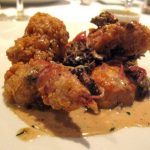
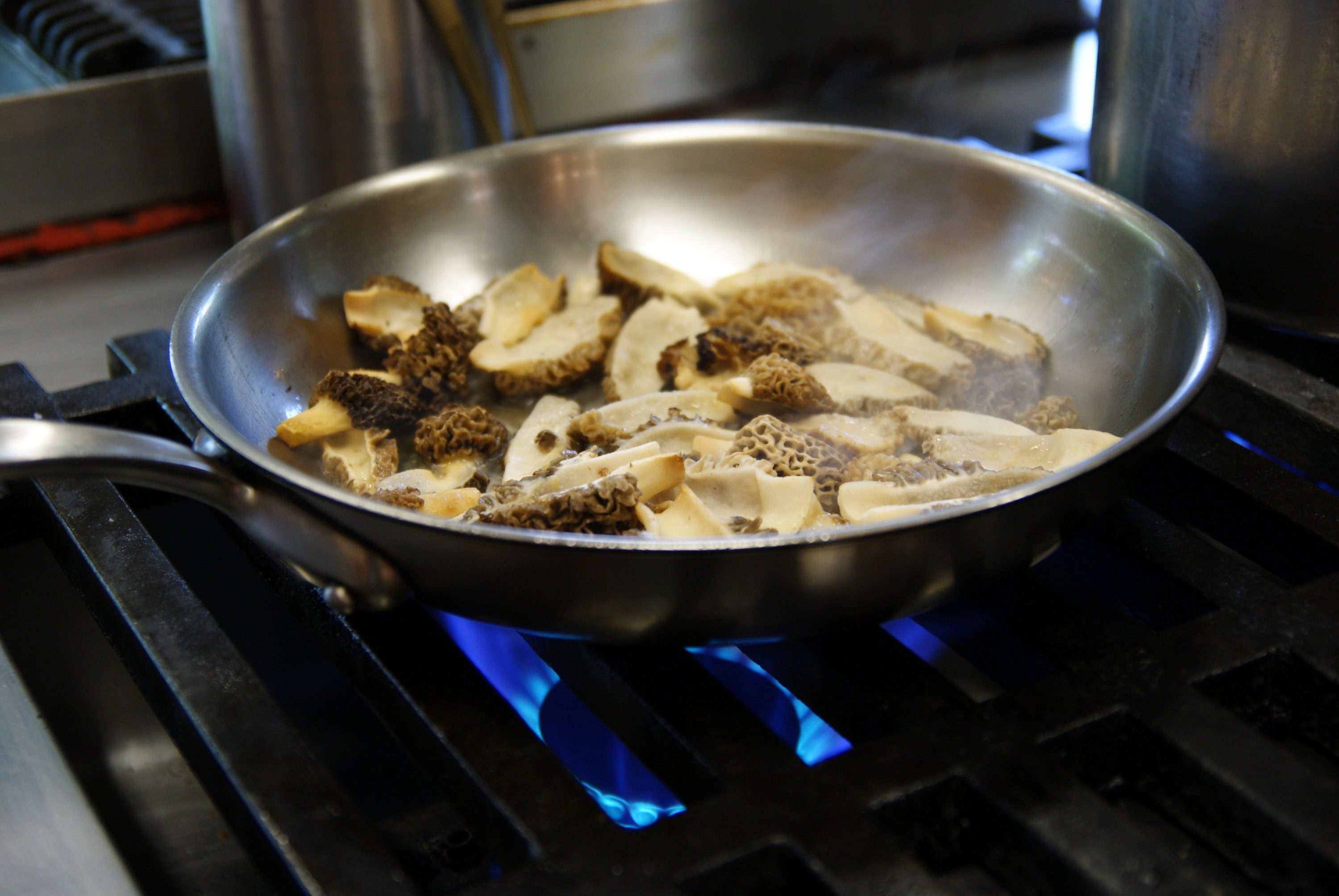
Morels should be cooked before they are eaten or they will probably trigger gastrointestinal distress. With an earthy richness and meaty texture, simple preparations work best to highlight the mushrooms. Rubba likes searing them in a hot pan with plenty of butter, garlic (or wild ramps, if you can get them) and some fresh thyme, before pairing them with a simple starch, such as pasta, rice, or potatoes.
Morel season usually runs from mid-April to mid-May, though the foragers I spoke to guessed there was just one to two weeks left in this season. Next on their horizons are chanterelle mushrooms, which should start showing up at the end of May.
Previously:
There’s Plenty Of Food To Forage For Around D.C.—If You Know Where To Look