Martin Austermuhle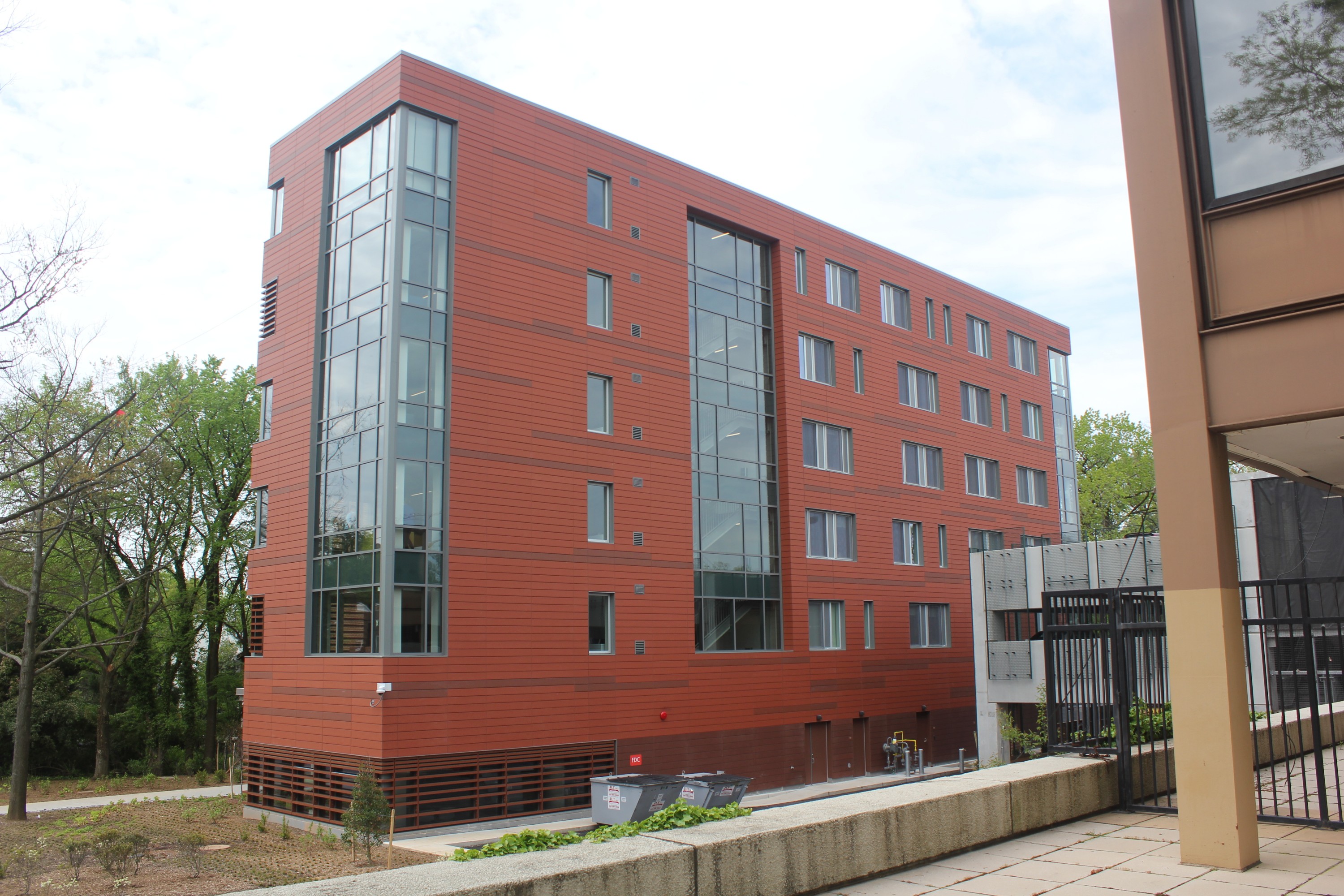
D.C. Mayor Muriel Bowser on Tuesday opened The Brooks, a new family homeless shelter in Ward 3, built as part of the city’s plan to replace the old D.C. General shelter that was closed in late 2018 after longstanding concerns over its size and condition.
The 50-unit building, located on Idaho Avenue in McLean Gardens, is the second-to-last shelter to be completed as part of Bowser’s plan to replace D.C. General with smaller shelters for families. Shelters in Wards 4, 5, 6, 7 and 8 have already opened, and the final shelter — slated for Ward 1 — is expected to be finished next year.
“At a time when we face unprecedented challenges, The Brooks reminds us that our most vulnerable residents of the District deserve the safety and security of a home when they fall on hard times,” Bowser said in a statement.
Named after Donald Brooks, the late Street Sense vendor and case manager with the D.C. Department of Human Services, the shelter had to overcome a lawsuit from Ward 3 residents who said they had not been properly consulted by city officials on the building’s location, as well as complaints that a playground for kids at the shelter would be too noisy.
City officials say the new smaller shelters are more humane for families and allow caseworkers to better assist them in finding housing. In documents submitted to the D.C. Council earlier this year, officials told lawmakers that homeless families were spending on average 71 days in shelter before being placed in housing. A majority of those placements happen through the city’s rapid rehousing program, which heavily subsidizes rents for a year, allowing families to gain a measure of stability before taking on payments themselves.
But homeless advocates have criticized the city’s increasing reliance on rapid rehousing, saying that most families can’t afford to pay full rent after their subsidy ends and end up back in shelters or displaced from the city. And while D.C. officials say their move to smaller shelters has helped drive down the number of homeless families by 45% since 2016, advocates argue that official annual counts don’t include families that may be doubled up in relatives’ homes.
The opening of the new family shelter comes as D.C. struggles to contain the coronavirus pandemic, which has impacted people experiencing homelessness at relatively high rates. As of Tuesday, 162 people in homeless shelters across D.C. had tested positive for COVID-19, 205 were in quarantine at five motels the city has rented out for that purpose, and nine have died.
City officials say they will take a number of steps, including screening families entering the new shelters for COVID-19 symptoms, having closed common spaces, and doing more cleaning of shared bathrooms. And on Tuesday, Bowser rolled out fast-acting mobile testing units that will be used for congregate settings like the D.C. Jail and homeless shelters.
But some lawmakers and advocates want D.C. to do more. On Monday, Councilmember Brianne Nadeau (D-Ward 1) asked city officials to create a single site where people who have tested positive can quarantine, and instead move healthy and at-risk people into motels for the time being. Currently, those who have tested positive or have been exposed to someone who is positive go to motels.
“Our chronically homeless population is particularly vulnerable,” said Nadeau in an interview, adding that older shelters are likely to be places where the coronavirus spreads. A shelter on New York Avenue, for one, had 51 positive cases as of last week.
And the Washington Legal Clinic for the Homeless this week asked the city to test every person experiencing homelessness for COVID-19 and suggested moving them into motels or other housing during the pandemic.
“While the disastrous effects of this pandemic are being seen throughout the country, people experiencing homelessness and in congregate settings are among those most heavily impacted,” wrote the group. “With a lack of access to widespread testing or safe spaces to socially distance, these communities are seeing a massive spread of infection. Simply, streets and congregate settings are not appropriate environments to contain or control the spread of this virus.”
This story originally appeared on WAMU.