Martin Austermuhle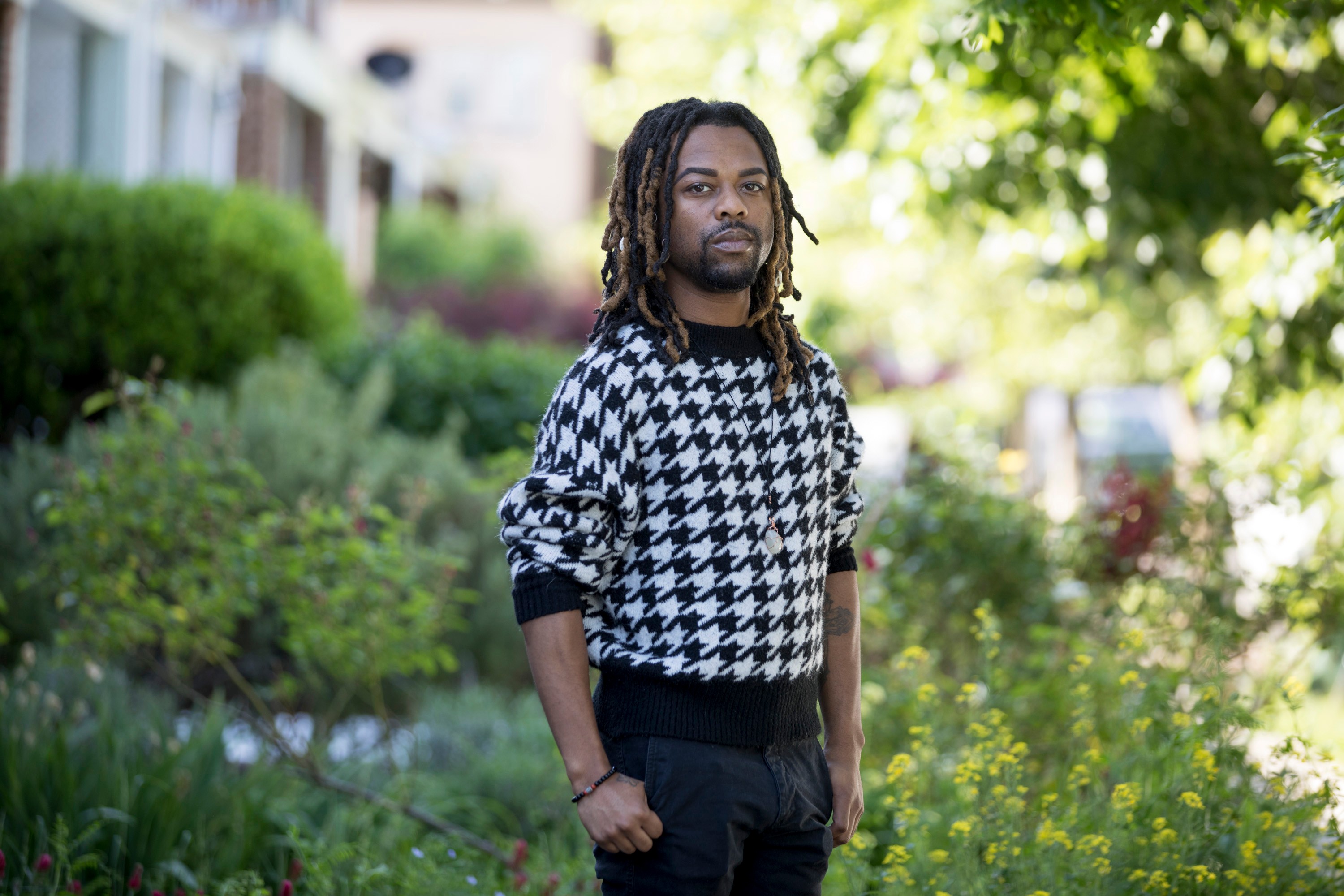
The coronavirus has been called an “invisible enemy,” but every day Malachi Stewart wakes up trying to find it.
The 32-year-old Philadelphia native is what’s known as a disease investigator, or disease intervention specialist. For the past year, it’s been his job at the D.C. Department of Health to quietly follow the unseen path of infectious diseases through the local population. Whether it’s HIV or tuberculosis, once he finds someone with a particular disease, Stewart tries to determine where they got it — and, more importantly, who else they may have given it to.
It’s that task — long a staple of local health departments across the country — that has suddenly gained newfound prominence during the coronavirus pandemic. Now more popularly referred to as contact tracers, workers like Stewart have over the last two months shifted almost all of their attention toward seeking out the source and spread of COVID-19 cases.
“One of the things that makes disease investigators or intervention specialists sort of valuable is that you can change the disease and it doesn’t change the work,” he says.
And health officials say it’s absolutely critical work in trying to contain the pandemic. While testing will tell you if someone has COVID-19, contact tracing is necessary to determine where they got it — and whether they may have passed it on to anyone else. If left unchecked, that number can quickly grow; a single person can infect up to three other people, who then go on to infect more people, leading to exponential growth. And stopping the spread can be especially challenging since carriers don’t even have to show symptoms before infecting people around them.
“We have to have the ability to very quickly jump on every new case, to reach out, contact them, make sure that they are in isolation, and then do that disease investigation work to see who else they may have inadvertently exposed,” says Fran Phillips, Maryland’s deputy secretary of health.
Just as cities and states have raced to beef up their ability to test for COVID-19, so too are they amassing what could eventually be an army of hundreds of thousands of contact tracers nationwide. Without them, most experts say a return to normalcy won’t be possible.
“We think that the needed capacity for the country is quite large,” says Crystal R. Watson, an assistant professor at the Johns Hopkins Bloomberg School of Public Health and author of a recent report on building national contact tracing capacity. “It’s at least 100,000 contact tracers across the country. An initial estimate for the Association of State and Territorial Health Officials was that prior to this initiative there were about 2,200 contact tracers at state health departments across the country.”
Other experts have put the need even higher — 180,000 contact tracers nationwide, at an expected annual cost of $12 billion.
D.C. currently has 65 contact tracers hunting down COVID-19, and city officials have started hiring more than triple that amount — and eventually aim to grow it tenfold. Maryland has 250 contact tracers between its 24 county departments of health; Gov. Larry Hogan has laid out plans to quadruple the force. Virginia says it wants to hire up to 1,000 contact tracers of its own.
In Arlington County, the government has repurposed staff members to do contact tracing and has drawn volunteers from the Medical Reserve Corps — people like Natalie Wodniak, a 23-year-old who is finishing her master’s in public health at the George Washington University.
“When someone tests positive for the coronavirus, we have to call that person and do an interview with them to figure out if they were symptomatic and then walk through day by day when they might have been contagious. Walk through where they went that day, who they saw at different points of the day and seeing if they may have potentially exposed anyone else,” she says.
Some Asian countries have deployed apps as a means of digital contact tracing; in Singapore, the government encouraged residents to install TraceTogether on their phones, allowing health officials to pinpoint exactly who someone may have come into contact with if a positive case is discovered. Privacy concerns may make such tools more difficult to adopt in the U.S., leaving existing contact tracers to do their detective work the more traditional way: lots of talking.
“I’m going to be asking you questions about, you know, where have you been? How did you get home from work that day? Did you take the Metro? Did you take an Uber? These kind of questions. I want to hear about, you know, if you went to the grocery store, what time did you go? Did you have on the mask? Were you six feet apart from people? These are the kinds of questions that we need to know,” says Stewart.
Wodniak says that when going off of memory isn’t enough, she’ll push people to dig a little themselves. “Some of the things we’ve told people — to look in their credit card statements. Look at your texts. We’re giving them all the resources to kind of spark their memory as much as possible,” she says.
And Stewart says this type of contact tracing takes more than just reading off a list of questions; it takes building trust and offering support.
“I think people’s expectations when they get the call is to have this really official, sterile conversation,” he says. “And when the conversation is personable, it opens people up to be able to share information. It motivates a person to say, ‘You know, actually, let me look back in my phone. I think I did go to this grocery store.’ You’re sort of getting their buy-in. And that’s the most important part of it.”
But when direct contact tracing isn’t enough, local jurisdictions have used other tools. In Fairfax County, a mailer was sent to every resident detailing what they should start doing if they come down with COVID-19 symptoms. That’s because while testing capacity has increased, it still remains limited — and that means contact tracing may have to begin without the benefit of a positive test.
“[The mailer] asks the person who’s been sick to document the day, the date, the time that their symptoms began, to list all the people who are in their household and all the others who they came in close contact with, during that infectious period starting 48 hours before they became ill. And then it goes through how they should talk to their close contacts. And by doing this now, we’re extending our reach,” says Dr. Benjamin Schwartz, the county’s director of epidemiology and population health.
Ultimately, state officials like Phillips and other health experts say that appropriately staffed contact tracing will be critical to reopening economies and lifting restrictions prompted by the pandemic. Phillips says contact tracing is one of Hogan’s four pillars for reopening Maryland, alongside beefed-up testing, adequate hospital surge capacity, and enough personal protective equipment.
But many jurisdictions still have a ways to go. According to an NPR survey of contact tracer staffing levels nationwide, the average rate is currently 12 tracers per 100,000 people — roughly a third of what’s needed to respond to the pandemic. And Dr. Watson from Johns Hopkins University says that won’t cut it in properly stopping the spread of COVID-19.
“We’ve suppressed it in a fairly effective way with these population-level social distancing measures. But once we remove those to a large extent, then there’s much less holding the virus back, and we’ll see as this transmission begins to grow again,” she says. “So I hope that leaders will think carefully before they do this and put in this capacity, because it is it is the best tool that we have to manage this in an ongoing way and really enable our economy to open up again.”
This story originally appeared on WAMU and includes additional reporting contributed by WAMU’s Hannah Schuster.