Elliot C. Williams
Nearly every job in the District has been upended by the coronavirus pandemic. Some people are working from their homes instead of going into an office; others have taken pay cuts or lost their jobs entirely. But there are plenty of people who are still doing their work in person, even as the world has changed dramatically. This series features the voices of the “still at workers,” telling us what their lives are like right now and what they wish other people knew about being an essential worker during a pandemic.
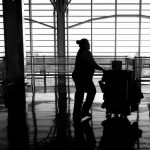
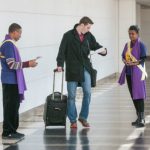
Kwaku Agyeman is a 63-year-old Guyanese immigrant who lives in Alexandria and has worked for the past seven years part-time as a wheelchair agent at National Airport. Contracted through G2 Secure Staff to work with American Airlines, Agyeman makes $12.75 an hour, a wage he says the SEIU 32BJ union helped secure for airport workers. Since the coronavirus pandemic hit the region and fewer passengers are boarding planes, National Airport has been slowing down operations, including closing gates.
Agyeman, who is helping his daughter pay for college, hopes to be able to retire and buy a home. But with reduced hours, he worries he and his family will soon face homelessness. “We need essential pay to help us pay the bills.”
What’s different about your job now?
The difference is that we’re at home more. We now work two days in a week, with reduced hours. So, instead of the typical eight-hour days, we now work seven or six hours—so, roughly 13 hours total.
Under normal circumstances you could work 40 hours in one week. Sometimes you don’t even get time to take a break because you’ve got constant customers. But because of the reduced flights, I can get maybe two passengers to push—three, maximum.
So basically, during the week I’m at home. I just sit down, read my bible, watch TV, and look at the news to see whatever is going on. That’s all I do.
What are your biggest fears as this situation continues?
At this rate, I’m making $200 a week, when, under normal circumstances, I’d make $600. My rent is $1,500 a month, so if I’m getting $400 every two weeks, $800 is not enough for rent.
By the time we come through this, I will have a lot of debt, and I’m afraid we could get kicked out. My wife also works, so we’re combining our pay and relying on the little savings that we have.
What kind of protective equipment are you using and how are you staying safe?
Well, they have a few basic stations where we use a little bit of sanitizer and then we can get gloves. But we provide our own masks. So I always take my mask from home, and sometimes also gloves because you never know. Sometimes you go there and the gloves are short, or you don’t get them. But we’re only pushing a limited number of customers, so we are okay with what we have.
I was lucky because my wife, she’s a nurse’s aide. Her employer had provided her with masks a long time ago, so that’s what I use. Last time I checked, we had about half a box left.
What are your conversations with your coworkers about this situation like?
We talk about needing some kind of financial protection, about how we can get some money. This protection which politicians are giving … I don’t know. We haven’t seen anything from it. We don’t benefit from it. The only benefit that we’ve gotten was this stimulus money. That is $1,200 that was paid to everybody. Apart from that, nothing else.
What can be done to help?
My colleagues and I are talking to the labor union to try to get employers to pay us as they used to. If they can get the company to pay us our normal wages, even though we are sitting at home, that would help. If the government can help with this—they’re spending trillions of dollars—we think that something like that should happen to protect all of us.
How has your family been affected by your work?
We’ve had to cut down on a few things that we do. The most important thing for us is our rent, then making sure we have food to eat. All other things have been put on hold until the situation gets better.
What do you want people to know about your job?
I think it’s important that we are given some kind of respect. People should remember that we are performing a service that is important to the airline industry and, therefore, they should give us the appropriate compensation and other benefits, especially because of the pandemic.
We should be given some kind of healthcare. Maybe reduced insurance or something, so that the company can pay for something for us. I’m taking everything out of the little money that they give us.
Previous Still at Workers:
A Hardware Store Manager’s Business Has Been Busy With Quarantine DIYers
A Pharmacist Struggles To Get Much-Needed Masks, Gloves, And Hand Sanitizer
A Capitol Hill Nanny Is Still ‘Like A Third Parent’ For The Children She Cares For