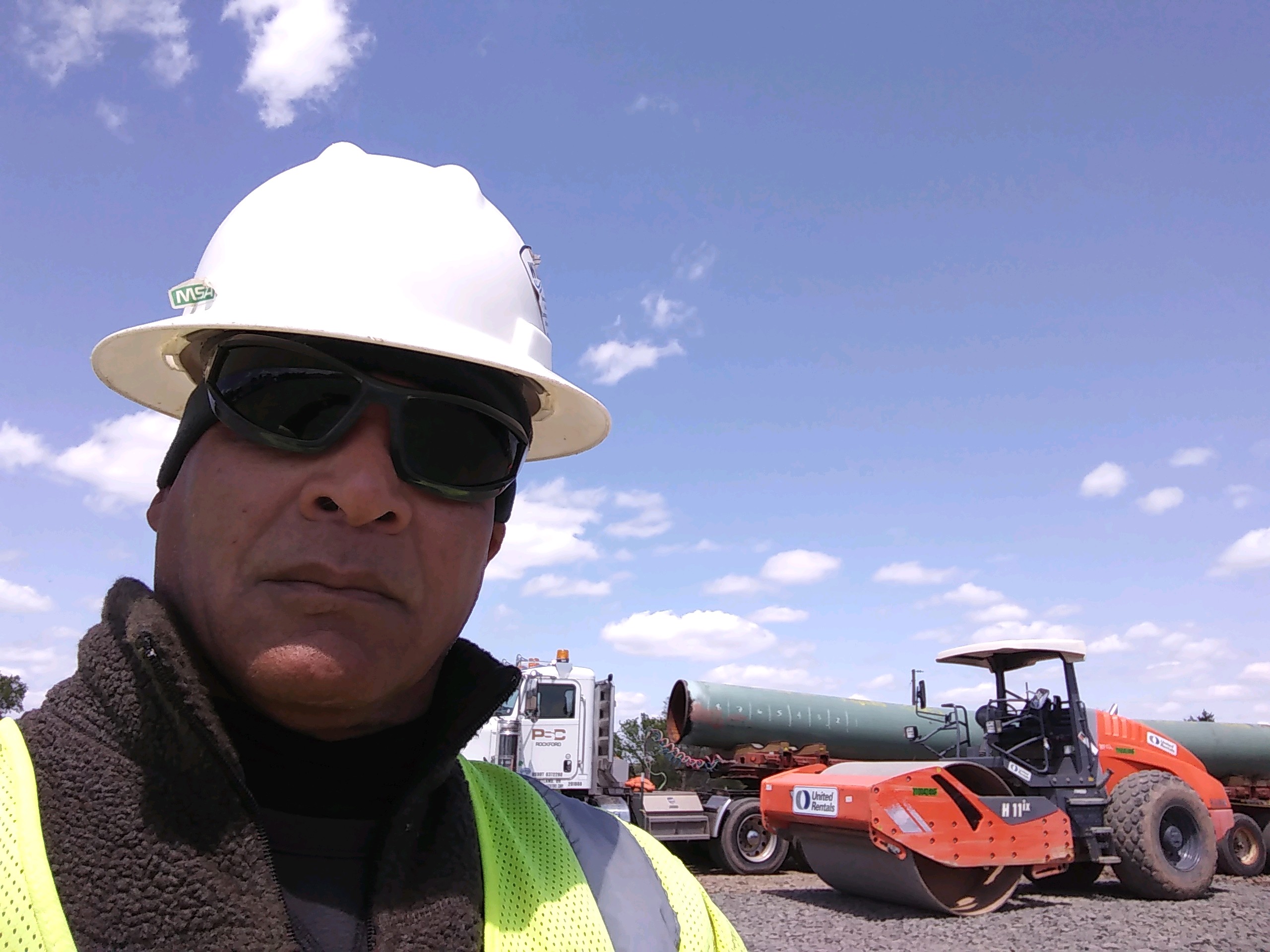
Nearly every job in the District has been upended by the coronavirus pandemic. Some people are working from their homes instead of going into an office; others have taken pay cuts or lost their jobs entirely. But there are plenty of people who are still doing their work in person, even as the world has changed dramatically. This series features the voices of the “still at workers,” telling us what their lives are like right now and what they wish other people knew about being an essential worker during a pandemic.
Robbie White, 58, is a construction worker and Local 11 union member who has worked on projects across the region, including the Silver Line, a power plant in Brandywine, Md., and a Kaiser health facility in Tysons.
Since February, he’s been working as a contractor—10 hours a day, six days a week—for Rockford Construction on a 7-mile-long natural gas pipeline in Catlett, Va. The main tasks include propping up new pipe for welders to bend, bracing the pipe with sandbags, and pumping water out of holes where the pipe will run. He typically works alongside six to nine other people.
He lives alone, and his family members in other states are safe and healthy. And though none of his immediate colleagues have fallen ill, White says he and his colleagues are being especially cautious: One pipeline worker voluntarily self-isolated in March after family members who had visited from out of town began showing symptoms.
Work, tiring as it is, has been a respite. “If they would have shut this job down, I would have tried to find something else to do because I wanted to keep working while this thing evaporates or disappears,” he says.
This interview has been edited for length and clarity.
How has your job changed since the pandemic arrived?
We weren’t really serious about it until all of these stats started coming in, mainly from New York and all these other places where they were getting hit real hard. After that, Rockford started getting memos down to us: Start keeping your hands clean. They started telling people in charge of Porta-Johns to make sure the hand sanitizer was filled the whole time. A lot of people really weren’t alarmed about it because our work is outside. Obviously, sometimes people have to be close to you and there’s nothing you can do about it.
An inspector came down with the symptoms. They shut it down for one day and then we went back. They gave us a thing about essential infrastructure to put in our windshield if the police pulled us over. We continued. Everybody started being a little bit more cautious.
Have you and your colleagues been wearing masks on the job?
They pretty much made that optional. It’s very hard to wear a mask out there unless you’re one of the truck drivers. We’re sweating a lot. I saw people wearing those masks out there and it irritated them because they were moving so much. When you talk out there, you want to give clear commands, you don’t want it to become a safety issue — “I heard something else, I did the wrong thing.” Very few people out there wear masks.
Has your employer provided PPE or other resources?
The superintendent said, “I’ve got a test for you guys: When you wake up in the morning, hold your breath for 10 seconds. If you cough right at 10 or right after 10 is up, maybe you need to go get checked. If you lose your sense of smell, you might need to think about getting checked.” As soon as I woke up, I’d get a good whiff, I’d hold my breath. I would try to hold it for about 20 seconds just to see if I felt anything.
The guy that runs this pipeline, he put the word out: “I need to know if anybody out here feels uncomfortable working on this job for any reason.” It wasn’t like one of these things where they said, ‘We’ve got to complete this pipeline or it’ll cost this many million dollars a day.’
I think we just follow the procedures and try to be as safe as possible.
What do you want people to know about your job?
With this chemical stuff, the fertilizer, with the wind blowing and the dust flying up — it doesn’t take much for your nose to get dirty. Then when your nose gets dirty, it makes it a little more difficult for you to breathe in and things to stay clean. I think construction workers have to be a little bit more conscious with all the dust and all the debris you’re working with. It’s more than just going to work and sitting down. We’re around all kinds of equipment, chemicals sometimes. It helps you in a situation like this because you’re pretty much used to keeping yourself clean.
When will the pipeline be finished? Are you worried about what you’ll do afterward if the virus threat persists?
Two to two and a half weeks, maybe three weeks at the most.
It gives me a little bit of worry. There’s a lot of jobs on hold. I’m a mechanic, I can do some of that on the side. I’ve only got three and a half years before I can retire from the union. I’d like to go ahead and move on through this thing.
Previous Still at Workers:
An Airport Wheelchair Attendant Worries About Paying Bills After Hours Were Cut
A Hardware Store Manager’s Business Has Been Busy With Quarantine DIYers
A Pharmacist Struggles To Get Much-Needed Masks, Gloves, And Hand Sanitizer