Matt Blitz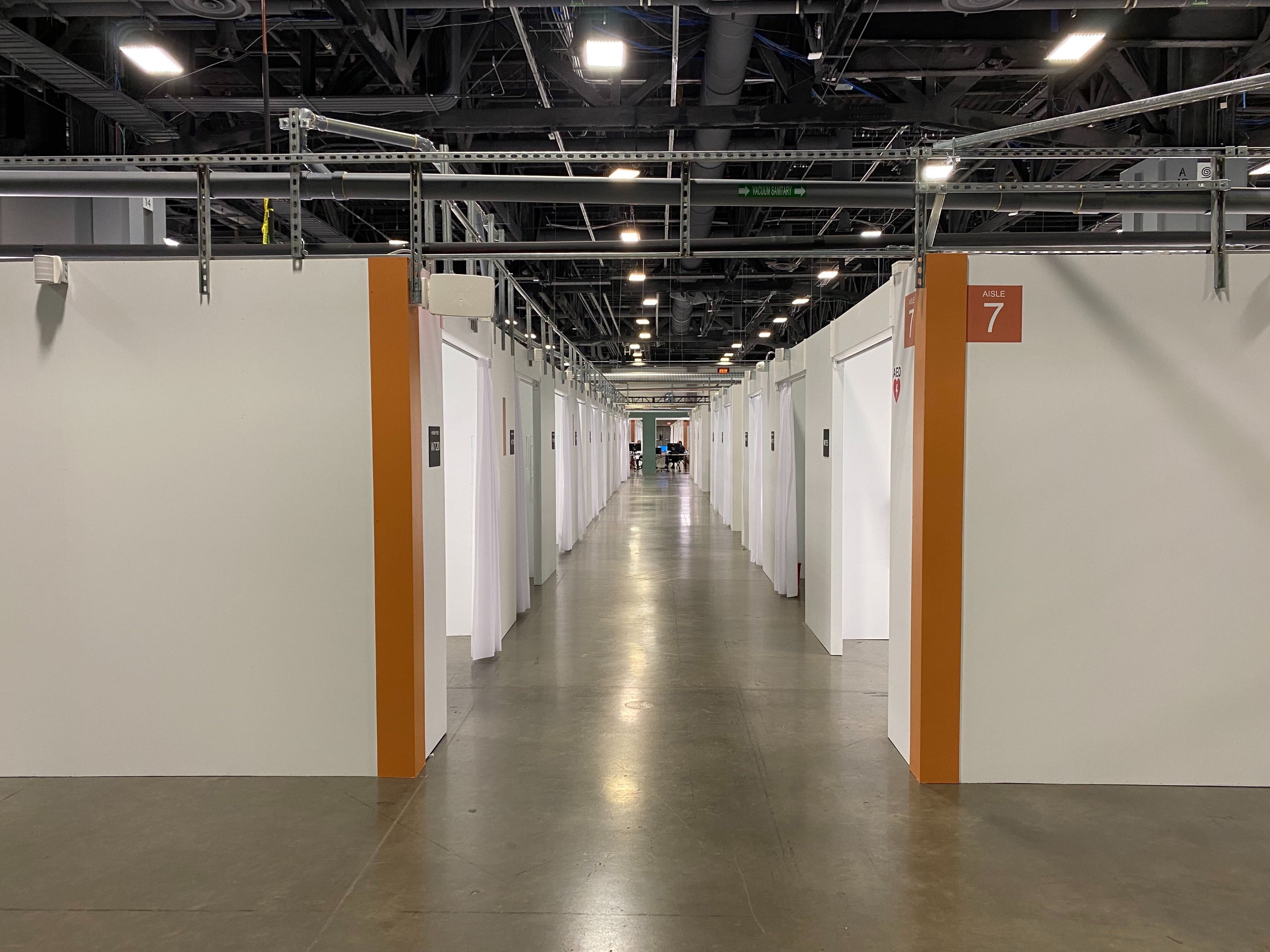
Across the region, coronavirus case numbers appear to be growing more slowly, with jurisdictions achieving key reopening metrics as the weeks go by. The type of surge that hit New York City, an epicenter of the pandemic in the U.S., hasn’t borne out here, sparing many hospitals, funeral homes, and morgues from being overwhelmed.
But, despite those positive signs, local authorities remain extremely cautious, signaling that a second wave of infections could happen as the economy reopens and restrictions are eased. Officials and frontline workers are keeping prepared by ramping up healthcare capacity as well as the amount of storage for the COVID-19 dead. As of Wednesday, more than 400 people have died from the coronavirus in the District, while more than 2,000 and 1,000 have died in Maryland and Virginia, respectively, according to government data.
Randolph Horton, the funeral director at R.N. Horton Company Morticians in Brightwood Park and a member of D.C.’s Board of Funeral Directors, says he’s received about 20 calls from people whose loved ones died due to COVID-19 complications in the last several weeks. While he still has to hold eight services for the deceased, Horton says he’s actually faced busier times in the past, such as during the holidays.
He’s on alert for a potential influx, though, something he says both D.C. and Maryland authorities have warned him about. As a result, he recently bought a refrigerated storage truck for his business. “So far, we haven’t been overwhelmed,” says Horton. “But with [the broader economy] reopening, we will see.”
The D.C. Office of the Chief Medical Examiner has expanded its capacity to handle upwards of 1,000 corpses, including by acquiring mobile storage trailers. While a spokesperson for the office says in an email that examiners haven’t yet needed to use the additional resources, they will maintain their current maximum capacity until there’s been “a significant decrease in fatalities.” (The District received six, 53-foot trailers from the federal government, WJLA reported earlier in May.)
To assist with body handling, storage, and release to families, the office is also relying on volunteers from the D.C. National Guard, the Air National Guard, the U.S. Army, the National Funeral Directors Association, and students and alumni from the University of the District of Columbia’s mortuary program. It’s in regular contact with District funeral homes, in part through virtual “town hall” meetings where requests for personal protective equipment and other resources are addressed.
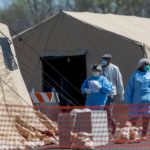
In addition, D.C. created a 443-bed field hospital at its downtown convention center earlier this month. Mayor Muriel Bowser said this temporary facility was an “insurance policy” and that the city would use it “as long as we need it.”
The governments of Maryland and Virginia are staying poised for future COVID-19 waves, too. In Maryland, the state health department says it’s operating a temporary mortuary center as a “contingency,” but declined to disclose the center’s location or provide other details. Maryland previously considered renting ice rinks for use as makeshift morgues, and multiple news reports have indicated that one in Laurel is serving this purpose.
The state has also received 15,000 body bags it originally requested from the federal government in March, officials confirm. And late last month, it built a 250-bed field hospital at the Baltimore convention center. A spokesperson for the field hospital says 70 people have been admitted so far, with 20 patients on site today.
Meanwhile, Virginia is deploying temporary morgues and refrigerator trailers amid the pandemic. These are currently active at a “few ‘hotspot’ areas” seeing a surge in COVID-19-related deaths, says a spokesperson for the commonwealth’s Office of the Chief Medical Examiner. “As long as there are deaths occurring at rates that exceed installed remains storage, the response will require the use of temporary refrigerated storage facilities,” the spokesperson writes in an email. (Their locations weren’t immediately specified.)
In April, Virginia paused plans to build three field hospitals in Richmond, Hampton, and Fairfax County, saying that existing infrastructure would likely suffice in the short term. Since then, acute-care facilities across Virginia have added “nearly 3,700 beds to their existing capacity for surge,” says the commonwealth’s health department, which is working to set up facilities with “smaller and more flexible footprints” for potential coronavirus surges.
With elective surgeries and procedures resuming in Virginia, available bed capacity for COVID-19 patients could shrink, but officials say they’re monitoring the situation. “If necessary, we may revise our medical surge strategies again,” the Virginia Department of Health writes in an email.
For Horton, the funeral director in D.C., storage capacity isn’t the only issue. He says he’s still waiting on racks that he ordered for his new refrigerator trailer, as well as personal protective equipment that he ordered for him and his staff. “The funeral homes in D.C. still haven’t gotten truly what they need,” he says.
Out of an abundance of caution, his business is currently providing only direct cremation and small graveside services for people who have died from the coronavirus. The funeral home isn’t taking these bodies inside, as Horton believes it’s the safe thing to do, even if some families disagree with it.
“It’s our priority to protect those who are living so they don’t get sick and die,” he says.