Nearly every job in the District has been upended by the coronavirus pandemic. Some people are working from their homes instead of going into an office; others have taken pay cuts or lost their jobs entirely. But there are plenty of people who are still doing their work in person, even as the world has changed dramatically. This series features the voices of the “still at workers,” telling us what their lives are like right now and what they wish other people knew about being an essential worker during a pandemic.
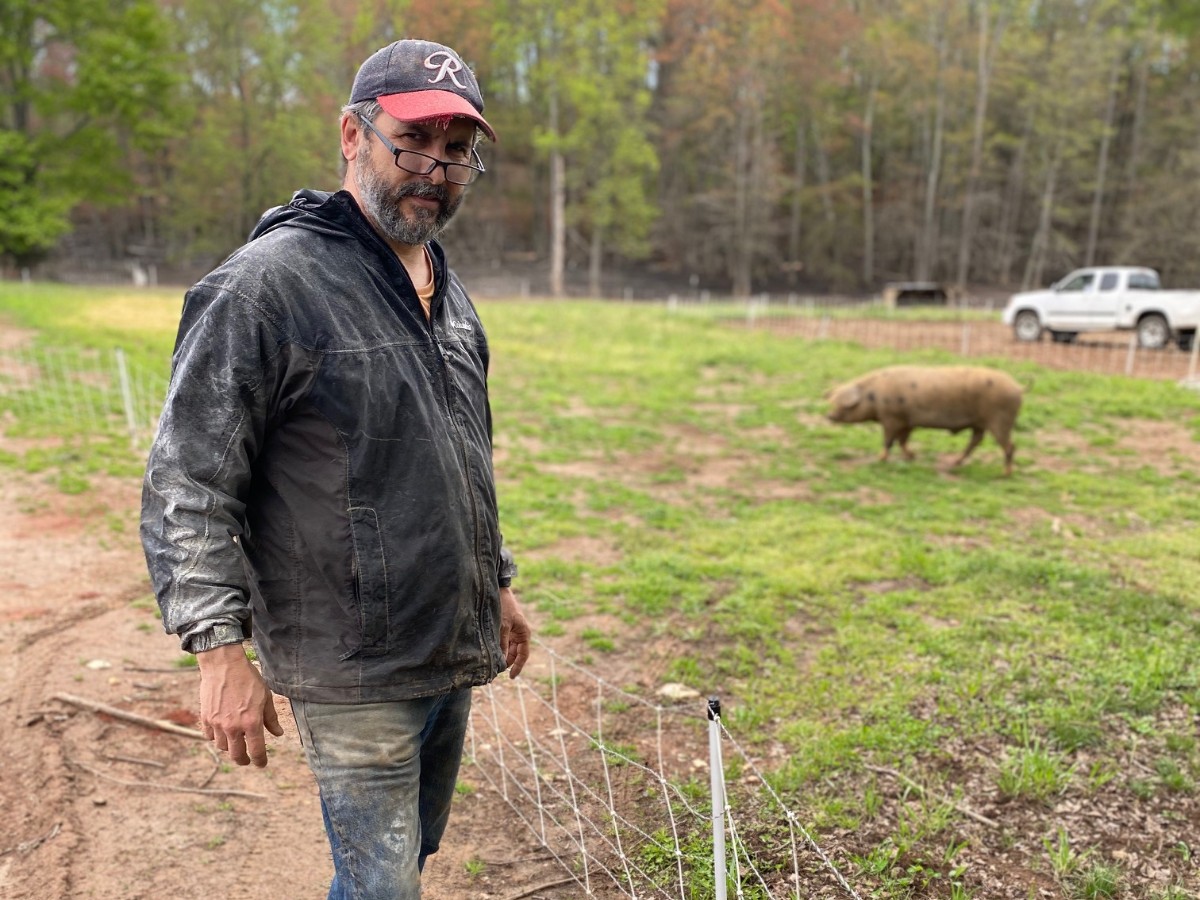
Robert Staples raises about 150 heritage pigs at Hog Haven Farms in Goochland County, Virginia, which is halfway between Richmond and Charlottesville. On the weekends, he’s a staple at Washington-area farmers markets, including FRESHFARM’S Dupont Circle and H St. NE markets, as well as the Old Town Farmers Market in Alexandria.
In addition to products like packaged pork, pork tongue, and bone broth, Hog Haven is known for its hot food—particularly, its breakfast sandwiches. Customers rave about the $8 original: Hog Haven sausage, grass-fed Irish cheddar, and free range egg on a homemade English muffin, smothered in house-made tomato aioli.
Since the coronavirus pandemic hit, the District has required farmers markets to apply for a waiver to operate, and added regulations including banning onsite food preparation and limiting the number of customers allowed inside at a time. In Virginia, where Staples operates at the Old Town Farmers Market, service is limited to pickup orders only. Staples, who’s 50, disagrees with the heightened regulations.
“It doesn’t really help anyone, because it limits people’s food choices, so they’re more inclined to go to grocery stores where it’s going to be more crowded,” he says. “I think it’s a mistake.”
This interview has been edited for length and clarity.
What is your typical day like now? How is it different from normal?
We haven’t stopped working. We’re out there doing as many markets as will have us.
About two months ago, when the virus first started to become an issue, the markets started to take action, and a lot of them closed up for a week or two. Most opened back up with a lot of restrictions about what you can sell and how it can be sold, and hot food vendors like us were particularly hit by that. A lot of the markets decided there shouldn’t be hot food, with the idea being that it would draw more people. So we’ve been selling refrigerated breakfast sandwiches with instructions on reheating.
Foot traffic is down, generally, and hot food is the main driver of our business. So Hog Haven isn’t doing all that great, relative to what we would be doing this year. We were set up for a really good year, and that hasn’t materialized because of the situation. We’re staying afloat, we’re paying the bills, but our revenue is less than half of what it normally would be.
The Old Town Farmers Market is only allowing pickup of prepaid stuff, and there are a lot less sales under those circumstances. We’ve had to scramble and figure out how to sell things online. That’s one of those things you always think you might do and then never get around to. But we kind of had to. So we threw a system together, and it’s worked out OK, but it takes a lot more time and attention during the week, with packing things up and getting them ready for the markets.
What kind of safety measures or PPE are you using to do your job? How are you staying safe?
Just the basic stuff: a face mask, gloves, and a lot of hand sanitizer. And then being conscious of staying six feet apart.
I’m not aware of any vendor or market personnel who has contracted the virus, which I think is very telling. The food is healthier, and the environment is healthier. It’s open air and outdoors, and you have a natural buffer between the customer and vendor: a table.
What have your interactions been like with customers?
Not as many people are out, and a lot of them are intimidated, understandably. They’re determined to get what they need and go, which is what the markets want them to do anyway.
There’s a social aspect to farmers markets, and that’s probably the biggest difference—it’s just not there anymore. People aren’t hanging around and eating, they’re not talking much, they’re just getting their products and leaving. Which I think is to be expected, and wise.
How has your family been affected by your work?
My wife and I run this business. We’re making a lot less money, and we’re working harder for less. That mainly has to do with the necessity of handling a lot of preordering, which customers want and many markets are requiring.
What do you want people to know about your job?
What drew us to this originally was that we felt like we were providing a good, healthy product, and a product we could be proud of selling. It’s locally produced, and we do it sustainability and bring something special to our community. So we’re happy to be able to continue to do so now under those circumstances. We take some pride in that, that we’re out there still bringing people the food they want.
Are there ways that people can make your life/job easier?
Don’t give up on the markets—keep coming out. I think they’re safe, and I think you’re better off going there than the grocery store. The farmers market is the first place you should look to get the food you need. Keep supporting us, and check out our website. That’s all we need right now.
Previous Still at Workers:
A Cashier-Turned-Delivery Driver Misses Joking With Regulars
An Airport Wheelchair Attendant Worries About Paying Bills After Hours Were Cut
A Hardware Store Manager’s Business Has Been Busy With Quarantine DIYers