 Kelsey Proud
 Rachel Sadon
 Victoria Chamberlin
This post was last updated at 2:13 p.m.
The National Guard is heading out of town — or starting to, according to President Donald Trump.
The president announced Sunday morning that he gave the order to withdraw “now that everything is under perfect control.” But he pledged that they can “quickly return” if needed.
In a briefing call on Sunday, Secretary of the Army Ryan McCarthy confirmed that all out-of-state National Guard elements will depart the District within 72 hours.
Trump’s announcement comes the morning after the largest day of protests yet in the District in reaction to the killing of George Floyd in Minneapolis. One arrest was made on a charge of destruction of property in the 500 block of 14th Street on Saturday. It was the first report of an arrest in relation to the demonstrations since Wednesday.
The District of Columbia National Guard and Metropolitan Police Department will continue to support peaceful protests.
“I speak with D.C. police chief Peter Newsham about five times a day, and we’ll work hard to draw down our Guardsman as quickly as possible,” said Major General William J. Walker, the commanding general of the District of Columbia National Guard.
Walker said there were 5,240 Guardsman total on duty in the District. On a given day, that number was around 1,500 as others slept, trained, were screened and medically cleared.
A reporter on the call asked why the Guard was working so closely with civilian federal law enforcement.
“We were defending the capital and we were the last line of defense,” Walker said. “On a couple of occasions they [protesters] penetrated the line, and our Guardsman held the line and kept people from advancing on the White House. We are not a law enforcement agency.”
Walker commented on videos circulating the internet of soldiers and protesters “pumping fists” as the week went on. “The Guard has had a calming effect.”
DCist asked if black National Guardsmen will be supported, as they express their hurt, even in uniform.
“We’re all hurting,” Walker said. “The nation is hurting. I’ve had protesters ask my Guardsmen ‘Aren’t you black? Why are you here?’ We’re citizens, Soldiers and Airmen.”
McCarthy added, “We’re going to talk to each other. We want to make sure everyone understands that we don’t want to punish our soldiers.”
It is prohibited for service members to actively participate in a protest while representing the military.
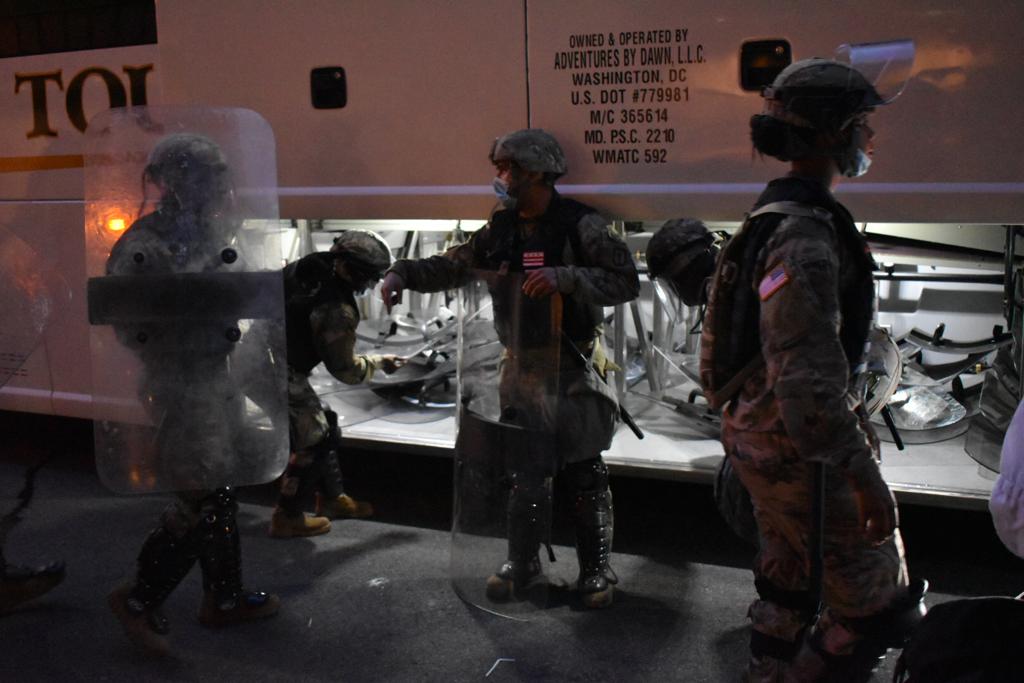
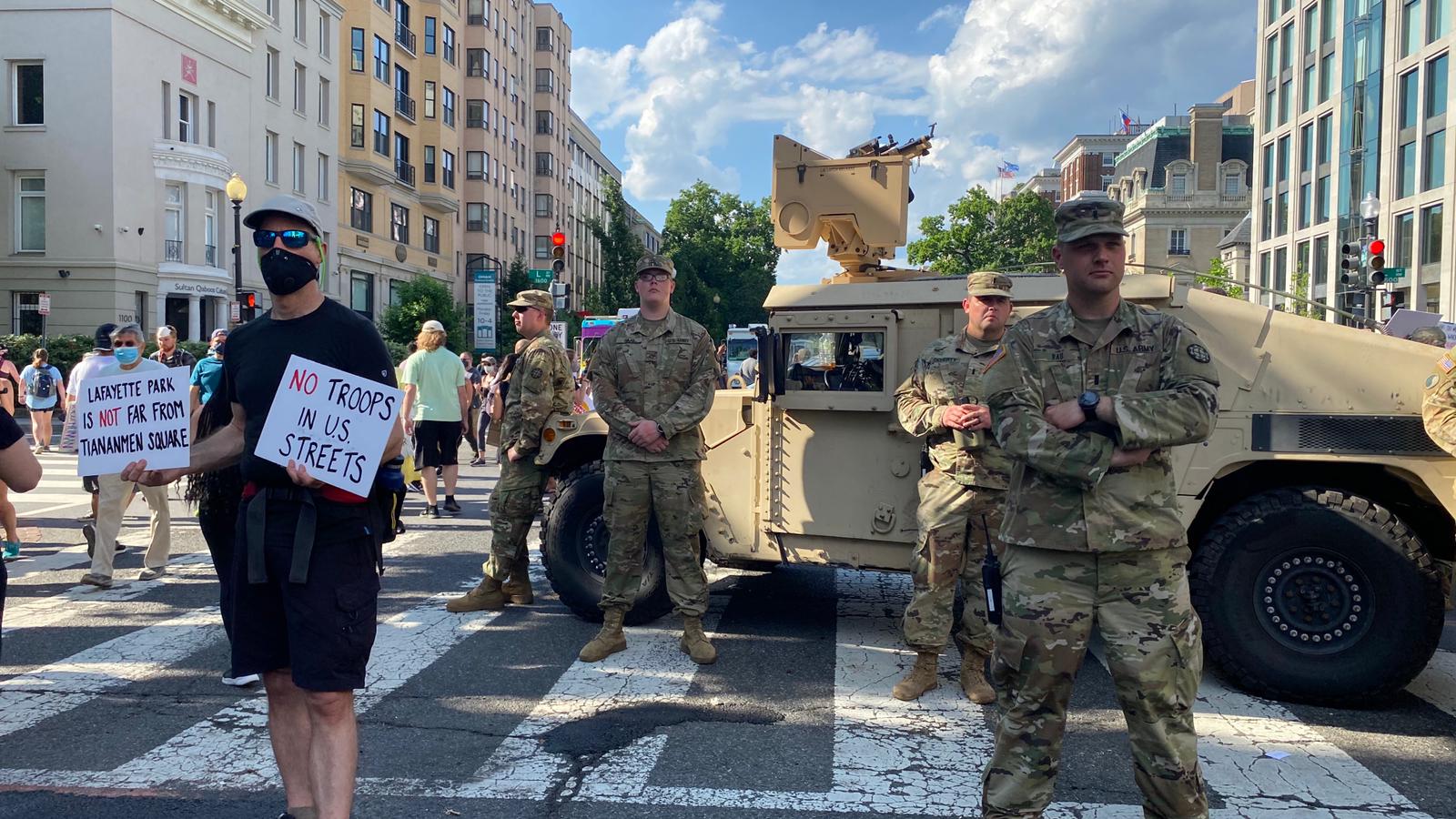
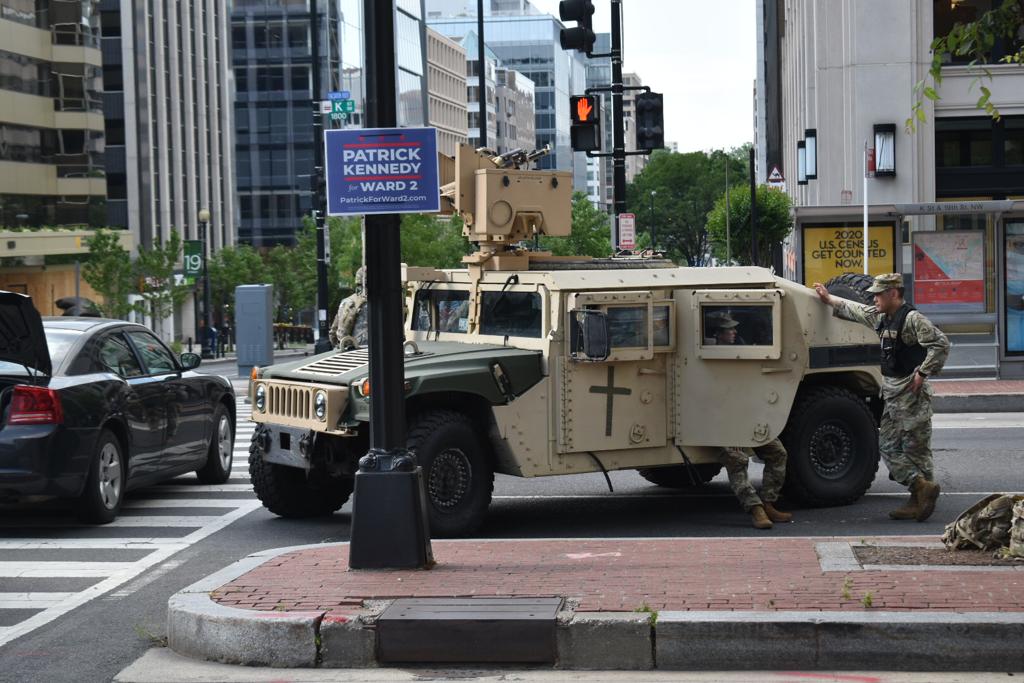
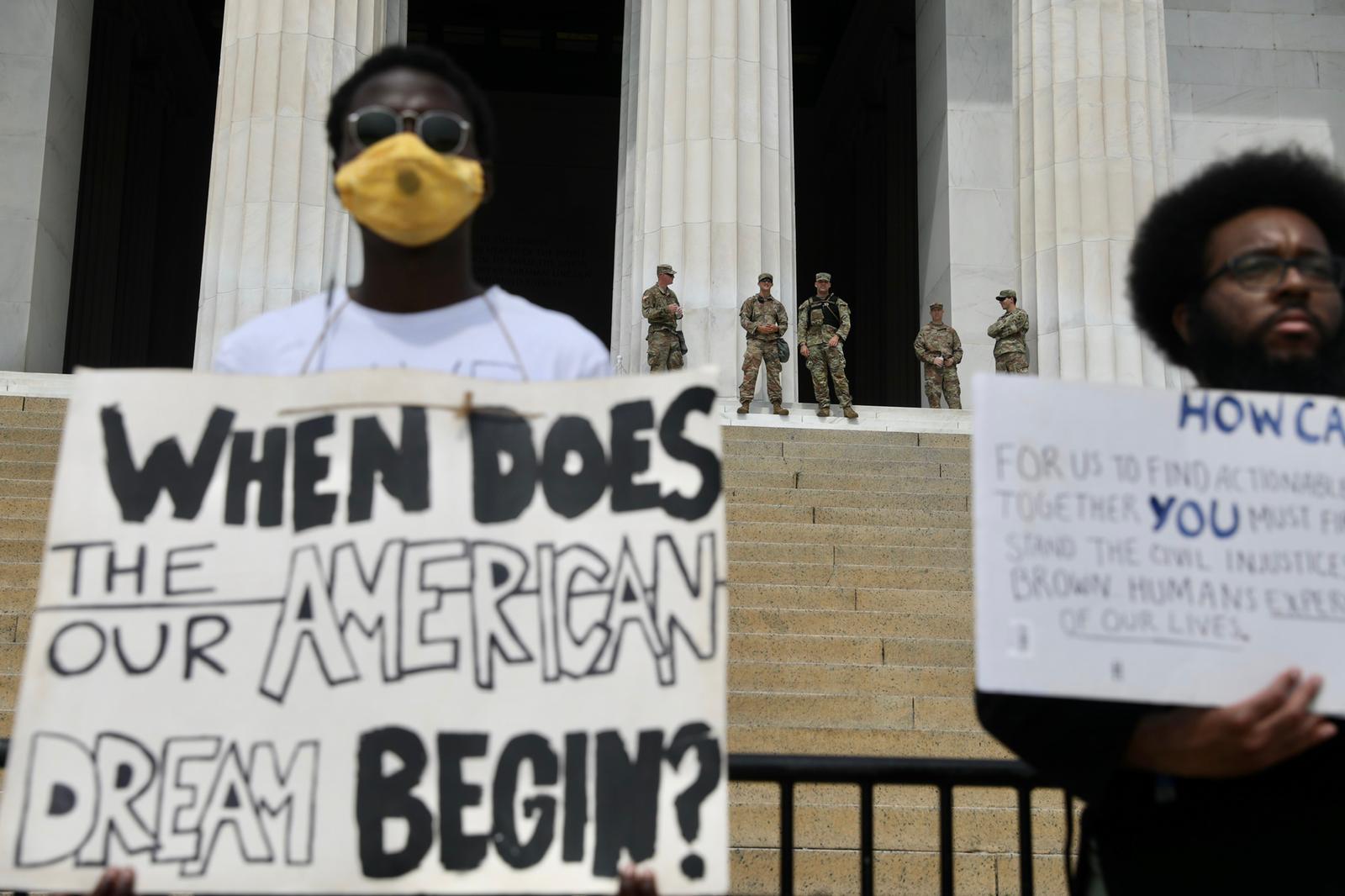

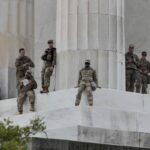
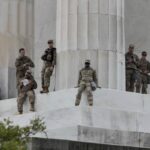
Over the past week, D.C. has looked like a mixture of capital city and military outpost with heavy fortification around the White House and thousands of National Guard troops posted across the District from around the country. Images of troops stationed on the steps of the Lincoln Memorial seemed destined to become icons of this historic moment.
Additionally, active-duty troops were given orders to leave the National Capital Region on Friday. Those troops never deployed in D.C. after arriving from bases in New York and North Carolina less than a week earlier.
In the same press call Sunday, Secretary of the Army Ryan McCarthy commented on the use of active-duty troops.
“We didn’t want to do it. We knew once you get to that escalation, it’s very, very difficult.”
One of the public skirmishes this week between Mayor Muriel Bowser and federal officials concerning who was paying for their stay in city hotels (long story short: D.C. was originally footing the bill for the pandemic response, but declined to do so under the current mission). The mayor formally requested the removal of the troops from the city on June 4, writing a series of letters to governors around the country.
“The deployment of federal law enforcement personnel and equipment are inflaming demonstrators and adding to the grievances of those who, by and large, are peacefully protesting for change and for reforms to the racist and broken systems that are killing Black Americans,” Bowser wrote.
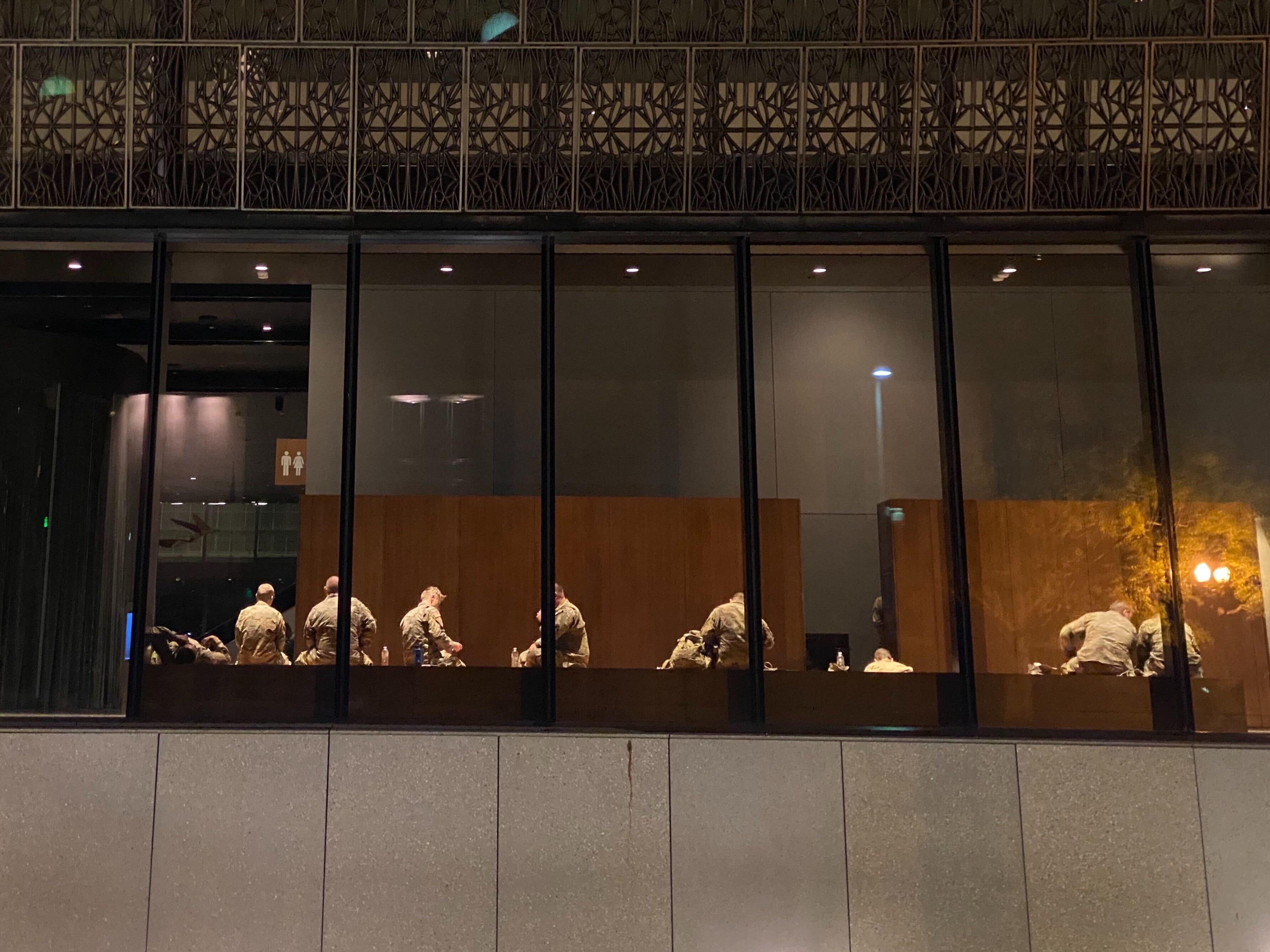
While a strong presence of federal troops remained in and around the District over the weekend, how some of them spent their time seemed to shift. At one point federal troops, were playing cards in the lobby of the African American History Museum.
Been seeing a lot of this around D.C. in the last few days: military and other law enforcement officers taking breaks, looking fatigued: pic.twitter.com/imvF4BNI8Y
— Abdallah Fayyad (@abdallah_fayyad) June 7, 2020
This story was updated with additional information about the timeline and specifics regarding the plan for National Guard withdrawal from the District.