Martin Austermuhle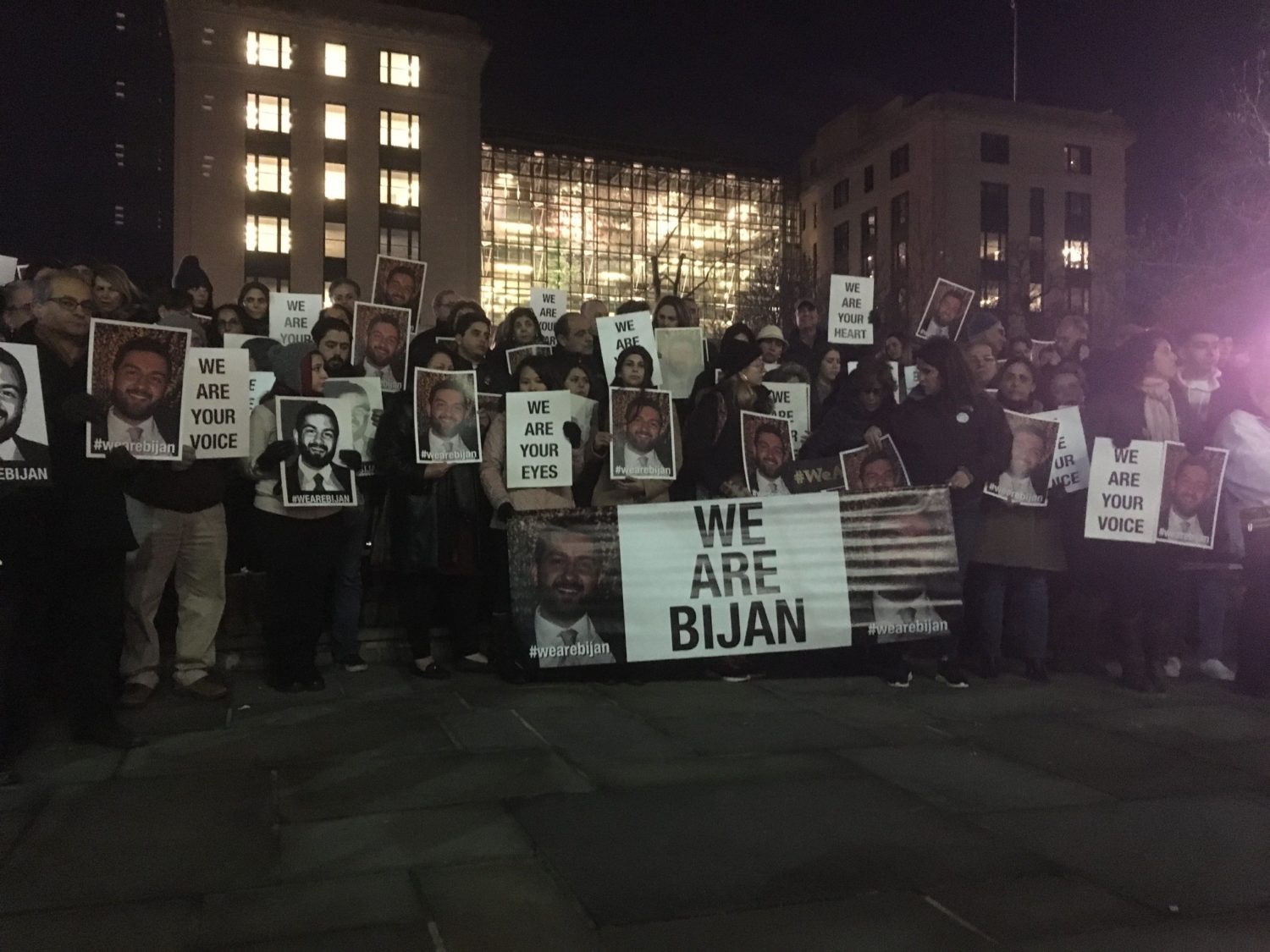
A sweeping police reform bill introduced by House and Senate Democrats on Monday would do lots of things if passed: prohibit the use of chokeholds, lower legal standards to pursue criminal and civil penalties for police misconduct, ban no-knock warrants in drug cases, and more.
And the bill — the Justice in Policing Act of 2020 — also would require federal uniformed police forces to use body-worn cameras.
If the bill passes, the body camera provision would likely have a noticeable impact in the Washington region, where a number of federal police forces, including the Secret Service and U.S. Park Police, operate. Those forces have come under criticism recently for their conduct during protests outside the White House in the wake of George Floyd’s killing.
Police forcefully dispersed a large group of protesters on June 1, using tear gas, pepper spray capsules, rubber bullets, and flash bombs to clear the public space so President Donald Trump could walk to a nearby church for a photo op with a Bible. Protesters and civil liberties groups are suing Trump, Attorney General William Barr, and heads of military forces and law enforcement over the incident.
The body-camera provision was initially introduced as a stand-alone bill in June 2019 by Rep. Don Beyer (D-Virginia) and D.C. Del. Eleanor Holmes Norton, but has not moved forward since. The provision arose directly from the 2017 shooting death of Virginia resident Bijan Ghaisar by two U.S. Park Police officers.
Ghaisar, who was 25 at the time, was shot by the officers after he fled the scene of a minor fender-bender on the George Washington Memorial Parkway in Fairfax County. And since that fatal incident, justice has been slow in coming for his family: Late last year federal prosecutors decided not to press charges against the two officers involved, and just this month the FBI refused to turn over hundreds of documents to Fairfax County Commonwealth’s Attorney Steve Descano, who has said he is considering filing criminal charges against the officers. Ghaisar’s family has also filed a $25 million wrongful death lawsuit against the U.S. Park Police.
“Body cameras increase the transparency and public trust in law enforcement, and all federal police should wear them,” Beyer said after introducing the provision in 2019.
“The still-unexplained killing of Bijan Ghaisar shows how important it is to make these reforms, which will benefit victims’ families, officers, and the communities they serve. Without the body camera footage from local police, the Ghaisars still would have almost no information about the death of their son. No one else should have to go through the living nightmare which they have experienced for the past 19 months, and this bill would help prevent it from happening again.”
Police in a number of Washington-area jurisdictions — including D.C., Fairfax County, and Montgomery County in Maryland — already use body-worn cameras, which advocates say can serve as a powerful tool to hold police accountable when there are allegations of misconduct.
But critics warn that while cameras can be useful, jurisdictions still have to be willing to make footage public — which doesn’t happen easily in D.C., where more than 3,600 officers use the cameras.