Jacob Fenston
 Tyrone Turner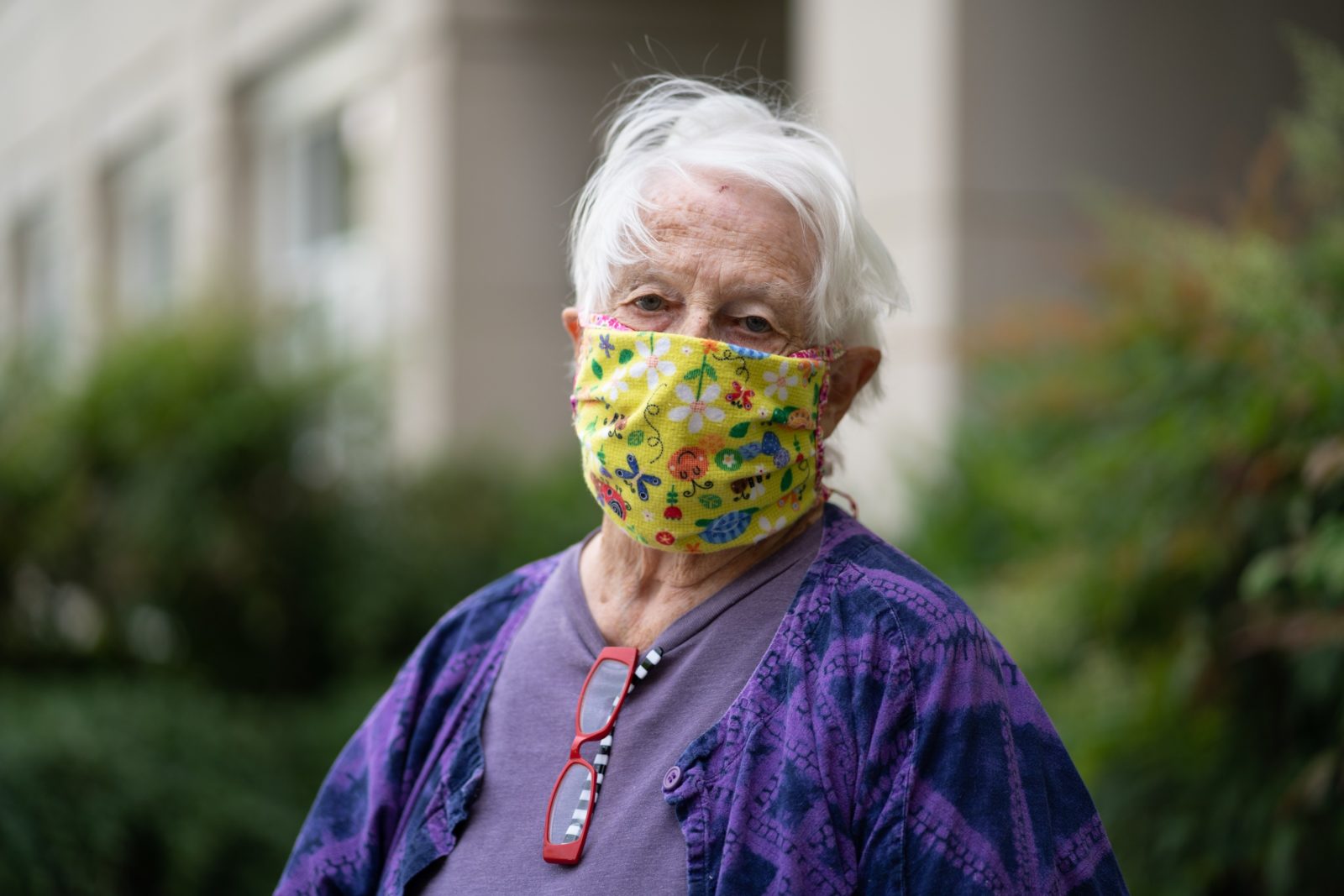
Margaret Sullivan and her husband Dan have a morning routine — coffee and the newspaper. On the morning of May 24, the thick Sunday papers came. Margaret already had an idea what she’d find on the cover of The New York Times.
“I just knew,” she says.
It was the edition marking 100,000 deaths from COVID-19 in the United States. The front page — six columns of names in small print. As she scanned the page, she was looking for her younger brother’s name.
Her brother was 72 when he died in March. He was one of the first 600 to die of the virus in the United States. Margaret found his name halfway down the first column. Like each name, it was followed by a tiny obituary — a whole life condensed into four words.
“For Ted, they said, he ‘could make anything grow.’ And he could.”
Margaret is 85 and lives on the 11th floor of a retirement home in Falls Church called Goodwin House. Like many such facilities, it has been under lockdown for more than two months in an attempt to keep the coronavirus out.
Margaret hasn’t been able to get together with family to grieve. Her brother Ted lived up in Vermont, and there’s been no funeral because of the pandemic. But for Margaret, seeing his name in print felt like a memorial of sorts.
“Those names, and that page, are in effect, the Vietnam Memorial Wall of the coronavirus. There is something starkly impressive about names.”
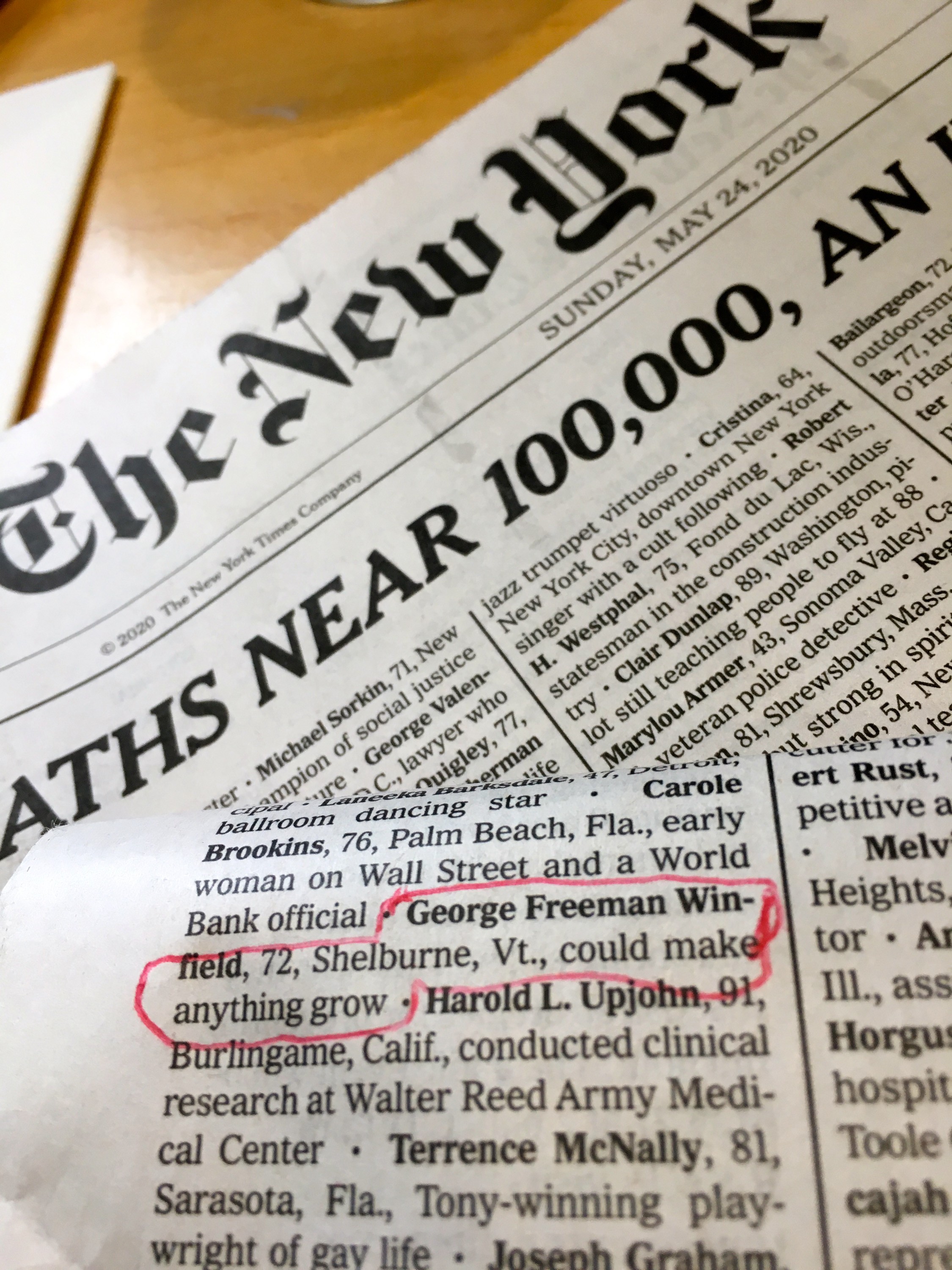
A photo Margaret took of the New York Times front page, with her brother’s name circled.
George Freeman Winfield was her brother’s full name, but Margaret and the rest of the family knew him as Ted, ever since he was a baby. “My mother said later they should have named him Edward,” Margaret wrote me in an email. “But he was formally named for our grandfather, who was also for who knows what reason called Ted.”
Seeing her brother’s full formal name on the front of the New York Times unleashed a flood of memories. Like a moment when she was in high school and Ted was still in diapers.
“I could still feel the weight of a 14- or 15-month-old on my 16-year-old shoulders as we walked over to watch football.”
‘Everybody Held Their Breath’
When I first talked to her back in early April, Margaret told me about the great lengths management was going to, to keep residents safe. The coronavirus has caused tens of thousands of deaths linked to senior homes around the country. Goodwin House, which has independent living, assisted living and nursing facilities, stayed virus-free for weeks.
Our first story about Margaret aired April 23. Later that same day, the first resident at Goodwin House tested positive for coronavirus.
The nearly 500 residents all had to get tested, along with almost as many staff.
“The swab goes up your nose,” Margaret says. “It doesn’t hurt very much, but they did it for everybody. And everybody sort of held their breath a little bit until you get the results.”
Nine of the 500 residents tested positive, as well as seven staff members. One resident died on May 16. A second resident died a week later. Margaret knew both of them — one lived nearby in the complex.
“It made us all very aware of the general world of risk we live in,” she says.
It’s a world of risk, and also a world of isolation. Margaret’s daughter lives a few miles away but can’t come to visit. But management is very slowly starting to relax restrictions.
“The first of the Phase One openings, actually, is the beauty parlor, and I’m feeling so fortunate.”
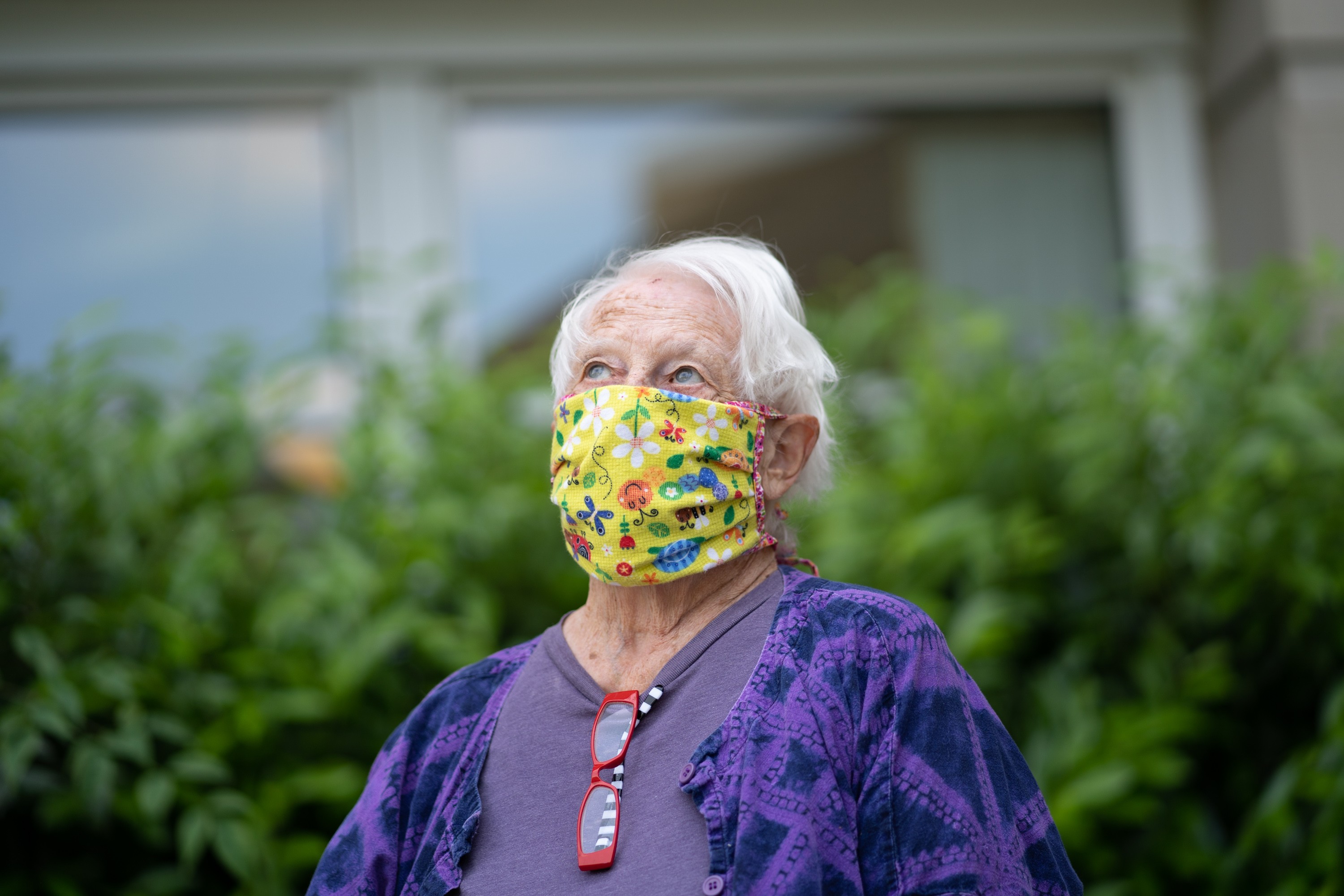
Margaret has been marking time by the number of haircuts she’s missed since the lockdown started — now, she’s about three haircuts in. Her fine, white hair drapes in her eyes. Her husband Dan is probably four haircuts past — he’s turned into “a fuzzy bear,” she says. She snagged a hair appointment for both of them on June 11.
“I wish we could take a pool on how much hair they’re going to take off of people in this building.”
She says during the pandemic, the ridiculous mixes with the serious.
“The sorrows are there. The pain is there. And the dark humor of thinking about piles of hair that’s being cut off of us — all of it’s there and it’s interlocked and it’s real.”
Now, something else is there: the world transfixed by a brutal 8 minutes and 46 seconds in Minneapolis and the protests that have followed.
Margaret sent me a recording from May 31. She was outside in the complex’s gardens during the perfect 70-degree weather.
“Here we sit today in our lovely masked cocoon, with the birds singing,” she said. “We are watching cities burn, and I’m proud and concerned about a son who’s at a demonstration.”
She said what was going on on the streets was perhaps like the lancing of a boil.
“The virus, and the political atmosphere, and the killings by the cops and the 400 years of accumulation before that.” It all came together, she said, and burst open right in front of the White House and all over the country. A protest is breaking out, even among the cloistered octogenarians walking with canes at Goodwin House.
Margaret is helping to plan a small demonstration next week: 8 minutes and 46 seconds of silence, two weeks after the killing of George Floyd.
“There are a good many residents here who were active in the Civil Rights demonstrations in the early ’60s and at least one reporter who covered them,” Margaret says. “So we feel the need to continue the work.”
Music featured in this story: “Surface Tension 3” and “Downtown” by Podington Bear, and “Mosey” by A. A. Aalto.
This story originally appeared on WAMU.