Rachel Kurzius
 Elliot C. Williams
 Martin Austermuhle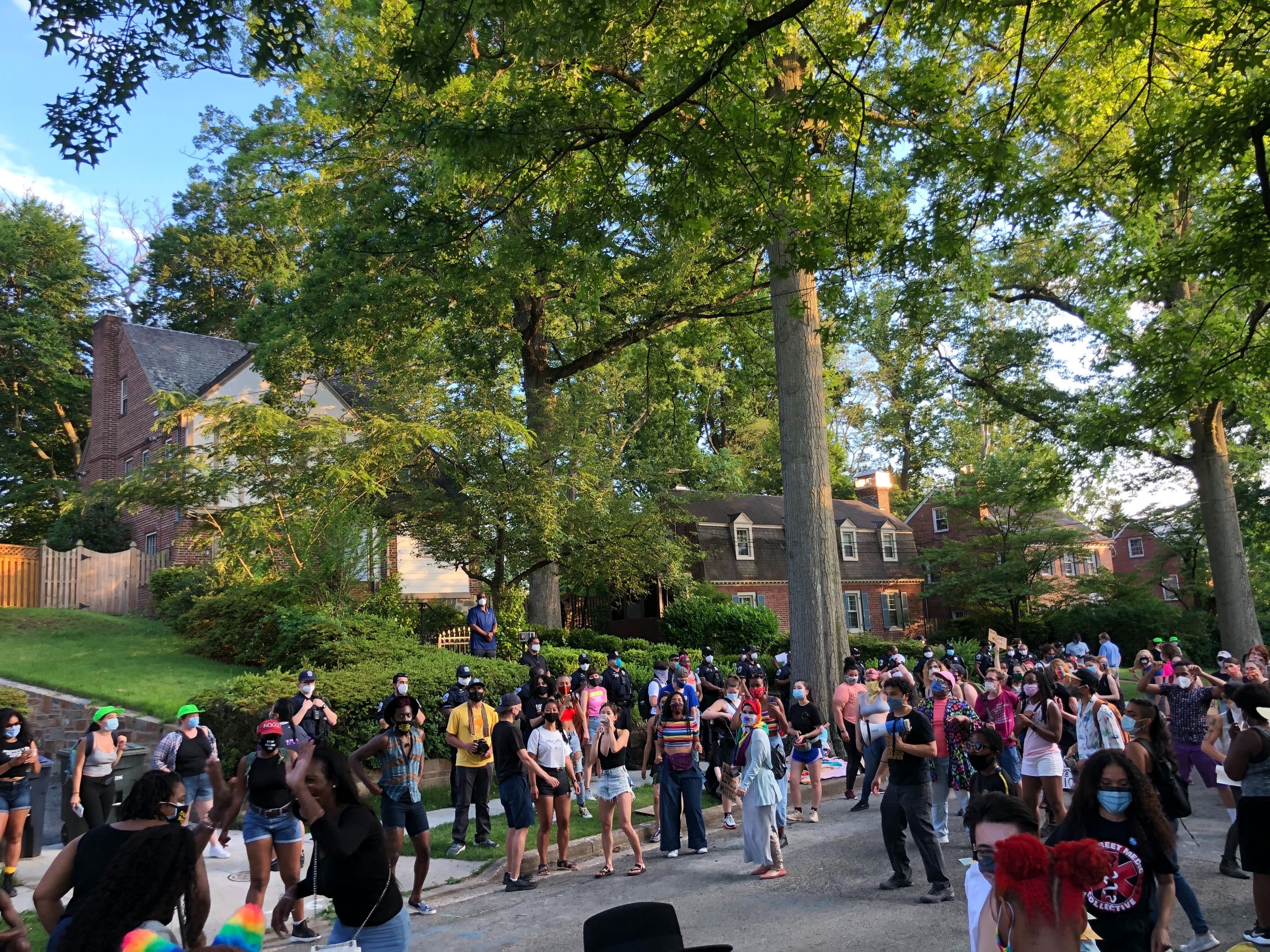
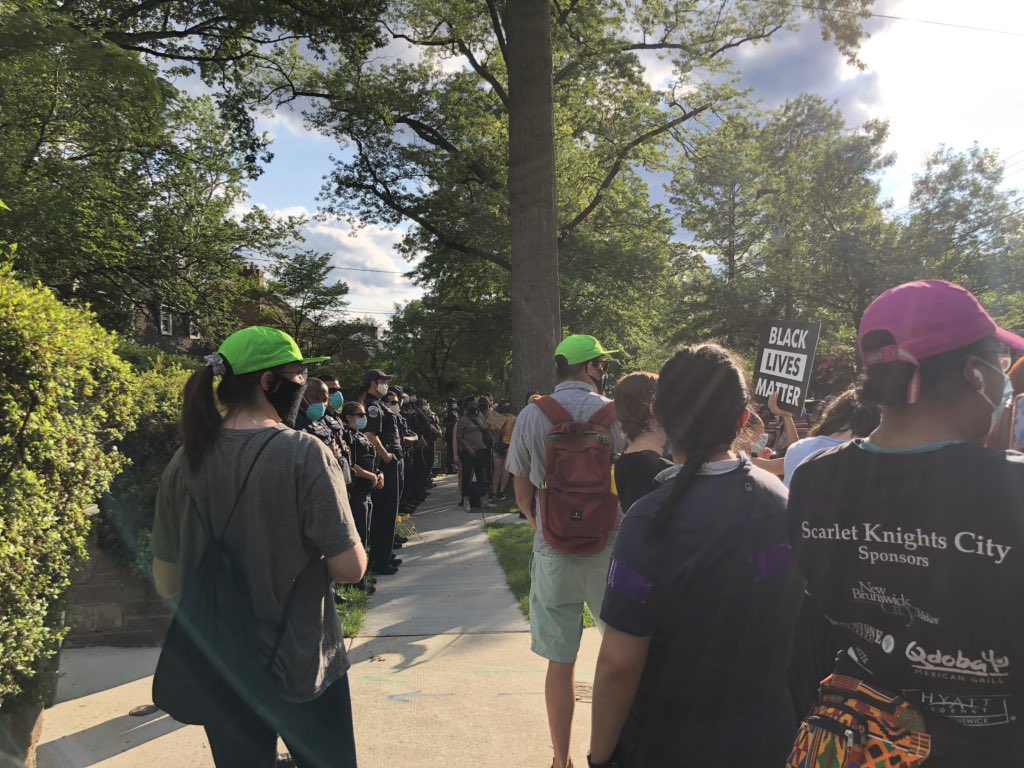
While large swaths of downtown D.C. were closed to vehicular traffic and largely free of the big protests the city has seen over the last two weeks, a livelier scene was to be found on the small residential street in front of Mayor Muriel Bowser’s house on Saturday evening.
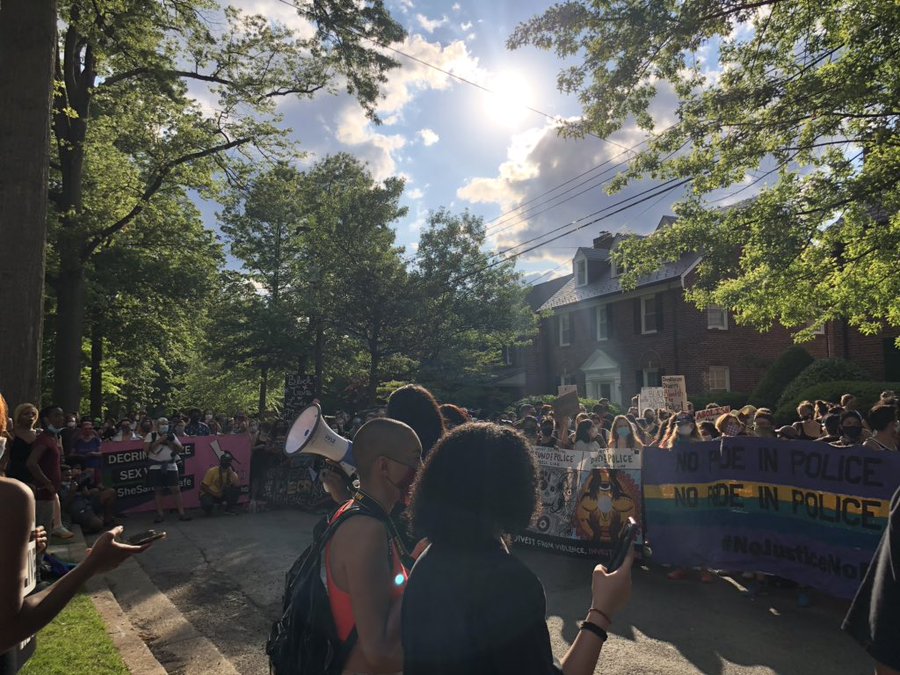
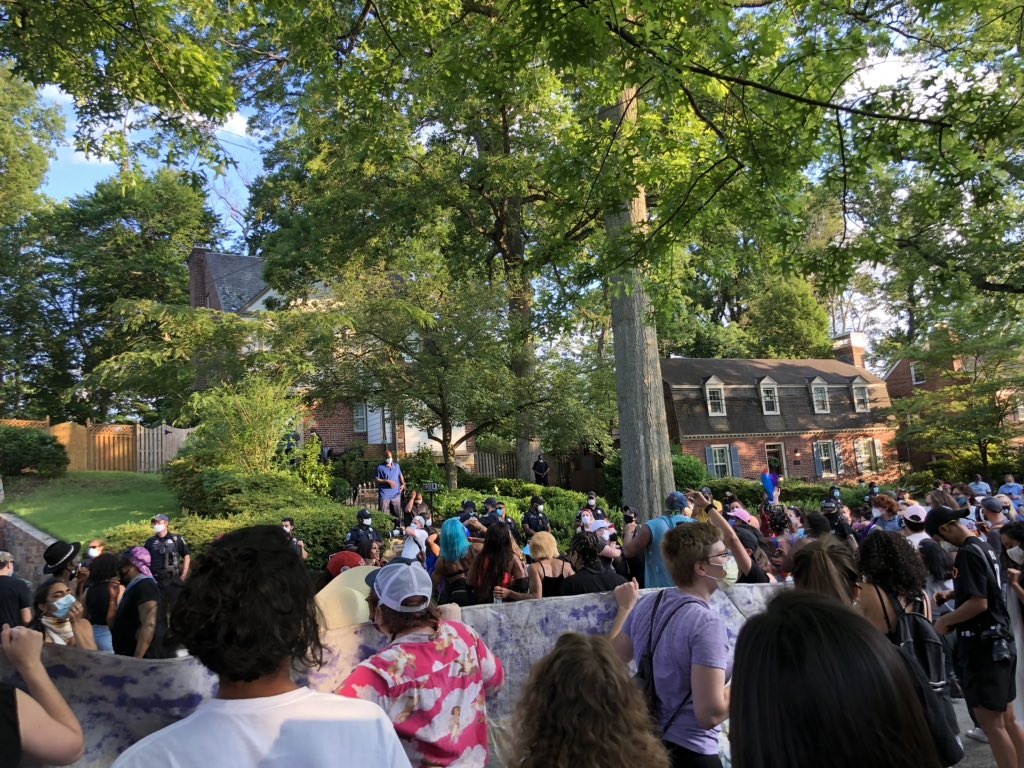
That’s where a group of at least 200 people gathered for a protest-turned-party, calling on Bowser to decriminalize sex work and defund the Metropolitan Police Department. They danced in the streets and sashayed along line of police officers standing in front of Bowser’s house, calling out for justice they say they’ve been denied.
“I want her to give a fuck,” said Pontianna Ivan, a trans women, of Bowser. “There’s a lot of things going on and the way she’s going on about things, it’s not showing us that she cares. Our lives matter. Show us our lives matter.”
Protesters were voguing — a form of dance created by members of the LGBTQ community —in front of the mayor’s house because “it’s a way to be free,” said Ivan. “It’s a chance to go and be yourself. We’re just showing them the dance of freedom, the dance of having it, the dance of love, the dance of peace.”
We’ve got demonstrators sashaying down the “runway” of police lined up outside of Mayor Bowser’s house pic.twitter.com/zhJz22WPAd
— Rachel Kurzius (@Curious_Kurz) June 13, 2020
More than a dozen D.C. police officers stood in line outside Bowser’s house. It’s unclear she was home during the protest; a question to her aides received no response on Saturday evening. A few of her neighbors came out to watch, some bringing children, as the protest unfolded; they demurred when asked to comment. Bowser did emerge from her house after the crowd dissipated around 8 p.m.; she declined to answer any questions.
But the protest — which was organized by No Justice No Pride and started with a march from Jessup Park in Silver Spring — is likely to echo in the Wilson Building, where on Monday the D.C. Council will hold a public hearing on the Metropolitan Police Department’s budget for the coming year.
Bowser has proposed increasing it by 3.3% to $580 million, while at the same time cutting some funding for violence interruption programs. And while she has defended her police budget as being what’s necessary for a growing city, the proposed spending hike has landed squarely in the midst of national and local calls for rethinking how police departments operate — and how much money they should get.
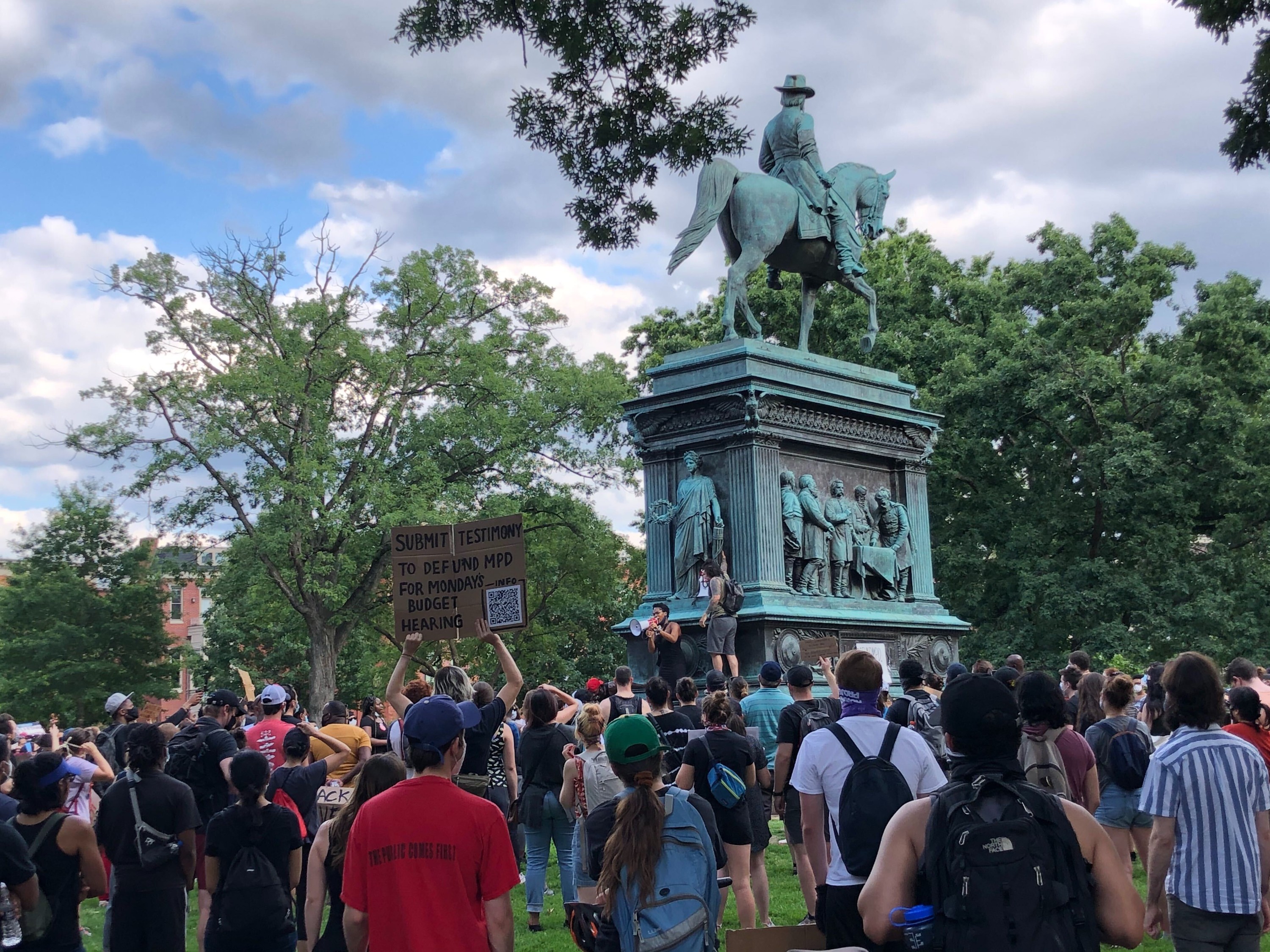
That growing interest was evident late this week, when Ward 6 Councilmember Charles Allen said his committee, which oversees police and public safety, had already received 15,000 written, phone, and video public testimonials ahead of Monday’s budget hearing (“far more public input than ever before“) and more than 500 requests for in-person testimony. Last year the committee received 22 such requests.
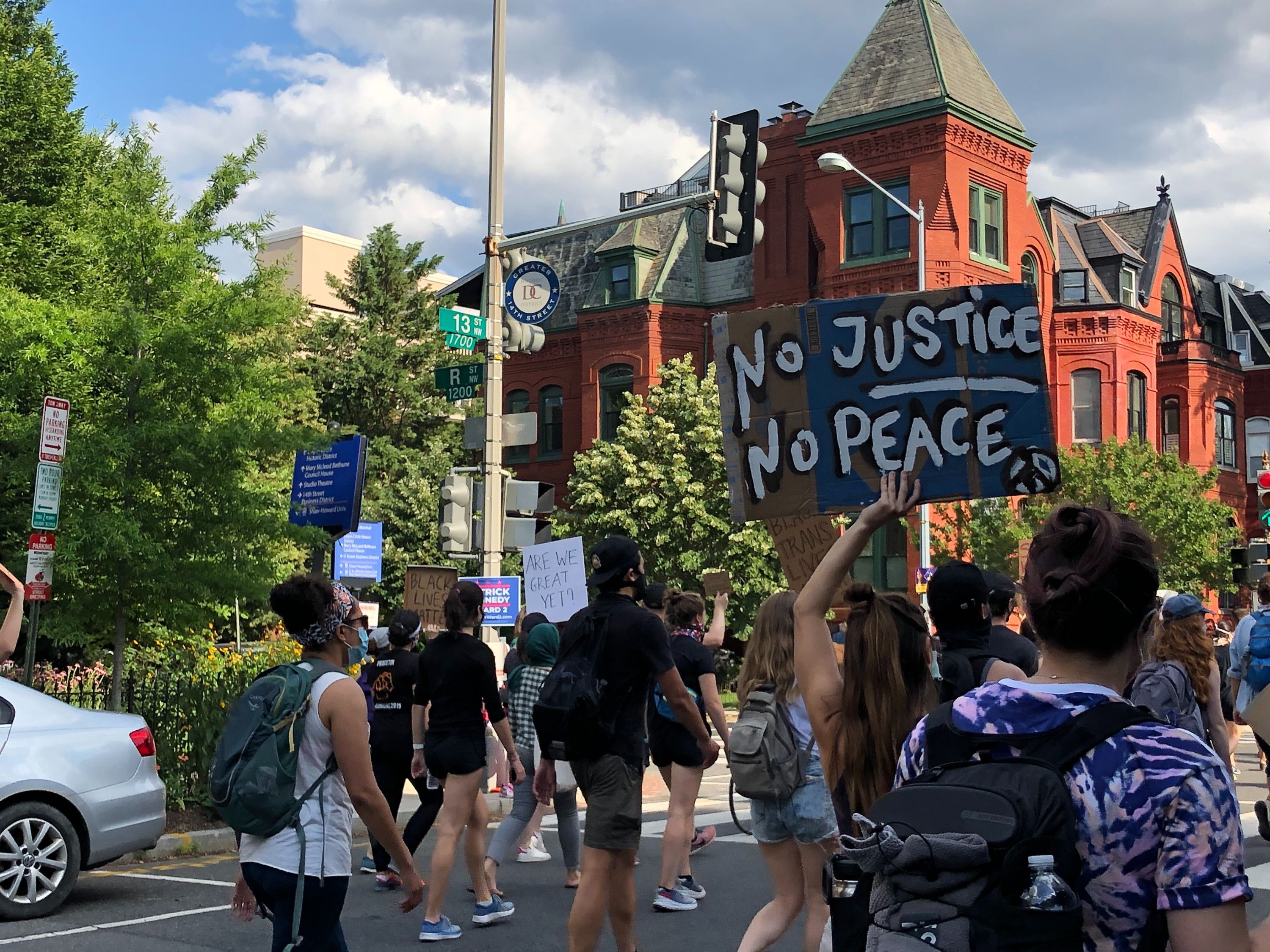
The city’s police budget was also the focus at a separate march that kicked off at 5 p.m. in Meridian Hill / Malcolm X Park and headed down 13th Street NW (a reference to the 13th Amendment that abolished slavery, said organizers) towards the Trump International Hotel.
“We want to defund the police now,” said Justin Dawes, who helped organize the march. “Mayor Muriel Bowser, she’s doing a lot of publicity stunts. But when it’s behind the curtains, she’s acting with the police and giving them more money.”
Dawes and other protestors echoed calls for action that go beyond public displays of support from officials, such as Bowser’s widely publicized painting of “Black Lives Matter” on a two-block stretch of 16th Street NW just north of the White House. Protesters later added “Defund the police” to the mural.
“We’re out here basically to show a demonstration and show that we’re not letting up pressure,” Dawes said. “This isn’t trending anymore, but we’re still out here. We’re still getting active, and we encourage everybody to come join us.”
The Black Lives Matter movement has sparked global demonstrations, but Hilda Jordan, a speaker at the Malcolm X Park protest, emphasized that “we get killed locally by the police who harass us regularly.” As the protesters rallied ahead of the march, a speaker used a bullhorn to name black and brown people killed by police, met by chants of “say his name” and “say her name.”
“The only way to actually save our communities is by changing the budget,” Jordan told DCist. “The reality is that when the budget cuts come, it’s always our education services, it’s always our health services, and our communities are tired of being defunded.”
While excited to see the current momentum of the protests, Jordan pointed ahead to future actions people can take to change the District — like emailing the mayor and D.C. Council members — and implored people in the park, especially white people, to “use your privilege … to make a difference … [Elected officials] listen to you.”
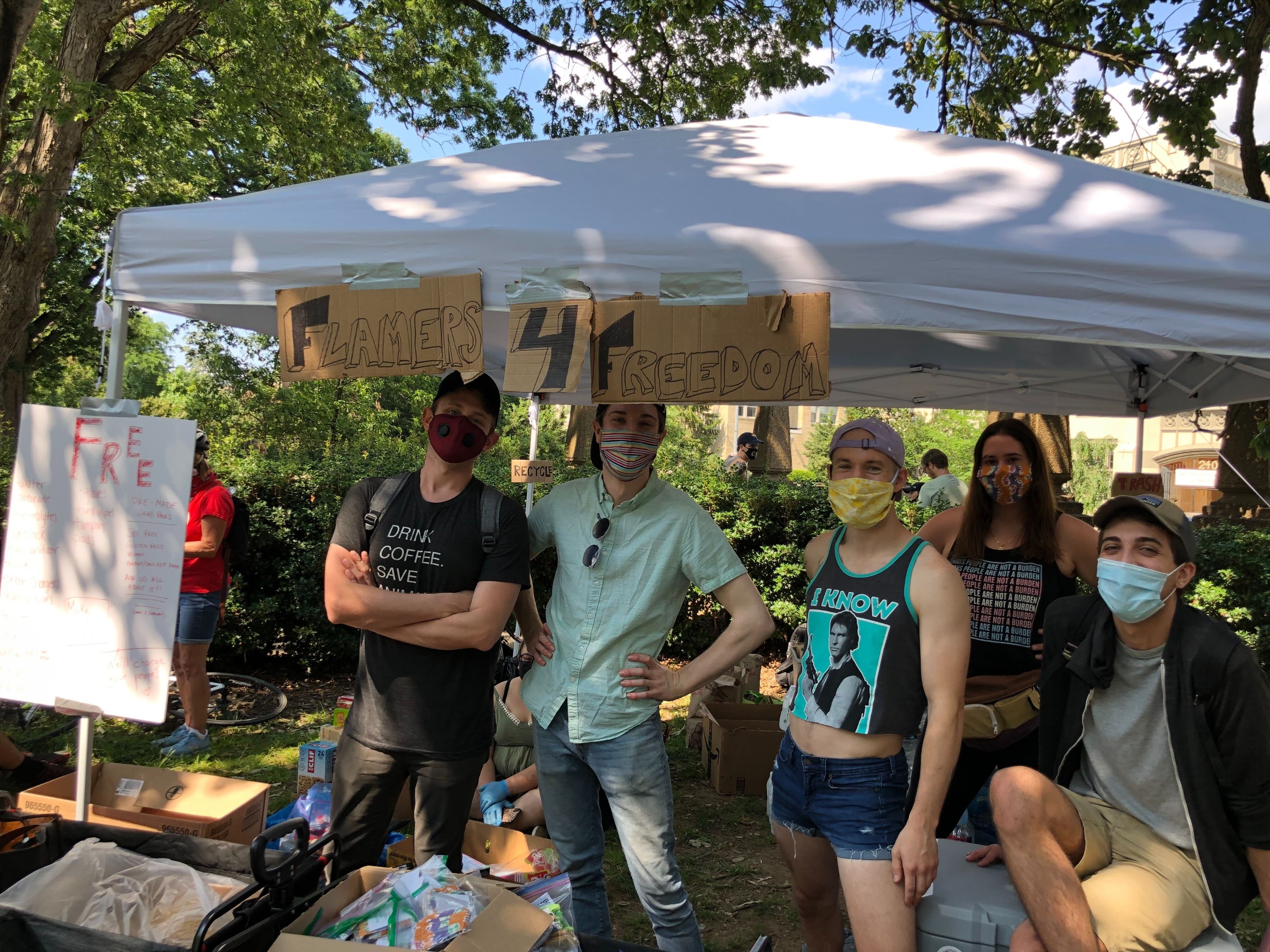
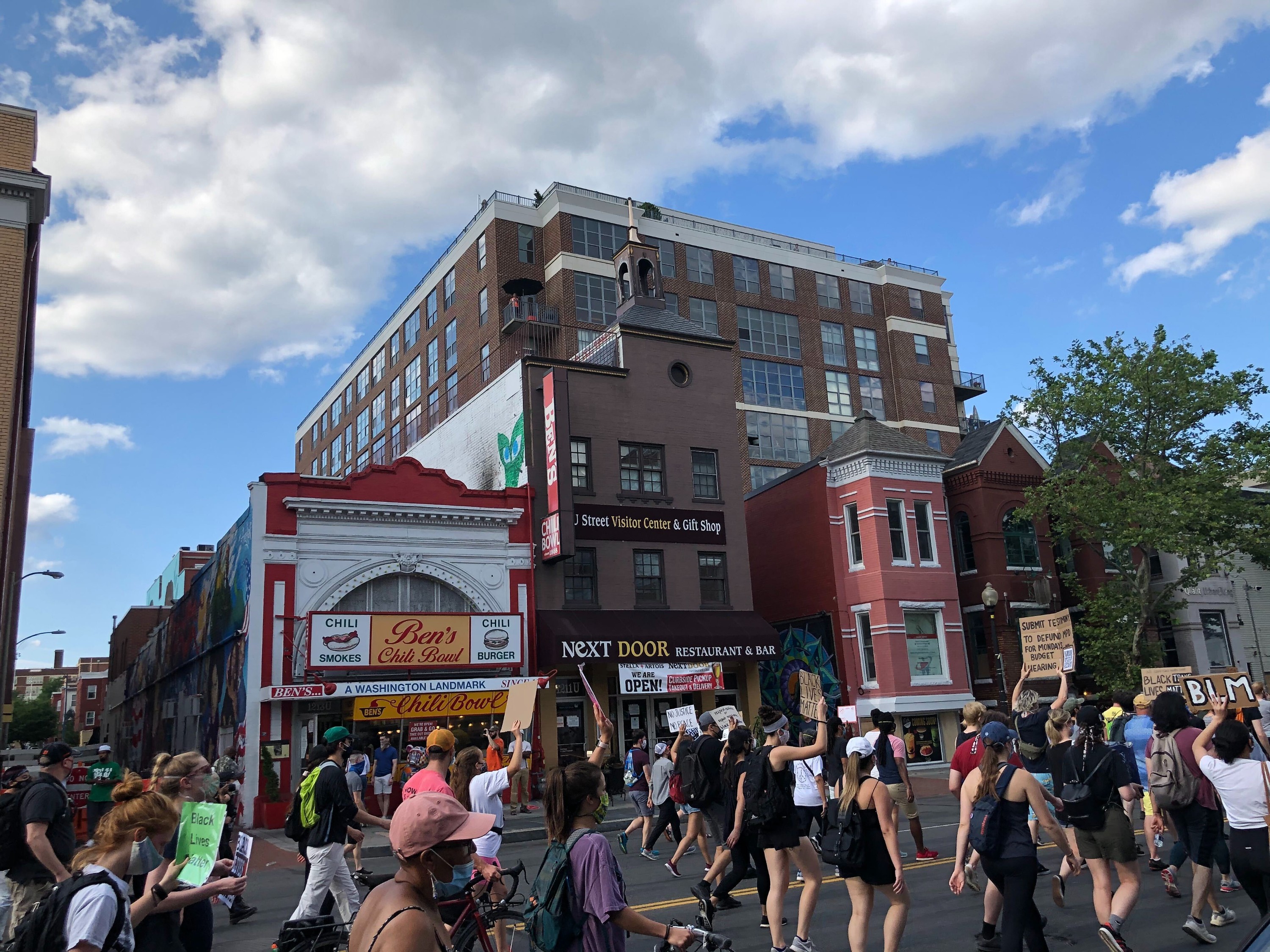
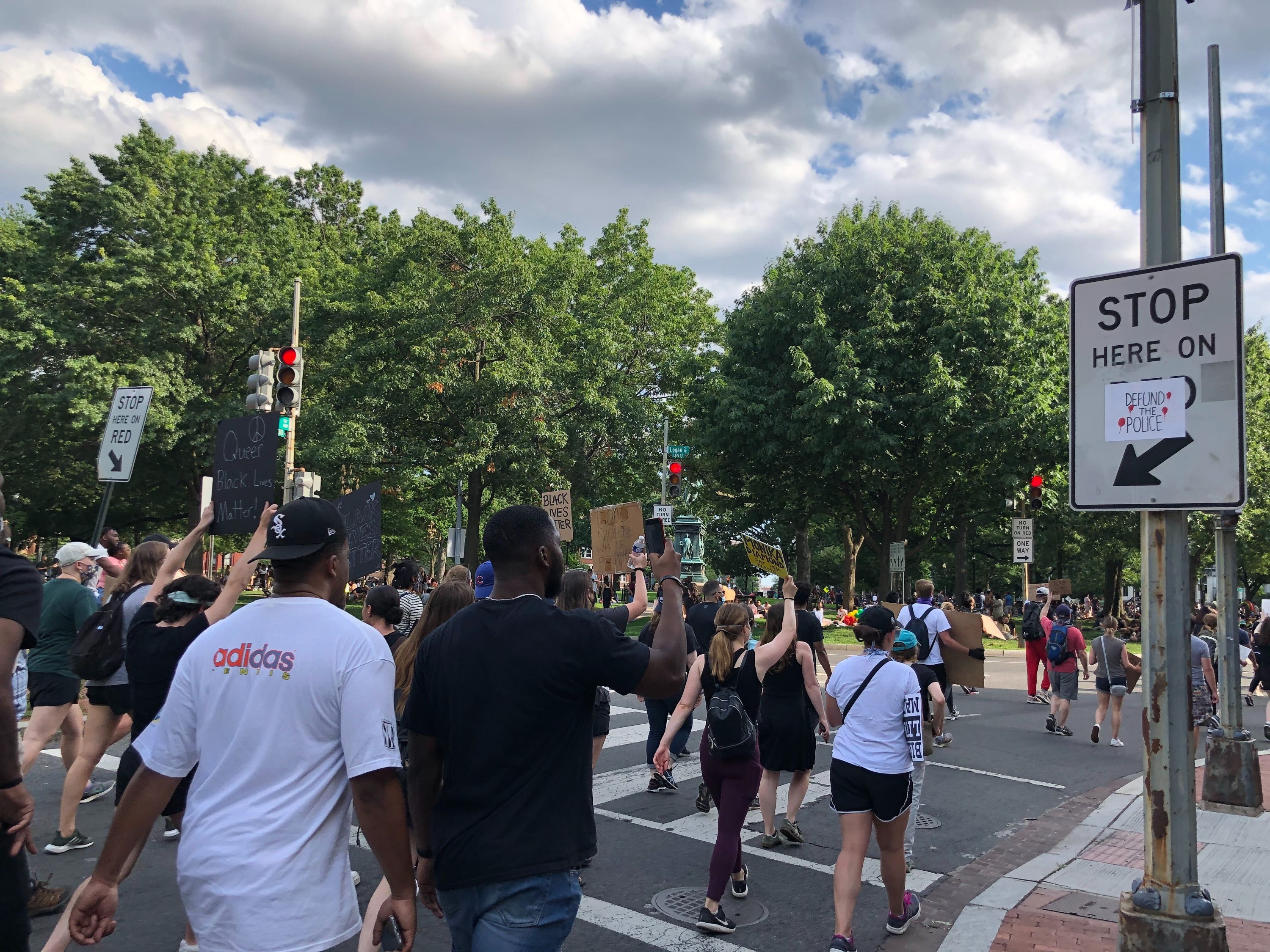

The pair of protests capped off what was otherwise a light day of demonstrations, at least compared to the significant mobilizations that happened over the past two weeks — notably last Saturday’s massive protest.
Earlier in the day, a small group of several dozen people also marched through downtown D.C., chanting “we back blue” in support of law enforcement. It appears to be the first such protest since George Floyd’s killing sparked massive demonstrations and some calls to defund the police.
“If you’re not willing to stand behind our police officers, then feel free to stand in front of them when they’re getting bullets and things thrown at them, feel free to stand in front of them,” one speaker told the gathered crowd.
By the afternoon, a few hundred people gathered around the newly reopened Lafayette Square and on Black Lives Matter Plaza, which for two weeks has been the site of protests, partying, photoshoots, education, and competing ideas.
Outside Bowser’s house — which has been the site of other protests in the past — Ivan said she wanted to send a mayor a message as directly as she knew how.
“There’s a lot of injustice that has gone unsaid, and people are not willing to stand up and speak,” she said. “But we’re here to speak at her doorstep and let her know that we deserve to be free, we deserve to have things the way we want them.”
And much of the message was communicated through music and dance. Whitney Houston’s “I Wanna Dance With Somebody” was played, and the group did the wobble. And putting music to the message was important, said Onrae Lateal, who was among those playing music at the protest.
“Black joy should be at the center of our freedom fighting,” she said. “It’s tough. We’ve been traumatized, we’re in pain, we’re hurting right now. But self-preservation is really important. While we’re sitting here and fighting, it’s really important be ready to battle but also be ready to get joy-filled because we’re moving to our freedom.”