Colleen Grablick
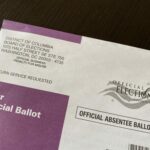
After a less-than smooth vote-by-mail effort in the June 2 Democratic primary, the D.C. Board of Elections announced that it had mailed all registered Ward 2 voters a ballot for Tuesday’s Ward 2 D.C. Council special election. This differs from the board’s stance leading up to primary day, which required voters to request ballots.
The announcement came via the election board’s Twitter account on Sunday, less than 48 hours before the special election voting day on Tuesday. To be counted, the returned ballots must be postmarked by June 16.
Ward 2 Voters: Ballots for the Ward 2 Special Election have been mailed to all Ward 2 registered voters.
Returned ballots must be postmarked by June 16th.
— DC Board of Elections (@Vote4DC) June 14, 2020
The independent elections office confirmed that the ballots would be sent to all registered Ward 2 voters, even if a ballot has not been requested. For residents not voting by mail, Hardy Middle School and One Judiciary Square will be open for voting from 7 a.m. to 8 p.m on Tuesday. The special election determines who will serve out the remainder of former Ward 2 Councilmember Jack Evan’s vacated term.
According to Rachel Coll, a spokesperson for DCBOE, the decision to send all Ward 2 voters a ballot was made after the board reviewed the primary election results and the execution of the voting-by-mail system. She says that, with a much smaller voting base in Ward 2 and expanded staffing abilities, the elections board was able to undertake sending all Ward 2 voters a ballot.
“We had some issues with the request process after the primary, and some of those requests were made for both the primary election and the Ward 2 special, so as those issues became more apparent during our audit after the primary election, it was doable,” says Coll, adding that staff worked 24/7 to mail the ballots.
The response to the seemingly last-minute DCBOE decision has largely been a mix of frustration and confusion from voters and former Ward 2 candidates alike, wondering why the information was shared only two days before the election. When asked about the short-notice tweet, Coll reiterates that regardless of when (or how) the information regarding the ballots was shared, ultimately the voters will receive their ballots: “Communicated or not, people are receiving their ballots.”
The new initiative departs from DCBOE’s previous stance on mail-in ballots during the primary. When the pandemic began sweeping through the city in March, the board encouraged all residents to vote by mail for the June 2 primary and June 16 special election, but stopped short of proactively sending every registered voter a ballot, as Maryland did. Instead, voters had to request a ballot from the board.
“Mailing ballots out to registered voters is a lot more complex process than one would think, and every jurisdiction that actually does that recommended that we take two years to plan the processes, not two months. You could have one mistake and your whole election is failed,” elections board chairman Michael Bennett said at the time.
In total, the board received around 90,000 requests for absentee ballots by late May. Some Washingtonians had still not received those requested ballots by primary day. The board told voters still waiting on their ballots to vote in-person, but primary day had limited voting centers (20 centers were open, compared to the usual 100-plus), leading to wait times of up to five hours at some locations—some voters were at the polls past midnight. Still other voters took advantage of a last-minute vote-by-email option. D.C. Mayor Muriel Bowser called the June 2 primary wait times and confusion “nothing short of a failed execution” in a June 3 press conference.
Jordan Grossman, a Ward 2 Democratic primary candidate who co-wrote a letter to the board in April voicing concerns about the process, voiced his frustration with the board’s about-face.
“One of the things that was repeated over and over again from the outset was that it was impossible to mail every registered voter a ballot, so the fact that they refused to engage on the questions of how they would do this and then seemingly with no significant public outreach or communication decided to reverse themselves a few days before a special election seems confusing,” Grossman tells DCist, adding that the move is “emblematic of the deep-seated and fundamental problems with election administration in D.C. and the Board of Election’s performance in particular.”
Grossman has conceded to Ward 2’s presumptive Democratic primary winner Brooke Pinto, as has her other top competitor, Foggy Bottom Advisory Neighborhood Commissioner Patrick Kennedy. Neither Grossman nor Kennedy will be campaigning for the special election.
Pinto’s win in the crowded Democratic primary, which also saw a decisive loss for Evans, marked her first D.C. election. The political newcomer received endorsements from D.C. Attorney General Karl Racine, her former boss; the Washington Post editorial board, and a handful of federal lawmakers. Following a Washington City Paper article regarding Pinto’s campaign finances last week, a voter filed a complaint with the D.C. Office of Campaign Finance over the weekend, alleging that Pinto had used a $975,000 Logan Circle home as campaign headquarters without reporting the expenditure. Pinto tells DCist over email that her campaign planned to use the home as a headquarters before the pandemic, but pivoted to remote work for safety precautions.
“It is unfortunate that my change of plans is being used to support a false narrative,” she said. “I am confident that we will soon be able to put this complaint behind us.”
As of election board’s latest count, Pinto leads with 351 voters over second-place Kennedy in the Democratic primary.
The only Republican in the special election, Katherine Venice, withdrew on June 5, but Pinto’s five Democratic challengers will still appear on the June 16 special election ballot, per DCBOE’s website.
This story has been updated with a statement from Brooke Pinto regarding the Office of Campaign Finance complaint.